Municipal (Baladi) Licence in Saudi Arabia 2026 Guide
Apply on the official municipal portal
- Sign in to Balady with your establishment account
- Choose Commercial Activity Licence
- Select the activity and attach the lease and commercial registration
- Book the premises inspection
- Pay the issued SADAD bill
The licence is tied to a specific premises and activity — changing either requires an amendment. Confirm current fees on Balady; they vary by municipality and activity.
A municipal (Baladi) licence is the permit that lets your business legally occupy and operate a physical premises in Saudi Arabia. You apply through the Balady platform of the Ministry of Municipalities and Housing, and it sits on top of a valid Commercial Registration. Many activities are now issued instantly online, while others require a municipality inspection that can take roughly 16 working days and up to 60 working days for classified activities. Typical municipal fees run about SAR 500 to SAR 5,000 per year depending on activity, size and city.
This guide explains exactly what the Baladi licence is in 2026, which businesses need one, how the Balady platform works, the premises, civil defence and signage requirements, the step-by-step process, fees, renewal, and how it links back to your Commercial Register.
What is a municipal (Baladi) licence in Saudi Arabia?
The municipal licence — known locally as the Baladi licence (رخصة بلدية) or commercial activity licence — is the permit issued by the local municipality that authorises a business to operate from a specific physical location. It is governed by the Ministry of Municipalities and Housing (MOMAH) and managed digitally through the Balady platform.
Where your Commercial Registration (CR) gives your company a legal identity on the national register, the Baladi licence confirms that the actual premises — your shop, office, warehouse, clinic or restaurant — meets municipal, zoning, health and safety rules for that activity. The two work together: you generally need an active CR (and, for foreign investors, a MISA investment licence) before you can issue a municipal licence.
It helps to think of Saudi business permits as a stack. At the bottom sits the legal entity (the CR, and a MISA licence for foreign owners). Above that sit the operational permits that let you actually trade — and the municipal licence is the most important of these for any business with a physical footprint. Without it, a fully formed company with a valid CR still cannot lawfully open its doors to customers, store inventory, or run a kitchen. That is why founders who treat the Baladi licence as an afterthought often lose weeks at the most expensive moment — when the lease is already running and staff are already hired.
The word “Baladi” simply means “municipal” in Arabic, and the Balady platform takes its name from the network of municipalities (amanat and baladiyat) that historically issued these permits in person. Today that network operates through one national digital system, which has made the licence far more predictable than it was a few years ago — but the underlying logic is unchanged: the municipality is signing off that this specific premises, at this specific address, is fit for this specific activity.
Which activities and premises need a Baladi licence?
Any business that operates from a fixed, customer- or operations-facing premises in Saudi Arabia needs a municipal licence for that location. In practice this covers the large majority of physical businesses, including:
- Retail shops and showrooms — stores, boutiques, electronics, groceries and supermarkets.
- Food and beverage — restaurants, cafes, bakeries and catering kitchens (these also require a municipal health certificate).
- Offices and professional premises — many commercial offices, depending on activity and location.
- Warehouses and logistics — storage, distribution and light industrial units.
- Clinics and health premises — which also need Ministry of Health licensing in addition to the municipal licence.
- Workshops, salons and service outlets — barbers, beauty, maintenance and similar premises-based services.
Purely online or home-based activities, or those run entirely from a co-working or virtual setup, may not need a full premises licence — but the moment you take a physical commercial unit with public or operational access, a Baladi licence is required. Always confirm your specific activity’s requirement on the Balady platform, because rules differ by activity class and emirate-level municipality.
Activities are also grouped into risk-based classes, and the class largely determines how much scrutiny your application receives. Low-risk commercial activities — many standard offices and certain retail formats — frequently qualify for instant issuance, where the system grants the licence as soon as you upload the attachments and pay. Higher-risk or public-facing activities — food preparation, fuel, industrial workshops, places of public assembly — are more likely to require an on-site municipality inspection and stricter Civil Defence sign-off. Knowing which class your activity falls into before you sign a lease lets you budget realistically for both time and safety fit-out.
A practical rule of thumb: if customers, the public, or staff will physically be inside the premises, or if you will store goods or operate equipment there, assume you need a municipal licence and plan for it from day one. If you are unsure whether your activity even requires a premises at all, that is a question worth resolving before committing to a lease, because some founders sign for space they do not strictly need.
The Balady platform: how municipal licensing works in 2026
In 2026, the Balady platform (balady.gov.sa) is the single, unified digital portal for municipal licensing across the Kingdom. Following MOMAH’s full digital transformation, it has become the primary channel for issuing, renewing and modifying municipal, construction and professional licences — replacing in-person municipality visits for most services.
Balady serves three user groups: Individuals (citizens and residents), Business (companies and establishments), and Government entities. To use the business services you log in with your establishment record, which means a valid Commercial Registration from the Saudi Business Center is a precondition for accessing municipal licensing.
The platform offers two issuance routes. For instant-issuance activities, the system issues the licence — together with a Civil Defence safety permit where applicable — immediately after you submit the required attachments and pay the fees, with no site visit. For activities that do not meet instant-issuance conditions, the request is routed to the municipality, an inspector visits the premises to verify the data and attachments, files an inspection report, and the licence is issued after approval.
Beyond first-time issuance, Balady consolidates the full lifecycle of a premises permit in one place. You can renew a commercial licence, modify an activity or add activities to an existing licence, license signage and advertising boards, obtain occupancy and compliance certificates, and apply for building permits — all from the same establishment record. This matters for planning, because it means your municipal obligations are not a single event at launch but an ongoing relationship you manage digitally throughout the life of the business.
Because the platform reads directly from your establishment record, the accuracy of your underlying data is critical. If your Commercial Registration activities, trade name or national address are out of date, the municipal application will reflect those errors. Cleaning up your CR record before you start the Baladi application is one of the simplest ways to avoid avoidable rejections.
Requirements: premises, civil defence and signage
To issue a municipal licence you must satisfy three core categories of requirement — proof of premises, safety compliance, and signage. The table below summarises the typical documents and conditions for a standard commercial activity in 2026.
| Requirement | What is needed | Notes |
|---|---|---|
| Valid Commercial Registration | Active CR from the Saudi Business Center | Foreign investors also need a MISA investment licence first |
| Proof of premises | Lease agreement, ownership deed, or investment contract | The unit must be zoned for your activity |
| Building completion / occupancy | Occupancy certificate for the building | Issued via Balady; a compliance certificate is generated automatically |
| National (Wasel) address | Registered national address for the premises | Required to link the location to your record |
| Civil Defence safety | Safety-equipment invoice or accredited safety report | Issued by / accredited by the General Directorate of Civil Defence |
| Shop signage | Sign matching the trade name on the CR | Advertising boards are licensed separately on Balady |
| Sanitation contract | Waste / sanitation contract | Optional — depends on activity and contract type |
| Sector approvals | e.g. municipal health certificate, MOH licence | Food, health and regulated activities only |
Requirements vary by activity and municipality. Always confirm the current document list and conditions for your specific activity on the official Balady platform before applying.
Premises and zoning
Your unit must be in a location zoned for your activity and supported by a lease, deed or investment contract. The building generally needs a valid occupancy certificate, which you can obtain electronically on Balady; once issued, a building compliance certificate is generated automatically as a proactive service.
Civil Defence (fire safety)
Most commercial premises require fire-safety compliance from the General Directorate of Civil Defence. For instant-issuance activities you typically attach a safety-equipment invoice or a technical safety report from an accredited safety company or engineering office, and Balady can issue the Civil Defence safety permit alongside the licence.
Signage
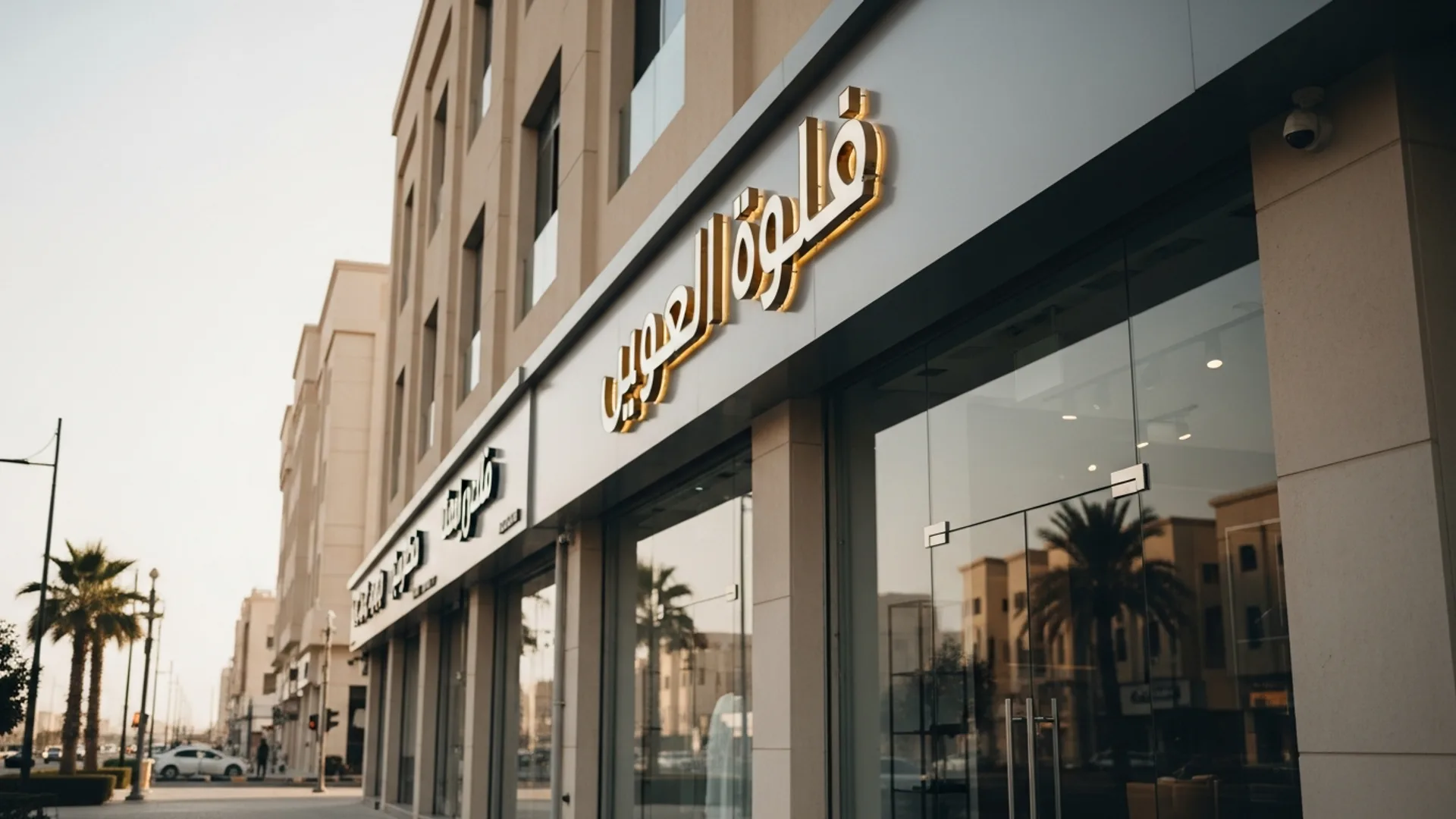
You must install a shop sign that matches the trade name registered on your Commercial Registration. Any additional advertising or directional boards are a separate service licensed through Balady, so factor signage approvals into your launch plan. Municipalities also apply rules on sign size, language and placement, and a mismatch between your displayed name and your CR is a common reason for fines during inspections — so confirm the wording before you commission the sign.
National (Wasel) address and sector approvals
Every premises must be tied to a registered national address so the municipality can locate and verify it. On top of that, regulated activities carry their own approvals: food businesses need a municipal health certificate, healthcare premises need Ministry of Health licensing, and some activities require sanitation contracts. Identify these sector approvals early, because they are often the slowest items and can hold up an otherwise complete application.
Step-by-step: how to get a Baladi licence
- Secure your CR (and MISA licence if foreign-owned). The municipal licence sits on top of an active Commercial Registration, so complete company formation in Saudi Arabia first.
- Sign your premises lease and register the national address. Take a unit zoned for your activity and obtain the building occupancy certificate via Balady.
- Log in to the Balady platform. Enter your establishment record and select the precise activity and the premises area.
- Upload your attachments. Lease/ownership/investment contract, occupancy certificate, Civil Defence safety document, and any sanitation contract or sector approval required.
- Pay the municipal fees. For instant-issuance activities the licence (and Civil Defence permit, where relevant) is issued immediately after payment.
- Complete any inspection. If your activity is not instant-issuance, a municipality inspector visits the premises, files a report, and the licence is issued after approval.
- Install compliant signage and start trading. Put up your shop sign matching the CR trade name and keep your safety equipment maintained.
The single biggest determinant of how smoothly this runs is document readiness. Founders who arrive at the Balady application with the lease signed, the national address registered, the occupancy certificate in hand and the Civil Defence safety report already prepared often clear instant-issuance activities in a single session. Those who start the application first and then chase documents end up cycling through repeated draft submissions. Treat the checklist above as a pre-flight list to complete before you open the portal, not while you are inside it.
Baladi licence fees in Saudi Arabia (2026)
There is no single flat fee for a municipal licence. Charges depend on the activity, premises size, classification and city, and the platform calculates them through an official fees calculator at the time of application. As an indicative guide, annual municipal licence fees commonly fall in the SAR 500 to SAR 5,000 range for typical small and mid-sized commercial activities, with larger, higher-risk or classified activities costing more.
| Cost component | Typical amount (SAR) | Notes |
|---|---|---|
| Municipal (Baladi) licence fee | 500 – 5,000 / year | Varies by activity, size and city; calculated on Balady |
| Civil Defence safety permit | Varies | Often issued with the licence for instant activities |
| Safety equipment / report | Varies | Via accredited safety company or engineering office |
| Signage / advertising board | Varies | Licensed separately on Balady |
| Sanitation contract | Varies | If required for the activity |
Figures are indicative for 2026. Always confirm the exact amount using the official fees calculator on the Balady platform for your specific activity and premises.
It is worth separating the municipal licence fee from the wider cost of getting a premises operational. The licence fee itself is usually modest, but the surrounding costs — safety equipment and fire systems to satisfy Civil Defence, fabrication and installation of compliant signage, and any fit-out needed to meet health requirements for food or care premises — can dwarf the official fee. When you budget for opening a location, treat the Baladi fee as one line in a larger premises-readiness budget rather than the whole story.
These municipal costs also sit alongside your entity-level costs — the Commercial Registration fee, Chamber of Commerce membership, and (for foreign investors) the MISA licence — so it pays to map the full setup spend in one view rather than discovering municipal requirements after you have already committed elsewhere.
How long does it take, and how does renewal work?
Timelines depend on the issuance route. Instant-issuance activities can be licensed the same day once attachments are uploaded and fees are paid. For activities that need verification, expect a municipality inspection that typically takes around 16 working days, extending up to 60 working days for activities subject to the classification system.
Municipal licences are renewed through Balady, with both instant and non-instant renewal options depending on the activity and location. A key renewal condition is up-to-date Civil Defence safety compliance — you generally need a current safety-equipment certificate or a technical report from an accredited engineering office. You also need a valid Commercial Registration at renewal, which is straightforward under the new system where the CR is confirmed annually rather than expiring.
How the Baladi licence links to your Commercial Register
The municipal licence and the Commercial Registration are tightly connected. Your CR — issued by the Ministry of Commerce through the Saudi Business Center — establishes the company and its activities, and Balady uses that establishment record to let you apply for the premises licence. Under the Commercial Register reforms effective in 2026, the CR is a unified national registration confirmed annually rather than carrying a fixed expiry, which keeps your municipal renewals aligned with an active record.
Foreign-owned companies add one more layer: the MISA investment licence comes first, then the CR, then the Baladi licence for each premises. If you are still at the formation stage, start with our MISA licence guide and work forward from there.
Common mistakes to avoid
- Leasing premises before checking zoning. Signing a lease for a unit not approved for your activity can block the licence entirely — verify the activity is permitted at that address first.
- Skipping the occupancy certificate. Without a valid building occupancy/compliance certificate, the municipal application stalls.
- Ignoring Civil Defence requirements. Missing or outdated fire-safety documents are a leading cause of refused issuance and refused renewals.
- Signage that doesn’t match the CR. A shop sign with a trade name different from your Commercial Registration breaches the rules and can trigger fines.
- Assuming the CR is enough. A Commercial Registration alone does not authorise you to operate a premises — the Baladi licence is separate and mandatory for physical locations.
- Letting the licence lapse. Trading on an expired municipal licence risks penalties and closure — renew before the due date through Balady.
- Forgetting sector approvals. Food, health and other regulated premises need extra approvals (health certificate, MOH licence) on top of the municipal licence.
Get your premises licensed without the back-and-forth
The Baladi licence is rarely the hard part on its own — it is the sequence (MISA, CR, lease, occupancy, Civil Defence, signage) and the activity-specific conditions that trip founders up. Noble Core manages the full premises-licensing path alongside your company formation, so your Commercial Registration, national address, safety compliance and municipal licence all line up the first time. Confirm the exact requirements for your activity on the Balady platform, and reach out for a tailored quote covering your CR and municipal licence together.
Need help setting up in Saudi Arabia? Noble Core handles your MISA licence, commercial registration, and visas end-to-end — done right the first time.
Frequently Asked Questions
What is a Baladi (municipal) licence in Saudi Arabia?
It is the permit issued by the local municipality, via the Balady platform of the Ministry of Municipalities and Housing, that authorises a business to operate from a specific physical premises. It confirms the location meets zoning, health and safety rules, and sits on top of a valid Commercial Registration.
Do I need a municipal licence if I already have a Commercial Registration?
Yes. A Commercial Registration gives your company a legal identity, but it does not authorise you to operate a physical premises. Any business with a fixed commercial location — shop, office, warehouse, restaurant or clinic — needs a separate municipal (Baladi) licence for that premises.
How much does a Baladi licence cost in 2026?
There is no flat fee; the cost depends on your activity, premises size, classification and city, and is calculated on the Balady platform. As a guide, annual municipal licence fees commonly range from about SAR 500 to SAR 5,000 for typical small and mid-sized activities. Always confirm via the official Balady fees calculator.
How do I apply for a municipal licence in Saudi Arabia?
Apply online through the Balady platform: log in with your establishment record, select your activity and premises, upload your lease/ownership document, occupancy certificate, Civil Defence safety report and any sector approvals, then pay the fees. Instant-issuance activities are licensed immediately; others require a municipality inspection.
How long does it take to get a Baladi licence?
Instant-issuance activities can be licensed the same day once attachments and fees are submitted. Activities that require verification go through a municipality inspection, which typically takes around 16 working days and can extend up to 60 working days for activities subject to the classification system.
What civil defence requirements apply to a municipal licence?
Most commercial premises need fire-safety compliance from the General Directorate of Civil Defence. You typically attach a safety-equipment invoice or a technical safety report from an accredited safety company or engineering office. Current Civil Defence compliance is also a condition for renewing the licence.
Can a foreign-owned company get a Baladi licence?
Yes. The sequence is MISA investment licence first, then the Commercial Registration, then the municipal (Baladi) licence for each premises. With an active establishment record, foreign-owned businesses apply on the Balady platform the same way as Saudi companies, subject to the same premises, civil defence and signage requirements.
How do I renew my municipal licence?
Renew through the Balady platform, which offers instant or non-instant renewal depending on the activity and location. You generally need up-to-date Civil Defence safety compliance and a valid Commercial Registration. Under the 2026 system the CR is confirmed annually rather than expiring, keeping renewals aligned with an active record.