
Setting Up a Mining Company in Saudi Arabia (2026)
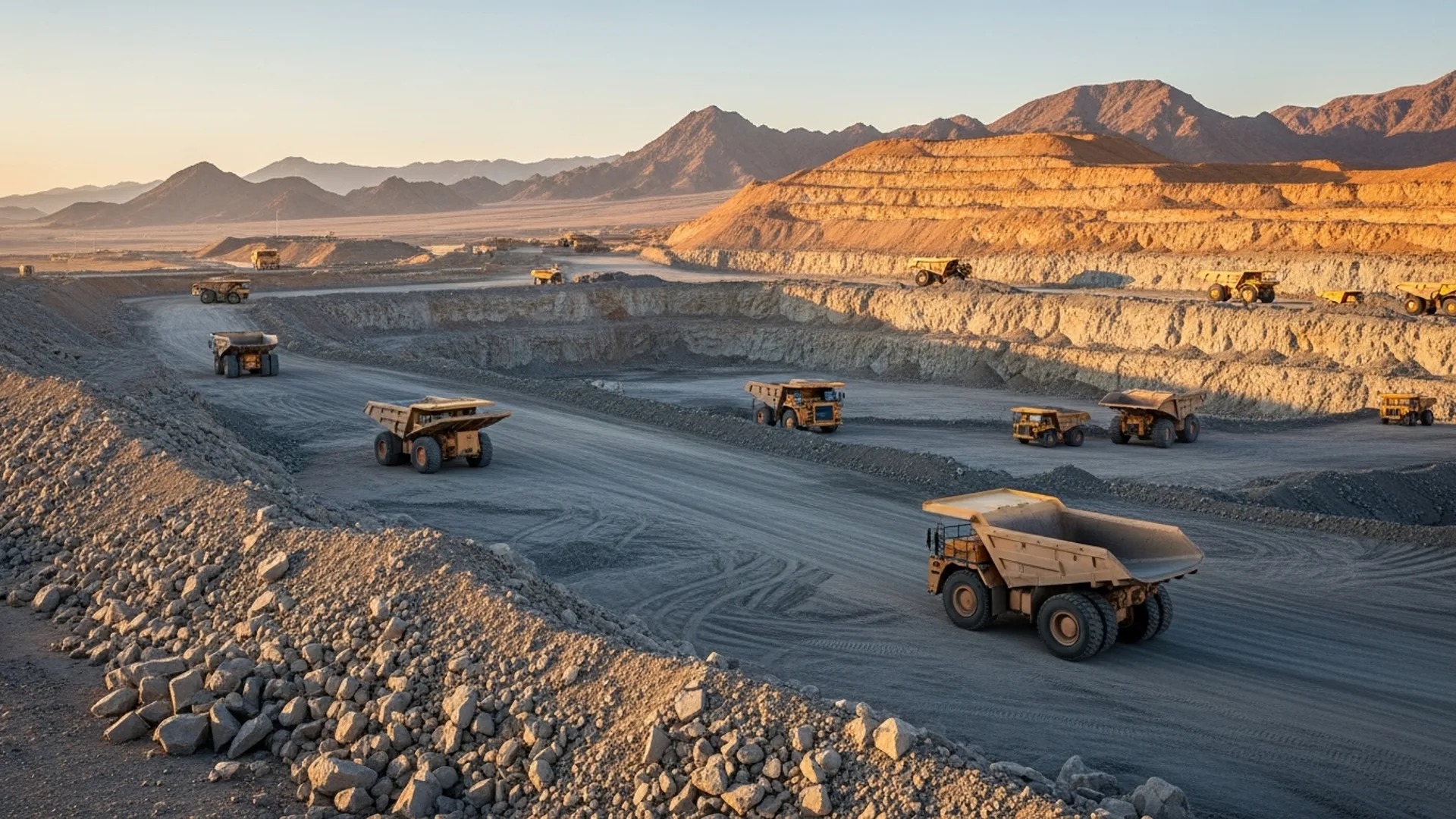
Setting up a mining company in Saudi Arabia in 2026 means securing a MISA investment licence (issued in roughly 3–10 business days), a unified Commercial Register from the Ministry of Commerce (no expiry under the new 3 April 2026 Commercial Register Law), and a mining or exploration licence from the Ministry of Industry and Mineral Resources. Foreign investors can hold up to 100% ownership in most activities, and a full launch typically runs from around SAR 36,999 in professional setup costs plus government fees.
Saudi Arabia sits on an estimated SAR 9.4 trillion (USD 2.5 trillion) of untapped mineral wealth — gold, copper, phosphate, bauxite, rare earths and industrial minerals — and the mining sector is positioned as the “third pillar” of the national economy under Vision 2030. For foreign and local investors alike, the pathway to a licensed mining company is now clearer and faster than ever, thanks to the modernised Mining Investment Law, the digital Ta’adeen platform, and the simplified company-formation regime.
This guide walks you through every step — the investment licence, the Commercial Register, the mining licence categories, the documents you need, indicative fees and timelines, and the most common mistakes that delay approvals. Whether you are an exploration startup or an established miner expanding into the Kingdom, here is exactly how to get registered and operating.
What is a mining company in Saudi Arabia?
A mining company in Saudi Arabia is a legally registered entity authorised to explore for, extract, process or trade minerals within the Kingdom. To operate, the company needs two distinct layers of authorisation: a corporate identity (an investment licence from MISA if foreign-owned, plus a Commercial Register from the Ministry of Commerce) and a sector licence (a mining or exploration licence from the Ministry of Industry and Mineral Resources, MIM).
The sector is governed by the Mining Investment Law (Royal Decree implemented from 2021) and administered through the Ta’adeen mining platform. The law created clear, transparent licence categories with defined durations, transferable rights, and a level playing field for domestic and foreign investors. Saudi Arabia’s mineral map covers the Arabian Shield in the west — rich in gold, silver, copper and zinc — and vast phosphate and bauxite deposits in the north and east.
Importantly, a mining company is not a single licence but a stack of authorisations. The corporate entity gives you legal personality to sign contracts, employ staff, open bank accounts and pay taxes. The mining licence gives you the exclusive or non-exclusive right to a defined area and mineral. A company can hold several mining licences across different blocks, and exploration rights can be converted into longer-term mining rights once a deposit is proven. This modular structure lets investors start small with a reconnaissance or exploration footprint and scale into full extraction as the resource is defined.
The platform also publishes competitive tenders for high-value deposits. For flagship sites — such as large gold or phosphate belts — the Ministry may run a bidding round where qualified companies compete on work programme, investment commitment and technical merit. For most other ground, applications are processed on a first-come, first-served basis through Ta’adeen, subject to the area being free and the applicant meeting the eligibility criteria.
Who needs to set up a mining company?
You need a registered mining company (and the associated licences) if you intend to do any of the following inside the Kingdom:
- Explore for minerals across a defined area (reconnaissance or exploration licence).
- Extract and produce metallic or non-metallic minerals at commercial scale (mining licence).
- Quarry building materials such as sand, gravel, limestone or gypsum (material-collection or building-materials quarry licence).
- Process or beneficiate ore into concentrates, metals or industrial products.
- Trade or export minerals and mineral products from a Saudi base.
Foreign investors must obtain a MISA (Ministry of Investment of Saudi Arabia) licence before they can register the company. Saudi nationals and GCC investors can register directly through the Ministry of Commerce. Either way, the operating mineral activity must then be licensed by the Ministry of Industry and Mineral Resources through Ta’adeen.
It is worth distinguishing between the different kinds of businesses that touch the sector. An upstream mining company explores and extracts. A midstream company processes, smelts or refines ore into concentrates and metals. A downstream business manufactures finished products — for example, fertiliser from phosphate, or aluminium from bauxite. Service companies — drilling contractors, assay laboratories, logistics and equipment suppliers — also need a corporate registration but generally not a mining licence, because they do not hold mineral rights themselves. Knowing where your business sits on this chain determines which activity codes you select and which sector licences (if any) you require.
Step-by-step: how to set up a mining company in Saudi Arabia
The process moves through corporate registration first, then the sector licence. Here is the full sequence, naming the exact portals and screens.
- Reserve a trade name and choose your activity. Log in to the Saudi Business Center (mc.gov.sa) with your account, open the “Business Name Reservation” service, and reserve a name. Under the new Commercial Register Law (effective 3 April 2026), English trade names are now permitted alongside Arabic.
- Obtain the MISA investment licence (foreign investors). Apply through the MISA portal. Upload your corporate documents and select the mining/industrial activity. MISA licensing typically completes in about 3–10 business days.
- Issue the Commercial Register (CR). Through the Saudi Business Center, submit the company’s Articles of Association and shareholder details. The new unified national Commercial Register issues a single CR number (now starting with “7”) that carries no expiry — you confirm it annually instead of renewing.
- Register with the Chamber of Commerce. Membership is issued through the local Chamber and is required to authenticate official documents.
- Register for tax with ZATCA. Create your taxpayer file on the Zakat, Tax and Customs Authority (zatca.gov.sa) portal — VAT registration is required once turnover thresholds are met (standard VAT is 15%), and you will join the Fatoora e-invoicing programme in waves.
- Open a corporate bank account and inject the share capital.
- Apply for the mining or exploration licence on Ta’adeen. Through the Ministry of Industry and Mineral Resources mining platform, choose the licence category (reconnaissance, exploration, building-materials quarry, or mining/exploitation), define your geographic block, and submit a work programme and technical/financial capability documents.
- Register employees with GOSI and Qiwa. Set up your establishment on Qiwa (qiwa.sa) for labour compliance and on GOSI (gosi.gov.sa) for social insurance, then process Iqamas for foreign staff through Absher and Muqeem.
Mining licence categories under the Mining Investment Law
The Ministry of Industry and Mineral Resources issues several licence types through Ta’adeen, each with its own scope and duration. Choosing the right one is the single most important decision in your application.
- Reconnaissance licence — non-exclusive, short-term right to survey and assess mineral potential over a wide area; typically valid for up to 2 years.
- Exploration licence — exclusive right to explore a defined block, drill and define resources; generally up to 5 years and renewable, with priority to convert into a mining licence.
- Mining (exploitation) licence — exclusive right to extract and produce minerals commercially; long-term (up to around 30 years) and extendable.
- Building-materials quarry licence — for extracting construction materials such as sand, gravel and limestone; medium-term and renewable.
- Material-collection licence — short-term permit to collect surface minerals or specimens.
Each category requires a credible technical and financial plan. Exploration and mining licences also carry environmental and rehabilitation obligations, plus royalty and surface-rent payments to the state.
Required documents and IDs
Gather these before you start to avoid back-and-forth rejections. Requirements vary slightly by licence type and applicant nationality, so always confirm the current checklist on the official portal.
- Corporate documents — parent-company commercial registration / certificate of incorporation, attested and translated into Arabic.
- Articles of Association (Memorandum of Association) for the new Saudi entity.
- Shareholder identification — passports for foreign individuals; national ID (Iqama/national ID number) for resident shareholders.
- MISA investment licence (foreign-owned companies).
- Audited financial statements of the parent company, demonstrating financial capability.
- Technical work programme for the mining/exploration block — including expenditure commitments and a timeline.
- Proof of technical competence — CVs of qualified geologists/mining engineers, prior project experience.
- Map and coordinates of the requested licence area.
- Environmental and rehabilitation plan for exploration/mining licences.
Fees and timeline (indicative)
The table below sets out indicative government and professional costs in 2026. Figures marked indicative can change; always confirm current figures on the official portal before budgeting.
| Item | Authority / Portal | Indicative cost (SAR) | Typical timeline |
|---|---|---|---|
| MISA investment licence (issue/renew) | MISA | Issue/renew fee suspended in 2026 (previously SAR 12,000 / 62,000) | 3–10 business days |
| Trade name reservation | Saudi Business Center (mc.gov.sa) | Nominal (indicative SAR 0–200) | Same day |
| Commercial Register issuance | Ministry of Commerce | ~SAR 1,200–2,000 (indicative) | 1–3 days |
| Chamber of Commerce membership | Local Chamber | ~SAR 2,000–3,000 / year (indicative) | 1–2 days |
| Mining / exploration licence | MIM — Ta’adeen platform | Application + annual surface rent + royalties (varies by area & mineral; confirm on portal) | Weeks to months |
| GOSI registration | GOSI (gosi.gov.sa) | ~21.5% total contribution on Saudi payroll (employer + employee) | Same day setup |
| Iqama (per foreign employee) | Absher / MOFA | ~SAR 650 / year govt fee + applicable levies (indicative) | 1–2 weeks |
| VAT registration | ZATCA (zatca.gov.sa) | No fee; VAT rate 15% | Same day |
| Noble Core setup package | Noble Core | From SAR 36,999 | 2–6 weeks end-to-end |
Note: mining-specific royalties and surface rents are set by the Ministry of Industry and Mineral Resources and depend on the mineral, area size and licence stage. Treat all figures above as indicative and verify current amounts on the relevant official portal.
Tax, royalties and ongoing compliance
Once licensed, a mining company has continuing obligations to several Saudi authorities:
- ZATCA — file VAT returns (15% standard rate), comply with Fatoora e-invoicing as your wave is activated, and settle Zakat (for GCC-owned shares) or corporate income tax (for foreign-owned shares).
- Ministry of Industry and Mineral Resources — pay royalties on extracted minerals and annual surface rent, submit periodic technical and production reports through Ta’adeen, and meet environmental and rehabilitation commitments.
- GOSI — remit social insurance contributions (total around 21.5% for Saudi employees, split between employer and employee).
- Qiwa / MHRSD — maintain Saudization (Nitaqat) targets, register employment contracts, and keep your establishment file compliant.
Saudi Arabia offers notable incentives for the mining sector, including support programmes for exploration and a competitive royalty framework designed to attract long-term investment under Vision 2030.
Visas, Iqamas and hiring for your mining operation
Mining operations need geologists, engineers, drillers and site staff — often a mix of Saudi nationals and foreign specialists. To bring in foreign employees:
- Secure work visa quotas (block visas) through Qiwa and the Ministry of Human Resources and Social Development (MHRSD).
- Issue the entry visa via the Enjaz visa platform (visa.mofa.gov.sa) / MOFA for the employee abroad.
- After arrival, complete medical checks and issue the Iqama (residence permit) through Absher (absher.sa), with status managed on Muqeem (muqeem.sa).
- Register every employee with GOSI for social insurance from day one.
Maintaining your Nitaqat (Saudization) band is essential to keep visa privileges active, so plan your Saudi-to-foreign hiring ratio early.
Saudization, training and local content
The mining sector is a priority area for Saudi employment, so local-content and Saudization expectations are part of operating responsibly in the Kingdom. Practical steps to stay compliant and competitive:
- Plan your Nitaqat band from the start — the ratio of Saudi to foreign employees registered on Qiwa determines your access to work visas and government services.
- Invest in training — partnerships with technical institutes and apprenticeship schemes build a Saudi workforce of geologists, technicians and operators.
- Prioritise local suppliers and contractors where feasible, supporting local-content goals and often simplifying logistics.
- Register contracts properly on Qiwa and keep GOSI contributions current to avoid compliance flags that can stall visa issuance.
Treating Saudization as a strategic advantage — not just a box to tick — tends to smooth approvals and build durable operations aligned with the Kingdom’s Vision 2030 goals for the mining sector.
Choosing a location and legal structure
Two early decisions shape the rest of your setup: where you base the company and what legal form it takes.
Legal structure
Most foreign-owned mining ventures register as a Limited Liability Company (LLC), which suits closely held businesses and is straightforward to administer. Larger ventures, joint ventures with multiple partners, or businesses planning to raise capital may opt for a Closed Joint Stock Company (JSC). Branches of an existing foreign company are also possible for certain activities. Your choice affects governance, the Articles of Association, and how shares are transferred — so confirm the right vehicle with an advisor before drafting documents.
Where to base the company
The corporate headquarters can sit in a major city such as Riyadh, Jeddah or Dammam, while the mining licence covers the actual deposit — often in a remote area of the Arabian Shield or the northern phosphate belt. Many investors locate the head office near government bodies and talent, and run a site office at the deposit. Saudi Arabia has also introduced a regional headquarters (RHQ) programme and special economic zones offering incentives; these can be relevant for groups consolidating Gulf operations, though they are not a prerequisite for a mining licence.
Common mistakes and errors to avoid
Errors that delay mining-company approvals
Most rejections and delays trace back to a handful of avoidable issues. Watch for these:
- Applying for the wrong licence category — e.g. requesting a mining licence when an exploration licence is the correct first stage for an unproven block.
- Incomplete or unattested corporate documents — parent-company papers not legalised or translated into Arabic.
- Weak technical/financial evidence — a work programme that lacks credible expenditure commitments or qualified personnel.
- Overlapping licence areas — submitting coordinates that conflict with an existing licence block on Ta’adeen.
- Skipping the MISA step — foreign investors trying to register a CR before securing the investment licence.
- Ignoring environmental obligations — no rehabilitation plan attached to an exploration or mining application.
- Missing tax and GOSI registration — operating before ZATCA and GOSI files are active.
Common mistakes to avoid
- Assuming one licence covers everything — corporate registration (CR), the MISA licence and the mining licence are separate approvals.
- Budgeting only for setup and forgetting recurring costs — surface rent, royalties, Chamber renewal, GOSI and VAT.
- Underestimating timelines — corporate setup is fast (days), but the mining/exploration licence and area allocation can take weeks to months.
- Using outdated fee figures — MISA issue/renew fees were suspended in 2026, so don’t budget the old SAR 12,000/62,000 amounts; confirm current figures on the official portal.
- Forgetting the annual CR confirmation — under the new Commercial Register Law the CR has no expiry, but you must confirm it each year to keep it active.
- Leaving Saudization planning until after hiring — Nitaqat compliance affects your ability to issue work visas.
- Not verifying licence-area coordinates against existing blocks before applying.
How Noble Core helps you set up a mining company in Saudi Arabia
Noble Core Ventures manages the entire pathway end-to-end so you can focus on the geology and the deal, not the paperwork. Our KSA team handles the MISA investment licence, the unified Commercial Register, Chamber registration, ZATCA and GOSI setup, and coordinates your mining or exploration licence application on Ta’adeen — including document attestation, Arabic translation, and the technical/financial file.
If you are still deciding on structure and ownership, start with our complete company formation in Saudi Arabia guide, then review the foreign-ownership pathway in our MISA licence in Saudi Arabia guide. From there, our advisors map your activity to the correct licence category, build a realistic fee-and-timeline plan, and shepherd every government step.
Packages start from SAR 36,999 for professional setup (government fees additional and indicative — confirm current figures on the official portals). Get in touch and we will turn the Kingdom’s mineral opportunity into a fully licensed, compliant operating company.
Need help setting up in Saudi Arabia? Noble Core handles your MISA licence, commercial registration, and visas end-to-end — done right the first time.
Frequently Asked Questions
How do I set up a mining company in Saudi Arabia?
To set up a mining company in Saudi Arabia, foreign investors first obtain a MISA investment licence (about 3–10 business days), then issue a unified Commercial Register through the Saudi Business Center, register with the Chamber, ZATCA and GOSI, and finally apply for a mining or exploration licence on the Ta’adeen platform run by the Ministry of Industry and Mineral Resources.
Can foreigners own 100% of a mining company in Saudi Arabia?
Yes. Under Saudi Arabia’s investment regime, foreign investors can hold up to 100% ownership of a mining company in most activities, provided they secure a MISA investment licence. The mineral activity itself must still be licensed by the Ministry of Industry and Mineral Resources through the Ta’adeen platform, separately from corporate ownership and registration.
How much does it cost to start a mining company in Saudi Arabia?
Costs vary by activity, but indicative figures in 2026 include Commercial Register issuance around SAR 1,200–2,000, Chamber membership SAR 2,000–3,000 a year, and mining licence surface rent plus royalties set by the Ministry. MISA issue/renew fees were suspended in 2026. Noble Core professional setup packages start from SAR 36,999; confirm current figures on the official portals.
What licences does a mining company in Saudi Arabia need?
A mining company needs a corporate layer — a MISA investment licence (for foreign owners) and a Commercial Register from the Ministry of Commerce — plus a sector licence from the Ministry of Industry and Mineral Resources. Mining sector licences include reconnaissance, exploration, mining (exploitation), building-materials quarry, and material-collection licences, each issued via the Ta’adeen platform.
How long does it take to register a mining company in Saudi Arabia?
Corporate setup is fast: the MISA investment licence usually takes about 3–10 business days and the Commercial Register a further 1–3 days. The mining or exploration licence on Ta’adeen takes longer — typically weeks to months — because it involves geographic block allocation, a technical work programme and environmental review by the Ministry of Industry and Mineral Resources.
What documents are required for a mining licence in Saudi Arabia?
You typically need attested and Arabic-translated parent-company registration, the new entity’s Articles of Association, shareholder IDs or passports, the MISA licence, audited financial statements, a technical work programme with expenditure commitments, CVs of qualified geologists or mining engineers, area maps with coordinates, and an environmental and rehabilitation plan. Always confirm the current checklist on the Ta’adeen platform.
What taxes and royalties apply to mining companies in Saudi Arabia?
Mining companies in Saudi Arabia register with ZATCA for VAT (15% standard rate) and comply with Fatoora e-invoicing in waves. Foreign-owned shares are subject to corporate income tax and GCC-owned shares to Zakat. The Ministry of Industry and Mineral Resources levies royalties on extracted minerals plus annual surface rent, with rates depending on the mineral, area and licence stage.
What changed for Commercial Registers in Saudi Arabia in 2026?
The new Commercial Register Law, effective 3 April 2026, introduced a unified national Commercial Register with a single number now starting with ‘7’ and no expiry — companies confirm the register annually instead of renewing. The law also allows English trade names alongside Arabic and provides a five-year grace period, simplifying setup for mining and other companies.