
Cosmetics and Perfume Trading Company in Saudi Arabia 2026
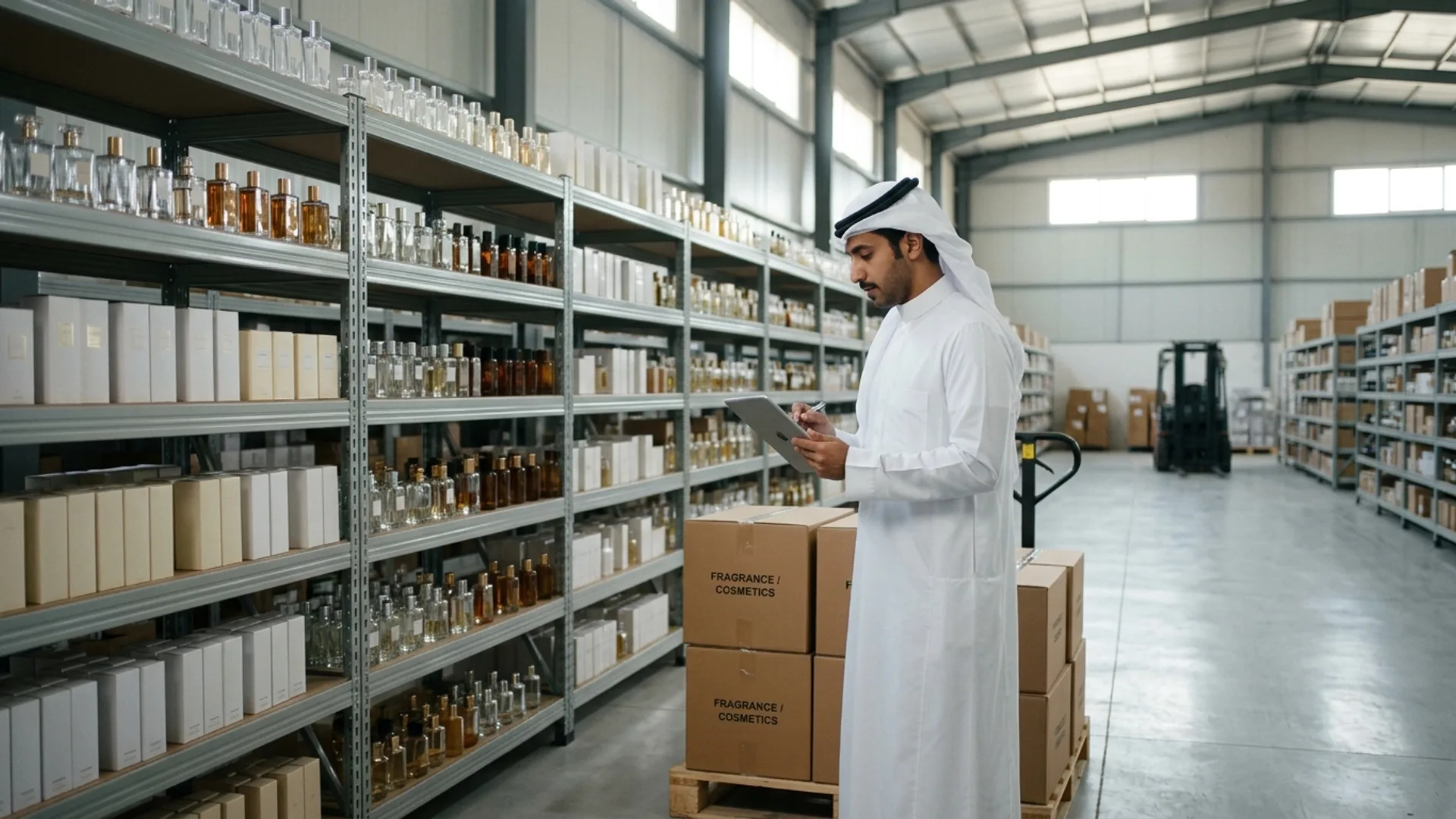
To import and trade cosmetics or perfumes in Saudi Arabia you need a commercial registration with the cosmetics activity, an SFDA GHAD account, a listing for every product before import (valid 5 years) and an SFDA-licensed warehouse. For 100% foreign ownership of a trading company, MISA requires SAR 30 million in capital and a presence in at least 3 markets. A Saudi partner holding 25% brings the capital floor to SAR 26,666,667, which is why most foreign beauty brands enter the Kingdom through a partnership, a distributor agreement or a GCC-owned entity rather than a wholly owned subsidiary.
The foreign-ownership rule for trading, as MISA publishes it in 2026
Cosmetics and perfume trading is a commercial (wholesale and retail) activity, and commercial activities are one of the special categories in the Ministry of Investment’s registration rules. We re-read the MISA Investor Guide, 13th edition (March 2026) on 20 October 2026. Section 5.1.1 sets two routes for a trading company with foreign shareholders:
- 100% foreign commercial activity: minimum capital SAR 30,000,000 and a presence in at least 3 regional or global markets.
- Commercial activity with a Saudi partner: minimum capital SAR 26,666,667 with at least 25% Saudi participation.
Section 5.1.3 adds obligations for the 100% foreign route during the first five years: train 30% of Saudi employees every year, meet the localisation rates set by the Ministry of Human Resources and Social Development with a plan to place Saudis in senior posts, and commit to one of two investment options. Option 1 is an investment of at least SAR 300 million over five years, including the SAR 30 million cash capital. Option 2 is at least SAR 200 million over the same period plus one further standard, such as manufacturing 30% or more of the locally distributed products in the Kingdom or spending 5% or more of sales on research and development in Saudi Arabia.
For most beauty importers these thresholds point to the partner route, a distribution agreement with a licensed Saudi importer, or a structure with Gulf shareholders, which MISA assesses differently. Confirm the treatment of your exact shareholding with MISA before you fix the capital. Under the Investment Law in force since February 2025, foreign investors register with MISA (the former investment licence is now an investment registration), MISA notifies the registration within 10 working days of a complete file, an annual update replaces renewal, and the registration fee is set by the ministry upon approval. Our MISA registration guide covers the documents and the annual update, and our guide to adding a Saudi or foreign partner explains how shareholdings are recorded.
What counts as a cosmetic product under Saudi law
The Cosmetic Products Law was issued by Royal Decree M/49 and is administered by the Saudi Food and Drug Authority (SFDA). Its implementing regulation defines a cosmetic product as any substance or mixture prepared for external use on the skin, hair, nails, lips, teeth or the external parts of the body to clean, perfume, protect, keep in good condition, change appearance or correct body odour. Perfumes, eau de toilette, oud oils, skincare, haircare, make-up, deodorants and oral-care products that make no medical claim all fall inside this definition.
Two points matter for a trader. First, the law defines “trading” widely: import, export, storage, transport, possession, marketing, distribution, supply for sale, sale and even free distribution. A warehouse that stores unlisted stock is trading it. Second, a claim can take a product out of the cosmetics lane. A cream that promises to treat a skin condition, or a serum described as “medical”, may be classified as a pharmaceutical or a medical device, with a different registration path and a different licence. SFDA publishes a product classification guide, and the technical regulation on cosmetic claims (SFDA.CO/GSO 2528) sets what may be said on packs and in advertising. Decide the regulatory lane for each product line before you sign a distribution contract.
The authorities you will deal with
A cosmetics and perfume trading company in Saudi Arabia touches more regulators than a service business. The Ministry of Investment (MISA) handles investment registration for foreign shareholders. The Ministry of Commerce issues the trade name and the commercial registration (CR). SFDA runs product listing, warehouse licensing and the release of shipments through its unified platform GHAD. The Zakat, Tax and Customs Authority (ZATCA) collects customs duty and 15% import VAT and processes the customs declaration through Fasah. The municipality licenses the shop or warehouse on Balady, and Civil Defense issues the safety licence through Salamah. The Chamber of Commerce attests documents, and the Ministry of Human Resources and Social Development, Qiwa and GOSI come in once you hire.
Since the new Commercial Register Law came into force on 3 April 2025, a company holds one national CR with no expiry date and confirms its data every 12 months (see the Ministry of Commerce announcement). Missing the confirmation suspends the CR after 90 days, and a suspended CR blocks GHAD, Fasah and Balady alike. Put the confirmation date in the compliance calendar on day one.
Approvals in order: the sequence that works
Each approval below is a precondition for the next one. Starting out of order is the main reason a beauty importer loses two to three months.
- MISA investment registration (foreign shareholders). Decide the ownership route first, because the capital and the partner percentage shape every later filing. MISA notifies the registration within 10 working days of a complete file.
- Trade name and commercial registration with the Ministry of Commerce. The CR must carry a cosmetics activity from SFDA’s list of economic activities. In SFDA’s August 2026 ISIC4 activity list, code 461042 covers establishments that import, store and sell beauty products wholesale, and code 521024 covers a cosmetics warehouse. Add the retail activity if you will sell to consumers. Our ISIC activity code guide explains how activities are chosen and amended.
- Post-CR registrations: Chamber of Commerce membership (no subscription for the first 3 years after CR registration), national address, Qiwa and GOSI files, and ZATCA registration. VAT registration is mandatory once taxable supplies pass SAR 375,000 in 12 months, and a trading company reaches that quickly.
- Premises: a lease or title deed for the warehouse or shop, the municipal licence on Balady (valid 1 to 5 years, fee calculated by the system) and the Civil Defense licence through Salamah.
- SFDA account on GHAD. SFDA’s notification guidance (version 4, May 2024) lists the account documents: a CR with a cosmetics ISIC4 activity, a copy of the MISA registration for foreign and mixed companies, and a notarised Chamber of Commerce authorisation for the person who files on GHAD.
- SFDA warehouse licence. A licensed warehouse is required before import, and the warehouse licence itself requires the municipal and Civil Defense licences from step 4.
- Product listing on GHAD for every product, size and variant, with the manufacturer’s notarised authorisation letter.
- Import and clearance. The shipment is released through Fasah with the SFDA file attached.
- Marketing. Advertising starts after the product is listed, in Arabic, under the SFDA advertising controls.
SFDA product listing on GHAD: what you submit
Article 6 of the law is the rule everything else hangs on: a cosmetic product may not be imported or traded in the Kingdom until it is listed with SFDA. Listing moved from the old eCosma system to the unified electronic system GHAD in 2024. The listing certificate is valid for 5 years from issue, and the regulation gives SFDA 15 days from a complete application to decide and issue it. In practice, SFDA’s current guidance describes listing as processed directly on submission, with the notifier taking responsibility for the accuracy of the data and the safety of the product, backed by post-market sampling and testing.
For each product the notifier uploads:
- A notarised authorisation letter from the manufacturer or the entity you import from (or a contract-manufacturing agreement for local production). The letter must show the name, address and CR number of both parties, sit on the authorising company’s letterhead, be stamped, signed by a responsible person and notarised.
- Clear artwork of the internal and external labels and any leaflet, plus a product picture suitable for publication on SFDA’s website.
- The full ingredient list with concentrations and the role of each ingredient, by INCI name. If an ingredient is missing from the GHAD database, you ask SFDA’s call centre on 19999 to add it, with its INCI name, role and CAS number.
- Core data: brand, product type, physical form, HS code, volumes and a unique barcode for every size, colour or variation.
Labels must meet the Saudi and Gulf safety requirements for cosmetics (SFDA.CO/GSO 1943): product and trade name, manufacturer and address, expiry, warnings, function and directions, ingredient list, production date or batch number, net content, country of origin and storage instructions, with the data SFDA specifies in Arabic. The label may not state that the product is listed with SFDA. Kits are listed as kits with their own barcode. The marketing notification you download afterwards exists to ease commercial transactions; SFDA states that it is not proof of approval and may not be used in advertising.
Renewal is applied for at least 90 days before the listing expires. Changing the product picture, volume, barcode, storage conditions or precautions is an update of the existing listing. Changing the brand name, product name, manufacturer, purpose of use or any ingredient or concentration requires a new listing and deactivation of the old one.
The SFDA cosmetics warehouse licence
The regulation defines a warehouse as a place licensed by SFDA for storing, distributing and trading cosmetic products, so stock cannot sit in an ordinary leased unit. Article 19 requires a licence application with the documents SFDA specifies and compliance with its technical conditions, and Article 20 fixes the licence term at 5 years, renewable, with the renewal filed at least 90 days before expiry. The renewed term runs from the expiry of the previous licence, so applying early costs nothing.
SFDA offers two forms on GHAD. The full cosmetic warehouse licence is for your own premises and is filed under Licensing Services, Create New License, Cosmetic Facility License, activity “Warehouse”. The cosmetic space warehouse licence is for third-party storage, where you rent space inside an already licensed warehouse. SFDA’s service page for the space licence, last updated 4 October 2026, lists the conditions and documents: a CR that includes the activity from SFDA’s list, a lease agreement or title deed, the commercial municipal licence and the Civil Defense licence. The published service time is 2 days and the service cost is SAR 800. The fee for the full warehouse licence is shown on GHAD when you file; confirm it there, and expect an inspection against good storage and distribution practice, because a warehouse that fails that standard is closed until it corrects the finding.
Many importers start with a space licence inside a licensed third-party warehouse, list their first products, and move to a full licence once volumes justify a dedicated site. The space route also lets a distributor begin clearing shipments while its own warehouse completes the municipal and Civil Defense steps.
Importing: the clearance file and customs
SFDA’s published import requirements for cosmetics list the file that accompanies a shipment:
- The commercial registration from the Ministry of Commerce showing the activity (trade in perfumes and cosmetics).
- A copy of the SFDA cosmetics warehouse licence.
- A certificate of conformity attested by an SFDA-accepted body in the country of export.
- The purchase invoice issued by the manufacturer.
- The certificate of origin attested by the Chamber of Commerce in the country of manufacture.
- A copy of the commercial agency registration from the Ministry of Commerce, or an original letter from the manufacturer authorising the importer to import and distribute its products in the Kingdom.
- A copy of the bill of lading, and the product listing (now on GHAD).
If a conformity certificate is not provided, SFDA’s clearance staff may draw samples from the shipment and test them against Gulf standard GSO 1943 in SFDA laboratories, at the importer’s cost. Each clearance request is submitted electronically, and the customs declaration runs in parallel through ZATCA’s Fasah platform. Customs duty depends on the HS code of the goods (perfumes and cosmetics sit in chapter 33 of the tariff), and 15% VAT is charged on the duty-inclusive value at import; confirm the duty rate for your codes on the ZATCA tariff before you price the first order. Our import licence and Fasah clearance guide walks through the broker, the importer code and the declaration.
Costs and timelines in 2026
The table collects the official figures and service times that are published today. Government fees that are calculated case by case are marked as such; never budget from a forum number.
| Item | Authority | Fee (SAR) | Time or validity |
|---|---|---|---|
| Investment registration (foreign shareholders) | MISA | Set by the ministry upon approval | Notified within 10 working days of a complete file; annual update |
| Trade name reservation | Ministry of Commerce | 200 (Arabic) or 500 (English) | Reservation held for the statutory period |
| Commercial registration, LLC | Ministry of Commerce | 1,200 + 500 publication + 15% VAT | No expiry; data confirmation every 12 months (1,200 for an LLC) |
| Chamber of Commerce | Chamber | 0 for the first 3 years, then 200 to 5,000 a year by class | Annual |
| Cosmetic space warehouse licence | SFDA (GHAD) | 800 | 2 days (service page, 4 October 2026) |
| Cosmetic warehouse licence (own premises) | SFDA (GHAD) | Shown on GHAD at filing | 5 years; renew 90 days before expiry |
| Product listing | SFDA (GHAD) | Shown on GHAD per product | Decision within 15 days of a complete file; valid 5 years |
| Municipal licence (shop or warehouse) | Balady | Calculated by Balady for the site and term | 1 to 5 years |
| Civil Defense licence | Civil Defense (Salamah) | Calculated by the system | Per the licence issued |
| Minimum capital, 100% foreign trading | MISA | 30,000,000 | Plus presence in 3 markets and five-year obligations |
| Minimum capital, trading with a 25% Saudi partner | MISA | 26,666,667 | Per Investor Guide 13th edition |
On timing, a foreign-owned beauty importer that starts with the ownership decision, files MISA and the CR in the first weeks, signs the warehouse lease early and runs the Balady, Civil Defense and GHAD account steps in parallel usually has its first products listed and its first shipment cleared within one quarter. The long poles are the notarised manufacturer letters from abroad and the Civil Defense visit, not the SFDA systems themselves.
Advertising, selling and the penalty schedule
Article 21 of the regulation sets the advertising controls. A cosmetic product may not be advertised or promoted before it is listed. Advertising must be in Arabic (other languages may be added if they match the Arabic), must be accurate and provable, may not carry claims that contradict the technical regulations, may not use the SFDA name or logo or that of any other regulator, must show the product image and data exactly as listed, and may not disparage other products. Advertising aimed at children may not contain aggressive, violent or dangerous scenes. If SFDA cancels, bans, withdraws or suspends a product, all promotion of it stops. Online sellers add the e-commerce rules on top; see our e-commerce licence and Maroof guide.
SFDA re-published the Violations Schedule of the Cosmetic Products Law in September 2026. Penalties are set by role in the supply chain, and a warehouse or retailer that cannot prove where it bought the stock is fined as if it were the importer. The headline figures from the schedule (English translation; the Arabic original prevails):
- Trading an unlisted product: SAR 30,000 for the lister or importer, SAR 15,000 for a distribution warehouse, SAR 1,000 for a retail outlet.
- Advertising or promoting an unlisted product: from SAR 50,000 for the lister or importer, from SAR 25,000 for a warehouse, from SAR 3,000 for a retailer.
- Trading a product that contains a prohibited substance, an expired product, or a product SFDA has banned, withdrawn or recalled: SAR 50,000 for the lister or importer.
- Not documenting wholesale sales: SAR 30,000 for the lister or importer and SAR 15,000 for a warehouse.
- Submitting incorrect information in a listing: from SAR 10,000; failing to withdraw or recall within the period SFDA sets: SAR 35,000.
- A warehouse that does not apply good storage and distribution practice is closed until the finding is corrected.
The lister also carries continuing duties: keep a product information file (SFDA.CO 6000:2020) and produce it on request, report any harm, manufacturing error or recall in any country as soon as it is known, document every wholesale sale, report misuse and provide test results on request. Build the file for each product at listing, not when an inspector asks.
Common mistakes to avoid
- Planning a 100% foreign trading company on a small capital. The SAR 30 million threshold and the five-year obligations are published by MISA; check the partner and distributor routes before you commit.
- Ordering stock before the warehouse licence. The import file requires a copy of the SFDA warehouse licence, and the licence requires the municipal and Civil Defense licences. A shipment that arrives first waits at port.
- Listing the product under the wrong lane. A medical claim turns a cosmetic into a pharmaceutical or a medical device. Fix claims and classification before you print packaging.
- One barcode for several variants. Every size, colour and variation needs its own barcode and listing entry.
- A weak manufacturer letter. Missing CR numbers, no letterhead, no stamp or no notarisation sends the listing back.
- Advertising in English only, or before listing. Arabic is mandatory and promotion before listing is a separate violation with its own fine.
- Buying from an unknown source without documents. A warehouse or shop that cannot prove its supplier is fined as the importer.
- Letting the listing or the warehouse licence lapse. Both run 5 years and both need a renewal filed 90 days before expiry; an expired listing means re-listing before any further import.
- Forgetting the annual CR confirmation. The CR has no expiry date, but a missed 12-month confirmation suspends it after 90 days and freezes every government portal.
How Noble Core helps you set up a cosmetics or perfume trading company in Saudi Arabia
Noble Core works with founders and foreign brands on the full route: the ownership structure and MISA investment registration, the trade name and commercial registration with the right cosmetics and warehouse activities, the Chamber, Qiwa, GOSI and ZATCA files, the municipal and Civil Defense licences for your premises, and the SFDA GHAD account, warehouse licence and first product listings. We prepare the manufacturer authorisation letters in the format SFDA accepts and coordinate the clearance file with your customs broker. We complete the procedures on your behalf, so you can concentrate on brands, pricing and retail partners. Read our company formation in Saudi Arabia guide for the entity options and the general cost picture.
Tell us the brands you plan to import, whether you will sell wholesale, retail or online, and your preferred ownership structure, and our team will map the approvals, the capital and the document list for your case. Talk to a Noble Core consultant on WhatsApp.
Need help setting up in Saudi Arabia? Noble Core handles your MISA licence, commercial registration, and visas end-to-end, done right the first time.
Frequently Asked Questions
Can a foreign company own 100% of a cosmetics trading company in Saudi Arabia?
Yes, but trading is a special category. The MISA Investor Guide (13th edition, March 2026) requires SAR 30 million in capital and a presence in at least 3 regional or global markets for a 100% foreign commercial activity, plus five-year obligations on training, localisation and investment. With a Saudi partner holding 25%, the minimum capital is SAR 26,666,667.
Do I need SFDA approval before importing perfumes into Saudi Arabia?
Yes. Article 6 of the Cosmetic Products Law prohibits importing or trading a cosmetic product until it is listed with SFDA on the GHAD platform. Perfumes are cosmetics under the law’s definition. You also need an SFDA-licensed cosmetics warehouse, because a copy of the warehouse licence is part of the import file checked at clearance.
How long is an SFDA cosmetic product listing valid?
The listing certificate is valid for 5 years from the date of issue. Renewal must be applied for at least 90 days before expiry, and the renewed period runs from the expiry of the previous certificate. If a listing lapses without renewal, the product must be re-listed before it can be imported or traded again.
What does the SFDA cosmetics warehouse licence cost and how long does it take?
The cosmetic space warehouse licence, for storage inside an already licensed third-party warehouse, is published at SAR 800 with a 2-day service time on SFDA’s service page updated 4 October 2026. The full warehouse licence for your own premises is valid 5 years; its fee is shown on GHAD when you file, and it requires the municipal and Civil Defense licences first.
Which documents are required to import cosmetics into Saudi Arabia?
SFDA lists a commercial registration showing the perfume and cosmetics trading activity, a copy of the SFDA warehouse licence, a conformity certificate attested by an SFDA-accepted body in the country of export, the manufacturer’s invoice, a chamber-attested certificate of origin, the commercial agency registration or a manufacturer authorisation letter, the bill of lading and the product listing.
Which ISIC activity should my commercial registration carry for cosmetics trading?
SFDA’s August 2026 list of economic activities includes code 461042 for establishments that import, store and sell beauty products wholesale and code 521024 for a cosmetics warehouse. Add a retail activity if you will sell to consumers. SFDA’s import requirements describe the CR activity as trade in perfumes and cosmetics, so the wording on your CR should match.
What are the penalties for selling unlisted cosmetics in Saudi Arabia?
Under the Violations Schedule SFDA re-published in September 2026, trading an unlisted product costs SAR 30,000 for the importer or lister, SAR 15,000 for a distribution warehouse and SAR 1,000 for a retail outlet. Advertising an unlisted product starts at SAR 50,000 for the importer. A warehouse or shop that cannot prove its supplier is fined as if it were the importer.
Can I advertise my perfume brand in English in Saudi Arabia?
Advertising must be in Arabic; other languages may be added provided they conform to the Arabic content. Promotion may start only after the product is listed with SFDA, claims must be accurate and provable, the SFDA name or logo may not appear, and the product image and data must match the listing. Advertising a product SFDA has suspended or recalled is prohibited.