Business Setup in Dammam (2026): Eastern Province Guide
Business setup in Dammam means launching in Saudi Arabia’s industrial heartland — the Eastern Province, which holds the Kingdom’s largest oil and gas reserves and roughly 23% of its factories. As a foreign investor you can own 100% of your company through a Ministry of Investment (MISA) licence, usually issued in 3 to 10 business days, and in 2026 MISA’s licence issuance and renewal fees remain suspended — a saving on the previous SAR 12,000 first-year fee.
This guide explains why founders choose Dammam and the Eastern Province, the exact setup process, the leading sectors, the real costs in Saudi riyals, and the role of the Asharqia Chamber — so you can plan your entry into the Gulf’s busiest industrial corridor with confidence.
Why set up a business in Dammam and the Eastern Province?
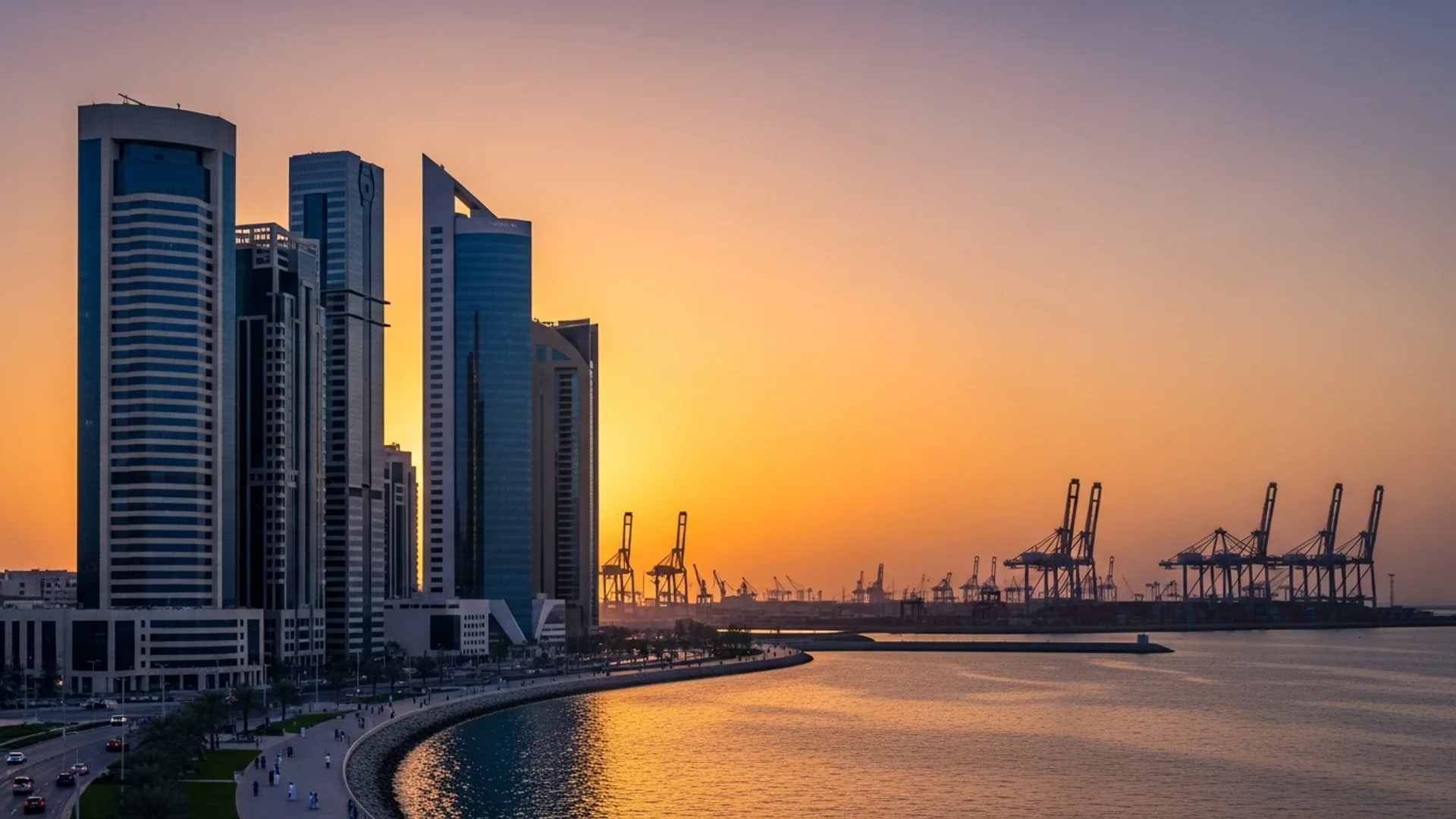
Dammam is the capital of the Eastern Province and the third-largest urban area in Saudi Arabia, forming a metropolitan cluster with Dhahran and Al Khobar. The Eastern Province is the economic powerhouse of the Kingdom: it contains the majority of Saudi Arabia’s proven oil and gas reserves, including Ghawar — the world’s largest conventional oil field — and is home to Saudi Aramco, headquartered in nearby Dhahran.
For a founder, the appeal is concentration and access. The region combines energy, petrochemicals, heavy manufacturing, ports and logistics within a short drive, and sits directly on the Arabian Gulf opposite Bahrain, connected by the King Fahd Causeway. That makes Dammam a natural base for businesses serving Aramco and the wider GCC supply chain.
- Energy and petrochemicals heartland — Saudi Aramco and a dense cluster of suppliers, contractors and service firms.
- King Abdulaziz Port — the largest port in the Arabian Gulf and one of Saudi Arabia’s busiest, ideal for import/export and distribution.
- Industrial cities nearby — Jubail Industrial City (one of the world’s largest) and the Dhahran Techno Valley innovation cluster.
- GCC proximity — quick access to Bahrain via the causeway and to Gulf markets by sea, road and air (King Fahd International Airport).
- Vision 2030 diversification — growth in logistics, advanced manufacturing, technology and tourism alongside the traditional energy base.
There is also a deep, ready-made customer base. With Saudi Aramco, SABIC affiliates, large EPC contractors and thousands of factories operating in and around Dammam, a new service business can find demand close to home without first building a national footprint. The cluster effect cuts logistics cost and shortens sales cycles — a maintenance, inspection or engineering firm can serve dozens of industrial clients within a 60-kilometre radius. For founders weighing where in the Kingdom to land first, that concentration of industrial buyers is the single strongest reason to choose the Eastern Province over a purely commercial market.
The region is also unusually well connected for both people and goods. King Fahd International Airport — one of the largest airports in the world by land area — sits between Dammam and Al Khobar, while the Saudi rail network links the Eastern Province to Riyadh and the dry ports inland. For a business that imports components, assembles or distributes them, and exports finished goods through King Abdulaziz Port, the full supply chain can sit within a single metropolitan area.
Can a foreigner own 100% of a company in Dammam?
Yes. In most activities, a foreign investor can own 100% of a company in Dammam through a MISA investment licence — there is no requirement for a Saudi partner or sponsor. A small number of activities remain restricted or reserved, so confirm your specific activity against the MISA negative list before you commit. The same national framework applies across the Kingdom, so ownership rules in the Eastern Province match those in Riyadh or Jeddah. You can review activity eligibility on the Ministry of Investment portal at misa.gov.sa.
Full foreign ownership is one of the most significant Vision 2030 reforms for investors. In practice it means a foreign parent company can hold its Dammam entity directly, control its board, repatriate profits and make commercial decisions without a local equity partner. This is particularly valuable for oilfield-services and industrial firms, where intellectual property, safety standards and global account relationships make shared ownership impractical. Where an activity does carry a restriction — certain trading, security-related or strategic activities — there may be a minimum Saudi-ownership element or a higher capital requirement, which is why confirming your exact activity code early prevents a restructuring later.
Capital requirements vary by activity rather than by city. Many service and professional activities have no fixed statutory minimum, while regulated activities such as trading, contracting or financial services carry specific thresholds. MISA confirms the applicable figure when you select your activities, so treat any single “minimum capital” number you read online with caution and verify it for your own scope.
The two licences you need: MISA licence + Commercial Registration
Every foreign-owned setup in Dammam rests on two core documents, obtained in sequence:
- MISA investment licence — issued by the Ministry of Investment of Saudi Arabia. This grants a non-Saudi investor the legal right to do business in the Kingdom and is the mandatory first step.
- Commercial Registration (CR / السجل التجاري) — issued by the Ministry of Commerce through the Saudi Business Center. The CR is your company’s official identity on the national registry and is required to open a bank account, sign contracts, hire staff and bid for local tenders.
Under the new Commercial Register Law that took effect on 3 April 2026, the CR became a unified national registration: each company has a single CR (its ID now starts with “7”), there is no expiry — an annual confirmation replaces renewal — and English trade names are permitted alongside Arabic. Once the CR is live, a Dammam business activates its membership with the Asharqia Chamber.
The sequence matters. You cannot register the CR before the MISA licence is granted, and you cannot open a corporate bank account, sign binding contracts or sponsor work visas before the CR exists. Founders who try to run these steps in parallel often hit a wall at the bank, which requires the CR, the Articles of Association and authorised-signatory documents before onboarding. Planning the order — attestation, MISA, CR, chamber, then banking and post-licence registrations — keeps the project moving and avoids paying for office space or staff before the entity can legally engage them.
Step-by-step: how to set up a business in Dammam
1. Choose your legal structure
Most foreign investors set up a Limited Liability Company (LLC). Other options include a branch of a foreign company, a joint-stock company, or a Regional Headquarters (RHQ). For energy-services and industrial firms targeting Aramco contracts, the LLC or branch is the usual route.
2. Prepare and attest your documents
Foreign corporate documents — the parent company’s commercial registration, articles of association, board resolutions and passport copies — must be notarised in the country of origin, legalised by the Saudi embassy, and translated into Arabic by an approved translator inside Saudi Arabia. This is usually the slowest step, so start it first.
3. Apply for the MISA licence
Submit your application through the MISA portal with the attested documents and chosen activities. With complete paperwork, the licence is typically issued in 3 to 10 business days.
4. Reserve your name and register the CR
Reserve a trade name and complete the Commercial Registration with the Ministry of Commerce via the Saudi Business Center. Draft and notarise the Articles of Association to finalise the entity. You can start CR services at the Saudi Business Center portal, business.sa.
5. Join the Asharqia Chamber and complete post-licence registrations
Activate Asharqia Chamber membership, then register with ZATCA, GOSI, Qiwa and Muqeem (covered below) so you can invoice, hire and operate legally. A premises-based activity will also need a municipal (Baladi) licence and a national Wasel address.
Key sectors for business in the Eastern Province
The Eastern Province economy is anchored by energy but is broadening fast under Vision 2030. The most active sectors for new foreign businesses include:
| Sector | Why Dammam / Eastern Province | Typical business types |
|---|---|---|
| Energy & oilfield services | Saudi Aramco HQ in Dhahran; largest oil & gas reserves in the Kingdom | Drilling support, inspection, EPC, equipment supply, maintenance |
| Petrochemicals & manufacturing | Jubail Industrial City nearby; ~23% of Saudi factories in the region | Plastics, steel, chemicals, industrial fabrication |
| Logistics & distribution | King Abdulaziz Port — largest in the Arabian Gulf — plus rail and airport | Freight forwarding, warehousing, customs clearance, 3PL |
| Technology & innovation | Dhahran Techno Valley incubator; KFUPM talent pipeline | Industrial tech, IoT, software, engineering services |
| Trade with the GCC | King Fahd Causeway to Bahrain; sea routes across the Gulf | Import/export, trading, agency and distribution |
Energy and oilfield services remain the gravitational centre. With Saudi Aramco headquartered in Dhahran and the largest reserves in the Kingdom on the doorstep, the Eastern Province hosts an unmatched concentration of drilling, inspection, valves, instrumentation, turnaround and maintenance providers. Many global energy-services brands operate their Saudi base here precisely because of proximity to the operator. A new entrant that can pre-qualify with Aramco and the major EPC contractors gains access to a sustained pipeline of work.
Petrochemicals and manufacturing are the second pillar. Jubail Industrial City — one of the largest industrial cities in the world — anchors a downstream cluster in plastics, chemicals, steel and fabrication, and the region accounts for roughly 23% of the Kingdom’s factories. Vision 2030’s localisation drive is pushing more component and equipment manufacturing into the area, opening opportunities for foreign manufacturers and joint ventures.
Logistics and distribution benefit from King Abdulaziz Port — the largest port in the Arabian Gulf — together with rail links to the interior and King Fahd International Airport. Freight forwarders, customs brokers, bonded-warehouse operators and third-party logistics firms find strong demand serving both the industrial base and the wider GCC. Technology and innovation are growing around the Dhahran Techno Valley incubator and the engineering talent from King Fahd University of Petroleum and Minerals, especially in industrial software, IoT, automation and digital field services.
Cost of business setup in Dammam (2026)
Setup cost in Dammam follows the national framework — there is no Eastern-Province premium on government licensing. The headline change for 2026 is that MISA’s licence issuance and renewal fees are suspended, removing what was previously a SAR 12,000 first-year cost. The table below shows the typical components for a standard LLC.
| Cost component | Typical amount (SAR) | Notes |
|---|---|---|
| MISA investment licence | Fee suspended in 2026 | Issuance & renewal fees suspended (previously SAR 12,000 first year / SAR 62,000 renewal) |
| Commercial Registration (CR) | 1,200 – 2,000 | Via Ministry of Commerce / Saudi Business Center; no expiry under the 2026 law |
| Asharqia Chamber membership | 2,000 – 3,000 / year | Eastern Province Chamber subscription — confirm tier on the chamber portal |
| Municipality (Baladi) licence | Varies by activity & city | Required for premises-based activities in Dammam, Dhahran or Al Khobar |
| Office / registered address | Varies | A national (Wasel) address is required |
| Document attestation & translation | Varies | Notarisation, Saudi embassy legalisation, certified Arabic translation |
| Government & service support (Noble Core) | from 36,999 | Transparent end-to-end package |
Government fees are indicative for 2026 and can change — always confirm current figures on the official MISA, Saudi Business Center and Asharqia Chamber portals, or ask our team for a live quote.
Beyond the line items above, two factors drive the total budget in Dammam: how many work visas you need, and what kind of premises your activity requires. Each work visa carries government and labour-file costs through Qiwa and Muqeem, and an industrial activity needing a factory unit in or near Jubail will cost far more in premises than a small office in Al Khobar. The MISA and CR fees are fixed nationally; the variable spend is almost entirely visas, premises and sector approvals — so build your quote around headcount and footprint rather than the licence alone.
It is also worth budgeting for the things that do not appear on a government fee schedule: certified Arabic translation of every foreign document, Saudi embassy legalisation in your home country, and professional fees for drafting the Articles of Association. These are modest individually but add up, and rushing them is the most common cause of a stalled application. A realistic 2026 plan treats the suspended MISA fee as a genuine saving while still provisioning for chamber membership, premises, visas and compliance set-up from day one.
The Asharqia Chamber: your local chamber in Dammam
The Asharqia Chamber (the Eastern Province Chamber of Commerce and Industry) is the regional chamber every Dammam company joins after receiving its CR. Established in 1952, it is headquartered on the Dammam–Al Khobar highway in the Al Hussam district and operates branches in Jubail, Khafji and Qatif. Chamber membership is not just a formality — it is what lets you authenticate commercial documents, certify certificates of origin for industrial exports, and participate in local tenders.
The chamber also runs an SME Development Center, a Training Center, an Investment Center and a Businesswomen Center, making it a practical first contact for founders building a network in the Eastern Province. You can review national chamber services through the Ministry of Commerce ecosystem at mc.gov.sa.
Post-licence registrations every Dammam company needs
- Asharqia Chamber — membership and authorised-signatory registration.
- ZATCA (Zakat, Tax and Customs Authority) — Zakat/corporate tax, VAT and e-invoicing (Fatoora).
- GOSI (General Organization for Social Insurance) — employee social insurance.
- Qiwa & Muqeem — labour files, work visas and resident (Iqama) management.
- Saudization (Nitaqat) — meeting the Saudi-national hiring ratio for your sector and company size.
- Corporate bank account — opened once the CR and signatory documents are in place.
Industrial and energy firms should also plan for sector-specific approvals — for example, factory licensing through the Ministry of Industry and Mineral Resources, or contractor pre-qualification for Aramco and large EPC clients.
How long does business setup in Dammam take?
For a straightforward LLC with complete, pre-attested documents, the MISA licence is usually issued within 3 to 10 business days. The CR and post-licence registrations add a few more days to a few weeks, depending on activity, Asharqia Chamber activation, bank onboarding and visa needs. As elsewhere in the Kingdom, document attestation in your home country is the variable that most often extends the overall timeline — prepare it before anything else.
A realistic end-to-end estimate for a well-prepared LLC is two to six weeks from a complete document pack to a fully operational entity with a live bank account. Energy and industrial setups can take longer where sector approvals, factory licensing or Aramco pre-qualification are involved, and bank onboarding timelines vary by institution. The single most effective way to compress the schedule is to have every foreign document notarised, legalised and translated before you file the MISA application, so the licence, CR and chamber steps can follow without pauses.
Common mistakes to avoid
- Leaving attestation to the end — embassy legalisation and certified Arabic translation are the slowest steps; start them first.
- Picking an activity without checking eligibility — confirm your activity against the MISA list before applying, especially for restricted or capital-heavy sectors.
- Forgetting Asharqia Chamber activation — without chamber membership you cannot authenticate documents, certify origin or bid for many local tenders.
- Underestimating Saudization (Nitaqat) — plan your Saudi-national hiring ratio from day one rather than after recruitment begins.
- Ignoring ZATCA e-invoicing — Fatoora compliance is mandatory; set it up as soon as the CR is live.
- Assuming Dammam costs differ from Riyadh — government licensing is national; the difference is in premises, sector approvals and logistics, not the MISA/CR fees.
How Noble Core helps you set up in Dammam
Noble Core manages the full Eastern Province setup end-to-end — MISA licence, document attestation and translation, Commercial Registration, Asharqia Chamber membership, post-licence registrations, visas and bank-account support. For a deeper walkthrough of the national process, see our pillar guides on company formation in Saudi Arabia and the MISA licence in Saudi Arabia. Whether you are an oilfield-services contractor, a manufacturer eyeing Jubail, or a logistics firm building around King Abdulaziz Port, our team handles the paperwork so you can focus on the market.
Need help setting up in Saudi Arabia? Noble Core handles your MISA licence, commercial registration, and visas end-to-end — done right the first time.
Frequently Asked Questions
Can a foreigner do business setup in Dammam with 100% ownership?
Yes. In most activities a foreign investor can own 100% of a company in Dammam through a MISA investment licence, with no Saudi partner or sponsor required. The national ownership framework applies across the Eastern Province. A few restricted activities are the exception, so check the MISA negative list for your specific activity first.
How much does business setup in Dammam cost in 2026?
MISA licence issuance and renewal fees are suspended in 2026. Beyond that, budget roughly SAR 1,200–2,000 for the Commercial Registration, SAR 2,000–3,000 per year for Asharqia Chamber membership, plus municipality, office, attestation and translation costs. Noble Core offers a transparent end-to-end package from SAR 36,999. Confirm current government figures on the official portals.
How long does it take to set up a company in Dammam?
With complete, properly attested documents the MISA licence is typically issued within 3 to 10 business days. The Commercial Registration, Asharqia Chamber activation and post-licence registrations add a few more days to a few weeks. Home-country document attestation is usually the step that most affects the overall timeline.
What is the Asharqia Chamber and do I need to join it?
The Asharqia Chamber is the Eastern Province Chamber of Commerce and Industry, headquartered in Dammam since 1952 with branches in Jubail, Khafji and Qatif. Every Dammam company joins it after receiving its CR. Membership lets you authenticate commercial documents, certify certificates of origin for exports, and take part in local tenders.
Which sectors are best for business in the Eastern Province?
The strongest sectors are energy and oilfield services (around Saudi Aramco in Dhahran), petrochemicals and manufacturing (near Jubail Industrial City), logistics and distribution (via King Abdulaziz Port, the largest in the Arabian Gulf), technology and innovation (Dhahran Techno Valley), and GCC trade enabled by the King Fahd Causeway to Bahrain.
Is business setup in Dammam different from Riyadh or Jeddah?
The licensing framework is national, so MISA licence and Commercial Registration rules and fees are the same across the Kingdom. The differences in Dammam are practical: you join the Asharqia Chamber rather than a different regional chamber, and the location favours energy, industrial, port-logistics and GCC-trade businesses.
Do I need a physical office to set up in Dammam?
You need a registered national (Wasel) address, and premises-based activities require a municipal (Baladi) licence in Dammam, Dhahran or Al Khobar. Industrial activities may also need factory licensing through the Ministry of Industry and Mineral Resources. The exact requirement depends on your activity, so confirm it during the MISA application stage.
Which authorities must a Dammam company register with after the CR?
After the Commercial Registration you register with the Asharqia Chamber, ZATCA (Zakat/tax, VAT and e-invoicing), GOSI (social insurance), and Qiwa and Muqeem for labour files, work visas and Iqama management. You must also meet your sector’s Saudization (Nitaqat) hiring ratio and arrange a corporate bank account.