
Tourism & Hospitality Investment in Saudi Arabia (2026)
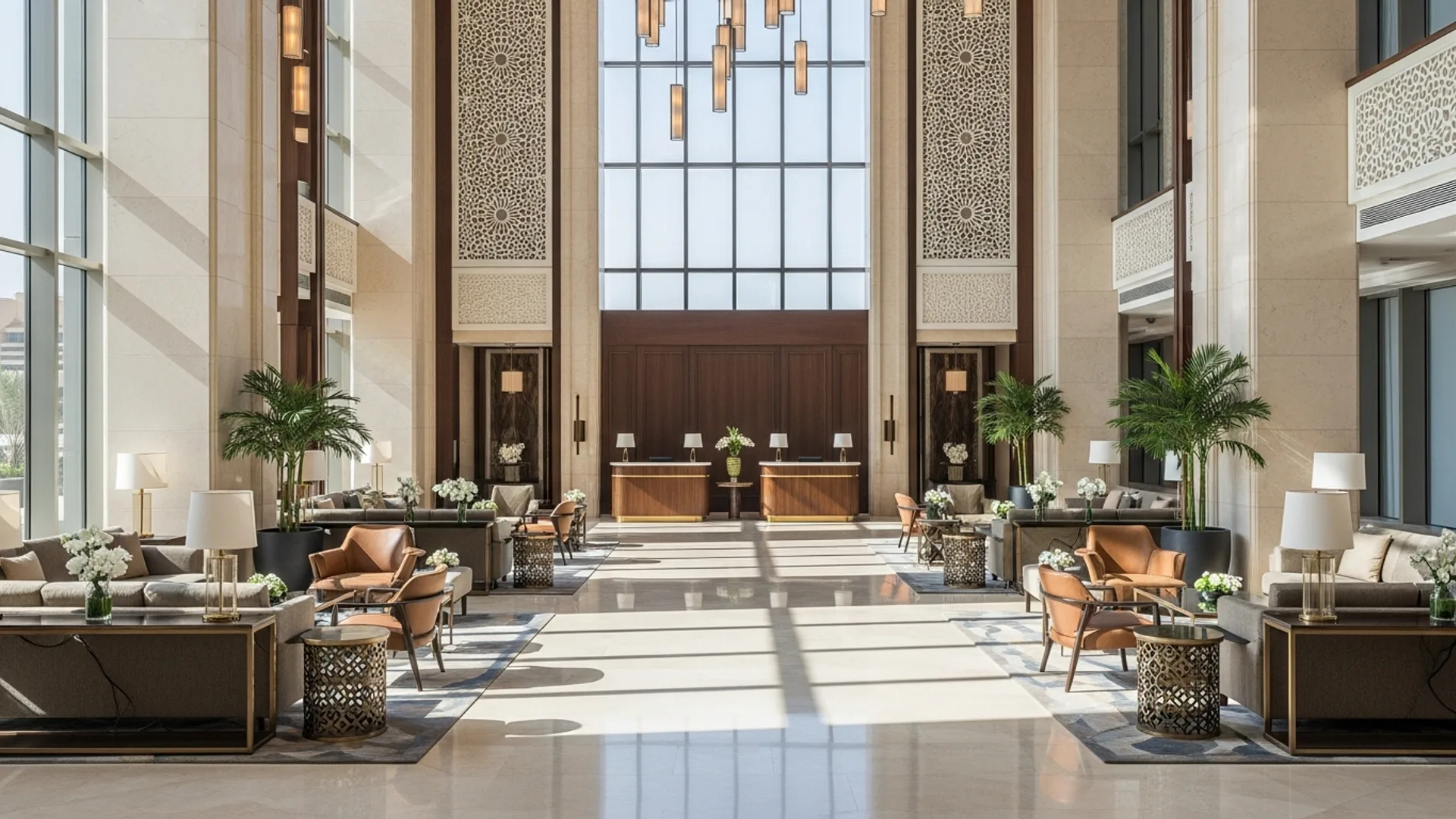
Investing in a tourism or hospitality business in Saudi Arabia in 2026 is now a fast, 100%-foreign-ownership route in most activities. Foreign investors first secure a MISA investment licence (about 3–10 business days), then issue a unified Commercial Register through the Saudi Business Center, register with the Chamber, ZATCA and GOSI, and obtain the relevant Ministry of Tourism licence — typically a 4-to-6 step path. MISA issue/renew fees were suspended in 2026.
What “tourism and hospitality” covers in Saudi Arabia
Tourism and hospitality is one of the fastest-growing investment sectors under Vision 2030, which targets a major expansion of inbound visitors and domestic travel. For company-formation purposes, the sector spans a wide band of licensable activities, each with its own corporate and regulatory layer.
When you set up a tourism hospitality business in Saudi Arabia, you are usually choosing one or more of the following activity families:
- Accommodation — hotels, resorts, serviced apartments, furnished units, hostels and short-stay rentals.
- Food and beverage — restaurants, cafés, catering, cloud kitchens and event catering.
- Travel and tour services — tour operators, destination-management companies, travel agencies and adventure-tourism providers.
- Attractions and entertainment — theme parks, museums, cultural venues, event organisers and experience providers.
- Hospitality support — hotel management, facilities, guiding and tourism-tech platforms.
Each activity is mapped to an ISIC code on your Commercial Register and may require a sector licence from the Ministry of Tourism (for example a tourism-licence for accommodation and tour operators) in addition to your core corporate registrations. Knowing your exact activity list early is the single most important planning step, because it determines which licences, classifications and inspections apply.
Who needs to read this guide
This guide is written for foreign and GCC investors who want to open or expand a tourism or hospitality venture in the Kingdom. It is most useful if you are:
- An international hotel group, F&B brand or franchise planning a Saudi entity.
- An SME founder opening a restaurant, café, boutique hotel or serviced-apartment business.
- A tour operator, travel agency or destination-management company targeting domestic and inbound travellers.
- An entertainment, events or attractions operator setting up a Saudi commercial presence.
- A Saudi or GCC national who wants the clean, correct registration sequence rather than guesswork.
Whether you are a global brand or a first-time founder, the registration backbone is the same. The difference is mostly in the sector classification (for example hotel star-rating or tour-operator category) and the capital and staffing you plan around it. A structured walk-through of your options is covered on our company formation in Saudi Arabia service page.
Step-by-step: how to set up a tourism hospitality business in Saudi Arabia
The end-to-end path for a foreign-owned tourism or hospitality company follows a clear, government-driven sequence. The exact screens are named below so you know what to expect on each official portal.
- Reserve your trade name and confirm activities. On the Saudi Business Center portal (mc.gov.sa), open the “Trade Name” service to reserve an Arabic — and, under the 2026 rules, optionally English — name, and shortlist your tourism/F&B ISIC activity codes.
- Apply for the MISA investment licence. Foreign investors apply through the Ministry of Investment (MISA) via its investor portal. Select the service activity (e.g. “Service — Tourism” or “Service — Restaurants”), upload your documents, and pay. MISA licensing typically completes in about 3–10 business days. Issue and renewal fees were suspended in 2026 (previously SAR 12,000 issue / SAR 62,000 multi-year renewal).
- Issue the unified Commercial Register (CR). Through the Saudi Business Center, draft and notarise your Articles of Association and issue the new unified national CR. Under the Commercial Register Law effective 3 April 2026, the CR number starts with “7”, has no expiry, and is confirmed annually instead of renewed.
- Register with the Chamber of Commerce. Activate Chamber membership for the city where you operate (Riyadh, Jeddah, Makkah, etc.). This is required for document attestation and is usually completed online.
- Obtain the Ministry of Tourism / sector licence. For accommodation, tour operators and travel agencies, apply for the tourism licence through the Ministry of Tourism’s licensing service, including property classification and required guarantees. F&B outlets additionally need municipality (Baladi) and food-safety approvals.
- Complete tax, labour and social-insurance registrations. Register with ZATCA for VAT and e-invoicing (zatca.gov.sa), open your file with the Ministry of Human Resources (MHRSD) and Qiwa (qiwa.sa), and register staff with GOSI (gosi.gov.sa). Then open a corporate bank account and process visas through Muqeem (muqeem.sa) and Absher (absher.sa).
If you are also bringing in foreign managers or chefs, you will issue work visas through the Ministry of Foreign Affairs platform (Enjaz, visa.mofa.gov.sa) and the unified national platform my.gov.sa for many cross-agency services.
Where the Ministry of Tourism licence fits
Not every tourism business needs a separate Ministry of Tourism licence on day one, but accommodation providers, licensed tour operators and travel agencies almost always do. The Ministry classifies hotels and furnished units, sets service standards, and links your licence to inspection and guest-experience requirements. Treat this as a parallel track to your corporate registration, not an afterthought.
In practice, the Ministry of Tourism licence is what converts your generic corporate entity into a recognised, classified tourism operator. For a hotel that means a star-rating assessment of rooms, facilities and service; for a furnished-apartment operator it means meeting safety and amenity standards; and for a tour operator or travel agency it can mean financial guarantees and qualified staff. Sequencing this correctly — applying once your premises and documents are ready, not before — is one of the biggest levers on how quickly you open.
Activity-specific notes that change your plan
Because “tourism and hospitality” is so broad, two businesses with the same MISA licence can have very different second-stage requirements. A few examples:
- Hotels and resorts: Ministry of Tourism classification, civil-defence safety certification, and often a higher capital and lease profile. Branded operators may also layer a management agreement on top of the Saudi entity.
- Restaurants, cafés and cloud kitchens: municipality (Baladi) licence, food-safety registration and civil-defence approval are the gating items, alongside the CR and VAT registration. The corporate layer is usually the quickest part.
- Tour operators and travel agencies: a Ministry of Tourism tourism-services licence, qualified personnel, and in some categories a financial guarantee. Inbound operators should confirm any additional approvals for organised group travel.
- Attractions, events and entertainment: venue and event permits often involve the relevant authority for entertainment and local municipality clearances in addition to your CR.
Identifying which of these buckets you fall into — ideally before you sign a lease or remit capital — prevents the most expensive kind of rework.
Required documents and IDs
Gather these before you start; missing or un-attested documents are the most common cause of delay. Requirements vary slightly by activity, so always confirm the live checklist on the relevant portal.
- Parent-company commercial registration and Articles of Association, attested and legalised, with certified Arabic translation (for corporate shareholders).
- Audited financial statements for the most recent year (often required for the MISA licence).
- Passport copies of shareholders, directors and the appointed general manager.
- A board resolution authorising the Saudi investment and appointing a signatory or attorney.
- The reserved trade name and your shortlisted tourism/F&B activity codes.
- A lease or title for the premises (especially for hotels, restaurants and attractions) for the sector and municipality licences.
- National Address registration and, for F&B, food-safety and civil-defence approvals.
- Iqama or national ID of the general manager once appointed, for Qiwa, GOSI and Muqeem.
Fees and timeline (indicative 2026)
The table below brings together typical government and professional costs for a foreign-owned tourism or hospitality entity. Figures are indicative and can change — always confirm current figures on the official portal before you budget.
| Step / item | Authority / portal | Indicative fee (SAR) | Indicative timeline |
|---|---|---|---|
| Trade name reservation | Saudi Business Center (mc.gov.sa) | Nominal (under ~100) | Same day |
| MISA investment licence | Ministry of Investment (MISA) | Issue/renew fees suspended in 2026 | 3–10 business days |
| Commercial Register (CR) | Ministry of Commerce / Saudi Business Center | ~1,200–2,000 | 1–3 days |
| Chamber of Commerce membership | Local Chamber | ~2,000–3,000 / year | 1–2 days |
| Ministry of Tourism licence | Ministry of Tourism | Varies by category + guarantees | 1–4 weeks |
| Municipality (Baladi) / F&B permits | Municipality + civil defence | Varies by city and unit | 1–4 weeks |
| VAT & e-invoicing registration | ZATCA (zatca.gov.sa) | No fee | 1–3 days |
| GOSI registration (social insurance) | GOSI (gosi.gov.sa) | ~21.5% total contribution (Saudi) | 1–2 days |
| Iqama (per foreign employee) | Absher / Muqeem / MHRSD | ~650/year + applicable levies | 1–2 weeks |
| Noble Core setup package | Noble Core Ventures | From 36,999 | End-to-end managed |
Two notes on this table. First, the GOSI figure (~21.5% total for Saudi employees, split between employer and employee) covers pensions and occupational hazards; the rate is lower for non-Saudi staff, who are mainly covered for occupational hazards. Second, VAT is charged at the standard 15% on most tourism and hospitality supplies, and you must comply with ZATCA’s Fatoora e-invoicing, which is being rolled out to businesses in waves.
Saudi authorities and portals you will use
Tourism and hospitality setup touches more agencies than a simple trading company, so it helps to know who does what:
- MISA (Ministry of Investment) — issues the foreign investment licence that unlocks 100% ownership in most activities.
- Ministry of Commerce / Saudi Business Center (mc.gov.sa) — trade name, Articles of Association and the unified Commercial Register.
- Ministry of Tourism — sector licences and classification for accommodation, tour operators and travel agencies.
- ZATCA — VAT, customs and Fatoora e-invoicing compliance.
- MHRSD and Qiwa (qiwa.sa) — labour file, Saudization (Nitaqat) and work-permit management.
- GOSI (gosi.gov.sa) — social-insurance registration and contributions.
- Muqeem (muqeem.sa) and Absher (absher.sa) — residency, Iqama and entry/exit services.
- MOFA / Enjaz (visa.mofa.gov.sa) — visas for foreign hires arriving from abroad.
Most of these connect through the unified national portal my.gov.sa, which increasingly acts as a single front door to cross-agency government services.
Saudization, staffing and the Nitaqat dimension
Tourism and hospitality is a people-heavy sector, so workforce planning matters as much as licensing. Through the Ministry of Human Resources and Social Development (MHRSD) and the Qiwa platform, your establishment is placed in the Nitaqat (Saudization) framework, which sets a target share of Saudi nationals depending on your activity and size.
Practical points to plan around:
- Confirm the Saudization band for your specific tourism or F&B activity early, because it affects how many work visas you can sponsor.
- Use Qiwa to manage work permits, contracts and the establishment’s compliance status.
- Budget GOSI contributions (~21.5% total for Saudi employees) into your operating model from day one.
- Plan recruitment and training pipelines for front-of-house roles, which Vision 2030 actively encourages localising.
Getting the staffing structure right at incorporation — rather than retrofitting it — keeps your establishment in good standing and your visa quota healthy.
Capital, premises and corporate banking
Tourism and hospitality ventures often carry higher fit-out and lease commitments than a simple trading company, so plan the capital and banking side alongside the licences rather than after them.
Key planning points:
- Minimum capital: while many service activities have modest capital expectations, some tourism categories and branded operations carry higher thresholds tied to the MISA licence. Confirm the figure for your specific activity at the application stage.
- Premises: a signed, compliant lease is usually required for the Ministry of Tourism, municipality and food-safety steps. Verify zoning and civil-defence suitability before committing to a unit, especially for hotels and F&B.
- Corporate bank account: opened after the CR is issued and the general manager’s Iqama is in process. Banks will ask for the CR, Articles of Association, MISA licence and authorised-signatory documents.
- Operating cash flow: budget for fit-out, pre-opening staffing, GOSI contributions and the first VAT cycles before revenue ramps up.
A clean sequence here keeps your banking and licensing milestones from blocking each other — a common, avoidable source of delay.
A worked example: opening a boutique hotel
To see how the pieces fit, imagine a foreign investor opening a 40-room boutique hotel in Jeddah. The path would typically run as follows:
- Reserve the trade name and confirm the accommodation activity codes on mc.gov.sa.
- Apply for the MISA investment licence under a tourism/accommodation service activity (about 3–10 business days).
- Issue the unified Commercial Register and notarise the Articles of Association.
- Activate Riyadh or Jeddah Chamber membership.
- Secure the lease, then apply for the Ministry of Tourism hotel classification and civil-defence certification.
- Register for VAT and Fatoora e-invoicing with ZATCA, open the labour file via MHRSD and Qiwa, and register staff with GOSI.
- Open the corporate bank account and process the general manager and key staff visas via Muqeem, Absher and Enjaz.
With documents prepared in advance, the corporate registrations can complete in a couple of weeks, while the tourism classification and fit-out determine the final opening date. The same skeleton applies to a restaurant group or a tour operator — only the sector-licence and premises requirements change.
Common errors that delay tourism and hospitality licences
Most delays in this sector are avoidable. The recurring issues we see are practical, not legal:
- Choosing activity codes that do not match the actual operation, forcing a costly amendment to the CR and MISA licence later.
- Treating the Ministry of Tourism classification as an afterthought, then discovering the premises do not meet the required standard.
- Signing a lease before checking municipality (Baladi) zoning and civil-defence requirements for an F&B or accommodation unit.
- Submitting parent-company documents that are not properly attested, legalised and Arabic-translated.
- Underestimating Saudization obligations and over-committing to foreign hires before the Nitaqat band is confirmed.
- Forgetting ZATCA e-invoicing (Fatoora) setup, which becomes mandatory in waves and is easy to miss for a new outlet.
Common mistakes to avoid
- Relying on outdated fee figures — MISA issue/renew fees were suspended in 2026, so do not budget the old SAR 12,000 / 62,000 amounts.
- Assuming the old Commercial Register rules still apply — since 3 April 2026 the unified CR has no expiry and is confirmed annually, not renewed.
- Opening F&B premises without sequencing municipality, food-safety and civil-defence approvals alongside the corporate registration.
- Ignoring the 15% VAT and Fatoora e-invoicing obligations until after you start trading.
- Mixing up the corporate licence (MISA + CR) with the sector licence (Ministry of Tourism) — you generally need both.
- Skipping National Address and GOSI registration, which blocks downstream visa and banking steps.
- Trying to obtain investor or staff visas without first completing Qiwa and MHRSD registration.
How Noble Core helps you launch faster
Noble Core Ventures manages the full tourism and hospitality setup so you move from decision to operating licence without bouncing between portals. Our team handles the activity mapping, the MISA application, the unified Commercial Register, the Ministry of Tourism classification, and all of the tax, labour and social-insurance registrations as one coordinated workstream.
Specifically, we:
- Map your hotel, restaurant, tour or attraction activities to the correct ISIC codes before you file anything.
- Prepare, attest and translate your corporate documents to MISA and Saudi Business Center standards.
- Secure the MISA investment licence and unified CR, then activate Chamber membership.
- Coordinate the Ministry of Tourism licence, municipality and food-safety approvals for your premises.
- Complete ZATCA, Qiwa, MHRSD and GOSI registrations and set up Fatoora e-invoicing.
- Process investor and staff visas through Muqeem, Absher and Enjaz, and support corporate banking.
Packages start from SAR 36,999 and are tailored to your activity mix and city. If your route depends specifically on the foreign-investment layer, our MISA licence in Saudi Arabia guide explains exactly how that piece works and how it connects to your tourism licence. With the right sequence and documents in place, a foreign-owned tourism or hospitality entity in Saudi Arabia can be operational in a matter of weeks rather than months.
Need help setting up in Saudi Arabia? Noble Core handles your MISA licence, commercial registration, and visas end-to-end — done right the first time.
Frequently Asked Questions
How do I start a tourism hospitality business in Saudi Arabia?
To start a tourism hospitality business in Saudi Arabia, foreign investors first obtain a MISA investment licence (about 3–10 business days), then issue a unified Commercial Register through the Saudi Business Center, activate Chamber membership, secure the Ministry of Tourism licence, and complete ZATCA, Qiwa and GOSI registrations. Noble Core manages the full sequence end to end.
Can foreigners own 100% of a tourism or hospitality business in Saudi Arabia?
Yes. Under Saudi Arabia’s investment regime, foreign investors can hold up to 100% ownership of a tourism, hotel, restaurant or travel business in most activities, provided they secure a MISA investment licence. The tourism activity itself is then classified and licensed by the Ministry of Tourism, separately from corporate ownership and Commercial Register registration.
How much does it cost to set up a tourism hospitality business in Saudi Arabia?
Indicative 2026 government costs include Commercial Register issuance around SAR 1,200–2,000, Chamber membership SAR 2,000–3,000 a year, plus Ministry of Tourism licence and municipality permits that vary by category. MISA issue/renew fees were suspended in 2026. Noble Core professional setup packages start from SAR 36,999; confirm current figures on the official portals.
What licences does a hospitality business in Saudi Arabia need?
A hospitality business needs a corporate layer — a MISA investment licence for foreign owners and a unified Commercial Register from the Ministry of Commerce — plus a sector licence. Accommodation, tour operators and travel agencies require a Ministry of Tourism licence, while restaurants and cafés also need municipality (Baladi), food-safety and civil-defence approvals before opening.
How long does it take to set up a tourism business in Saudi Arabia?
Corporate setup is fast: the MISA investment licence usually takes about 3–10 business days and the unified Commercial Register a further 1–3 days. The Ministry of Tourism licence and municipality permits for a hotel or restaurant typically add one to four weeks, so a foreign-owned tourism business can often be operational within a few weeks.
What documents are required for a tourism hospitality business in Saudi Arabia?
You typically need attested and Arabic-translated parent-company registration and Articles of Association, audited financial statements, passport copies of shareholders and the general manager, a board resolution, the reserved trade name with activity codes, a premises lease, and National Address registration. F&B units also need food-safety and civil-defence approvals. Confirm the live checklist on the official portals.
What taxes apply to tourism and hospitality businesses in Saudi Arabia?
Tourism and hospitality businesses register with ZATCA for VAT, charged at the standard 15% on most supplies, and must comply with Fatoora e-invoicing, rolled out in waves. Foreign-owned shares are subject to corporate income tax and GCC-owned shares to Zakat. Employers also pay GOSI social-insurance contributions of roughly 21.5% total for Saudi employees.
Does a tourism business in Saudi Arabia have Saudization requirements?
Yes. Through the Ministry of Human Resources and the Qiwa platform, tourism and hospitality establishments fall under the Nitaqat Saudization framework, which sets a target share of Saudi nationals based on activity and size. Confirming your Nitaqat band early is important because it affects how many work visas you can sponsor for foreign hires.