Saudi Vision 2030 Business Opportunities (2026)
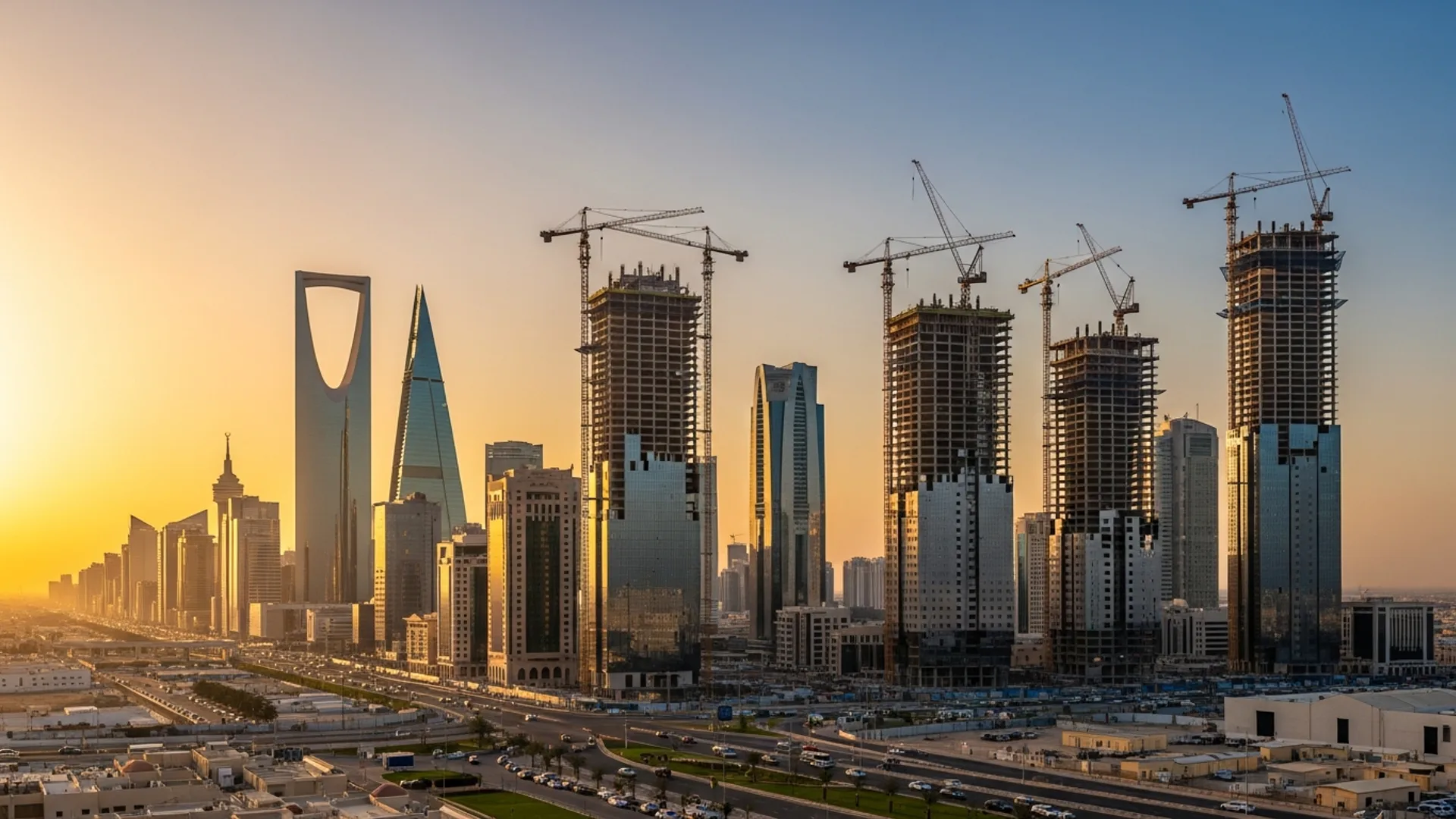
Saudi Vision 2030 has opened the largest economy in the Gulf to foreign investors across more than a dozen high-growth sectors. The non-oil economy now contributes around 55% of GDP, the Kingdom welcomed a record 123 million tourists in 2025, and foreign investors can own 100% of a company in most activities through a Ministry of Investment (MISA) licence — typically issued in 3 to 10 business days, with MISA licence fees suspended in 2026.
This guide maps the most attractive Vision 2030 business opportunities for 2026 — tourism and entertainment, the giga-projects, renewable energy and hydrogen, logistics, manufacturing, technology, sports, healthcare and mining — and shows exactly how to enter each one with a MISA investment licence. The momentum is real, the door is open, and the timing has rarely been better.
What is Saudi Vision 2030 and why it matters for business
Launched in 2016, Vision 2030 is Saudi Arabia’s national transformation plan to diversify the economy beyond oil, grow the private sector, and build new industries. A decade on, the results are tangible. Non-oil activities now make up roughly 55% of GDP, the non-oil economy grew about 4.9% in 2025, and total investment has climbed to around 32% of GDP. For founders and investors, this is the headline: Saudi Arabia is deliberately creating demand, infrastructure and incentives across entirely new sectors — and inviting global businesses to help build them.
The numbers behind the transformation are striking. Unemployment has fallen to around 7.2% from 12.3% in 2016, women’s participation in the workforce has risen sharply, the private sector now contributes close to 48% of GDP on the way to a 65% target, and non-oil exports have expanded significantly. Sectors such as wholesale and retail, hospitality, financial services and manufacturing all posted solid growth in 2025. This is an economy moving in one clear direction — broader, more diversified and increasingly led by private enterprise — which is precisely the environment in which new businesses thrive.
Two structural reforms make this especially investor-friendly in 2026. First, 100% foreign ownership is permitted in most business activities, with no Saudi partner required. Second, the path to market is simpler: the new Commercial Register Law took effect on 3 April 2026, creating a unified national Commercial Registration that does not expire (with an annual confirmation instead), and MISA’s licence issuance and renewal fees have been suspended. The combination of a fast-growing market and a streamlined entry process is the core of every opportunity below.
Tourism and entertainment: a 150-million-visitor market
Tourism is one of Vision 2030’s biggest success stories. Saudi Arabia surpassed its original 100-million-visitor target six years early, welcomed 123 million tourists in 2025, and has raised its ambition to 150 million annual visitors by 2030. The sector already contributes around 5% of GDP and generated more than SAR 300 billion in spending in 2025, with roughly 100,000 hotel rooms under construction.
For investors, the opportunity spans hotels and resorts, tour operations, food and beverage, events and experiences, cinema, gaming and live entertainment. With major events on the calendar — Expo 2030 in Riyadh, the FIFA World Cup 2034, and the annual Esports World Cup — demand for hospitality and entertainment services will compound for years.
Entertainment deserves special attention. The General Entertainment Authority and the wider cultural programme have turned what was once a quiet calendar into a year-round schedule of concerts, festivals, sporting fixtures and family attractions. Cinemas, theme parks, e-sports arenas and live-event venues are multiplying, and the supporting ecosystem — ticketing platforms, production houses, talent agencies, staging and AV suppliers, security and catering — needs reliable partners. For founders with experience in experiences, this is a market being built almost from scratch, which means early movers can establish strong positions before competition intensifies.
How to enter: apply for a MISA investment licence under a tourism, hospitality or entertainment activity, then complete your company formation in Saudi Arabia with a Commercial Registration. Premises-based activities also need a municipality (Baladi) licence and, for tourism operators, registration with the Ministry of Tourism.
The giga-projects: NEOM, Qiddiya, Red Sea, Diriyah and ROSHN
The Public Investment Fund’s giga-projects represent more than USD 1 trillion in planned investment and are some of the largest construction and development programmes on earth. Each is now opening its first phases, creating a long pipeline of contracts for construction, engineering, technology, hospitality, retail and professional services.
- NEOM — a flagship development on the Red Sea coast, grouping The Line, Oxagon (advanced manufacturing), Trojena (mountain tourism) and the Sindalah luxury island, which began receiving guests in late 2024.
- Qiddiya — the entertainment, sports and culture capital near Riyadh; Six Flags Qiddiya City opened in December 2025 and the Aquarabia water park opened in 2026.
- Red Sea Global — luxury regenerative tourism, with Phase 1 completion targeted for 2026–2027 and the Amaala resort cluster nearing completion.
- Diriyah — a UNESCO-linked cultural and heritage destination near Riyadh, supported by a steady flow of contracts worth around USD 14.5 billion.
- ROSHN — the national real-estate developer building 400,000 homes across nine cities, with over SAR 350 billion planned over the next decade.
What makes the giga-projects so attractive is the sheer breadth of work they generate. A single development needs everything from earthworks, steel and concrete to smart-city technology, interior fit-out, landscaping, signage, facilities management, food and beverage operators, retail tenants and specialist consultants. Small and medium enterprises with a genuine niche — sustainable materials, modular construction, building-information modelling, hospitality staffing — can win meaningful contracts without competing head-to-head with global majors. The Public Investment Fund has also signalled a sensible, returns-focused approach in 2026, prioritising phases with near-term commercial value, which gives suppliers greater clarity on where to focus.
How to enter: contractors, suppliers and service firms typically establish a Saudi entity via a MISA licence (or a branch/RHQ for larger groups), then register on the relevant project and government vendor portals to bid for work.
Renewable energy and green hydrogen
Saudi Arabia is positioning itself as a global clean-energy hub. The cornerstone is the NEOM Green Hydrogen Project, an USD 8.4 billion facility that reached around 90% construction completion by early 2026. Powered by roughly 4 GW of solar and wind, it is designed to produce 600 tonnes per day of green hydrogen and up to 1.2 million tonnes per year of green ammonia once fully operational, with product availability expected in 2027.
Beyond hydrogen, the National Renewable Energy Programme is rapidly expanding solar and wind capacity, opening opportunities in project development, EPC, components, operations and maintenance, energy storage, and the broader clean-tech supply chain. For investors with energy, engineering or sustainability expertise, this is one of the most strategic Vision 2030 lanes.
How to enter: MISA licenses renewable-energy and industrial activities, and you can review eligible sectors and incentives on the official investment portal at misa.gov.sa. Many energy projects also involve partnerships with national champions such as ACWA Power and the PIF.
Logistics and transport
Sitting between Europe, Asia and Africa, Saudi Arabia is building a world-class logistics network under the National Transport and Logistics Strategy, with the goal of becoming a leading global logistics hub. Investment is flowing into ports, airports, rail, special economic and logistics zones, and the connective infrastructure around the giga-projects. The PIF has notably narrowed its near-term focus toward sectors with quicker returns, including logistics, which signals strong continued momentum.
Opportunities include freight forwarding, warehousing and fulfilment, cold chain, last-mile delivery, customs brokerage and supply-chain technology. As e-commerce and tourism grow, so does demand for efficient movement of goods and people.
How to enter: obtain a MISA licence for transport, logistics or warehousing activities; firms locating in special economic zones may access additional incentives. Customs and trade registrations run through the Zakat, Tax and Customs Authority (ZATCA).
The logistics opportunity is amplified by Saudi Arabia’s geography and its growing role as a trans-shipment and re-export base for the wider region and East Africa. New and expanded ports on both coasts, an expanding rail network, and dedicated logistics zones near major cities are designed to cut transit times and costs. For e-commerce sellers and 3PL providers, the combination of rising domestic consumption, a tourism boom and improving last-mile infrastructure is a powerful tailwind. Service providers that can offer technology-enabled, reliable fulfilment are particularly well placed.
Manufacturing, industry and localization
Vision 2030 places a strong emphasis on industrial localization — making more products inside the Kingdom and building local supply chains. Manufacturing posted around 4% growth in 2025, and programmes encourage local content in defence, automotive, pharmaceuticals, food processing, building materials and advanced manufacturing (anchored by NEOM’s Oxagon). Localization initiatives often reward companies that invest, manufacture and hire locally with preferential access to government and PIF-related procurement.
Localization is not just a slogan — it is backed by concrete tools. Local-content requirements in public and PIF-linked procurement, competitive industrial land and energy costs, and supportive financing through development funds all tilt the field toward companies that genuinely produce inside the Kingdom. Sectors with particularly strong momentum include pharmaceuticals and medical supplies, electric-vehicle and battery components, building materials, food and agri-processing, and defence-related manufacturing. For a manufacturer weighing a regional base, Saudi Arabia increasingly offers both the demand and the cost structure to justify a factory rather than just a sales office.
How to enter: apply for an industrial MISA licence and an industrial licence pathway via the Ministry of Industry and Mineral Resources, then register with the Ministry of Commerce and the Federation of Saudi Chambers. Industrial cities (managed by MODON) offer ready land and utilities.
Technology, digital and innovation
Saudi Arabia’s digital economy is booming. Information and communications technology is now estimated at around 15.6% of GDP, and the Kingdom is investing heavily in cloud, artificial intelligence, fintech, e-commerce, gaming and emerging technologies. The financial-services sector grew about 6.1% in 2025, and a maturing regulatory framework (including support from the Saudi Central Bank, SAMA) is fuelling a vibrant fintech scene. Monsha’at, the small and medium enterprises authority, actively supports startups and SMEs with funding and incubation.
The Kingdom has also made itself the natural regional base for multinationals through its Regional Headquarters (RHQ) programme, which encourages global groups to locate their MENA leadership in Riyadh in exchange for incentives and easier access to government contracts. For technology companies, this creates a virtuous circle: more regional HQs mean more demand for local talent, cloud capacity, cybersecurity, systems integration and software services. Combined with one of the youngest, most connected populations in the world and high smartphone penetration, the conditions for digital businesses — from SaaS and e-commerce to gaming studios and AI ventures — are unusually favourable.
How to enter: tech and software companies set up via a MISA licence, often using the streamlined entrepreneurship or RHQ routes. Fintech ventures coordinate with SAMA and, where relevant, the Capital Market Authority.
Sports, healthcare and mining: three more high-growth lanes
Sports
Sport has become a national priority, with major investment in clubs, leagues, facilities, events and the wider sports economy ahead of the FIFA World Cup 2034 and the Esports World Cup. Opportunities span venue management, sports tech, training academies, broadcasting, sponsorship and event services.
Healthcare
Healthcare is being modernised and partly privatised, opening room for hospitals, clinics, medical devices, digital health, pharmaceuticals and health insurance services. A young, growing population and rising tourism both expand demand for quality care.
Mining
Mining is the declared “third pillar” of Saudi industry. The Kingdom’s mineral wealth is now estimated at over USD 2.4 trillion, and a reformed mining law has cut the relevant tax rate to 20% from 45%. The mining sector’s GDP contribution is forecast to reach around USD 64 billion, with recent licensing rounds awarding well over 100 sites to investors. Gold, copper, phosphate, rare earths and battery metals all offer entry points for exploration, extraction, processing and mining services.
How to enter: mining ventures require a MISA licence plus sector approvals from the Ministry of Industry and Mineral Resources; manufacturing, sports and healthcare follow the standard MISA-plus-sector-regulator route.
How to enter any Vision 2030 sector with a MISA licence
Across every sector above, the entry pathway is consistent. The MISA investment licence is the gateway that grants a foreign investor the legal right to operate, followed by the Commercial Registration that gives the company its national identity. Here is the typical sequence:
- Choose your activity and structure — most investors form a Limited Liability Company (LLC); larger groups consider a branch or a Regional Headquarters (RHQ).
- Prepare and attest documents — corporate documents are notarised at home, legalised by the Saudi embassy, and translated into Arabic.
- Apply for the MISA licence — submitted via the Ministry of Investment; typically issued in 3 to 10 business days with complete paperwork. Learn more in our guide to the MISA license in Saudi Arabia.
- Register the Commercial Registration (CR) — through the Ministry of Commerce and Saudi Business Center.
- Complete post-licence registrations — Chamber of Commerce, ZATCA (Zakat/tax, VAT, e-invoicing), GOSI (social insurance), and Qiwa/Muqeem for labour and Iqama management, plus your sector’s Saudization (Nitaqat) ratio.
The table below summarises each sector, the core opportunity, and the MISA activity route to enter it.
| Sector | Opportunity in 2026 | MISA entry route |
|---|---|---|
| Tourism & entertainment | 150m-visitor target by 2030; SAR 300bn+ spend in 2025 | Tourism / hospitality / entertainment licence + Ministry of Tourism |
| Giga-projects | USD 1tn+ pipeline (NEOM, Qiddiya, Red Sea, Diriyah, ROSHN) | Service/contracting licence or branch/RHQ + vendor registration |
| Renewable energy & hydrogen | NEOM Green Hydrogen ~90% complete; 4 GW solar/wind | Renewable-energy / industrial licence |
| Logistics & transport | Global hub strategy; ports, rail, warehousing | Transport / logistics licence (SEZ incentives available) |
| Manufacturing & localization | ~4% growth in 2025; local-content priority | Industrial licence + Ministry of Industry & Mineral Resources |
| Technology & digital | ICT ~15.6% of GDP; AI, cloud, fintech, gaming | Tech / entrepreneurship / RHQ licence |
| Sports | World Cup 2034, Esports World Cup, sports economy | Sports / services licence |
| Healthcare | Privatisation; hospitals, devices, digital health | Healthcare licence + sector regulator |
| Mining | USD 2.4tn mineral wealth; tax cut to 20% | Mining licence + Ministry of Industry & Mineral Resources |
Figures are indicative for 2026 and reflect publicly reported targets — confirm current activity rules and any fees on the official MISA and Saudi Business Center portals, or ask our team for a live assessment.
Common mistakes to avoid
- Choosing the wrong activity code — your MISA activity determines what you can legally do and which capital or sector rules apply. Confirm it before applying.
- Leaving document attestation too late — notarisation, Saudi embassy legalisation and certified Arabic translation are the slowest steps. Start them first.
- Underestimating sector approvals — regulated lanes (energy, mining, healthcare, fintech) need a second regulator beyond MISA. Plan for it.
- Ignoring Saudization (Nitaqat) — meeting your sector’s Saudi-hiring ratio is essential to keep visas and services active.
- Skipping post-licence registrations — a company is not fully operational until ZATCA, GOSI and Qiwa/Muqeem are set up.
- Assuming fees are fixed — government fees and incentives change; always verify current figures on the official portals.
The window is open in 2026
Vision 2030 has transformed Saudi Arabia into one of the world’s most dynamic markets — diversified, fast-growing and genuinely welcoming to foreign capital. With 100% ownership, suspended MISA licence fees, a simpler 2026 Commercial Register, and demand surging across tourism, giga-projects, energy, logistics, manufacturing, technology, sports, healthcare and mining, the opportunity for founders is exceptional. Pick the sector that fits your expertise, secure the MISA licence, and build alongside one of the most ambitious national growth stories of our time.
Need help setting up in Saudi Arabia? Noble Core handles your MISA licence, commercial registration, and visas end-to-end — done right the first time.
Frequently Asked Questions
What are the best business opportunities under Saudi Vision 2030 in 2026?
The strongest opportunities are in tourism and entertainment, the giga-projects (NEOM, Qiddiya, Red Sea, Diriyah, ROSHN), renewable energy and green hydrogen, logistics, manufacturing and localization, technology and fintech, sports, healthcare and mining. Each is backed by large government and PIF investment, and most allow 100% foreign ownership through a MISA licence.
Can foreigners own 100% of a business in Saudi Arabia under Vision 2030?
Yes. In most activities a foreign investor can own 100% of a Saudi company through a Ministry of Investment (MISA) licence, with no Saudi partner required. A small number of activities remain restricted, so confirm your specific activity against the MISA negative list before applying.
How do I enter a Vision 2030 sector as a foreign investor?
Apply for a MISA investment licence under your chosen activity, then complete your Commercial Registration with the Ministry of Commerce. Regulated sectors such as energy, mining, healthcare and fintech also require approval from a second regulator. The MISA licence is typically issued in 3 to 10 business days with complete documents.
How many tourists does Saudi Arabia attract, and why does it matter for business?
Saudi Arabia welcomed about 123 million tourists in 2025 and has raised its target to 150 million annual visitors by 2030. Tourism contributes around 5% of GDP, generated over SAR 300 billion in spending in 2025, and is driving demand for hotels, F&B, events, entertainment and supporting services.
What are the Saudi giga-projects and how can my company work on them?
The giga-projects are PIF-led developments worth over USD 1 trillion, including NEOM, Qiddiya, Red Sea Global, Diriyah and ROSHN. Construction, engineering, technology, hospitality and professional-services firms can bid by establishing a Saudi entity through a MISA licence (or a branch/RHQ) and registering on the relevant project and vendor portals.
Is the green hydrogen sector a real opportunity in Saudi Arabia?
Yes. The NEOM Green Hydrogen Project, an USD 8.4 billion facility, reached around 90% construction completion by early 2026 and is powered by roughly 4 GW of solar and wind. Alongside the National Renewable Energy Programme, it opens opportunities in project development, EPC, components, storage and clean-tech supply chains.
Why is mining considered a top Vision 2030 opportunity?
Saudi Arabia’s mineral wealth is estimated at over USD 2.4 trillion, and a reformed mining law cut the relevant tax rate to 20% from 45%. The sector is the declared third pillar of industry, with recent licensing rounds awarding well over 100 sites. Gold, copper, phosphate, rare earths and battery metals all offer entry points via a MISA and mining licence.
How much does it cost to set up a company to pursue these opportunities?
MISA licence issuance and renewal fees are currently suspended in 2026. Beyond that, expect roughly SAR 1,200–2,000 for the Commercial Registration, SAR 2,000–3,000 per year for Chamber of Commerce membership, plus municipality, office, attestation and translation costs. Noble Core offers a transparent end-to-end package from SAR 36,999.