

Opening a Training Centre in Saudi Arabia (2026, TVTC)
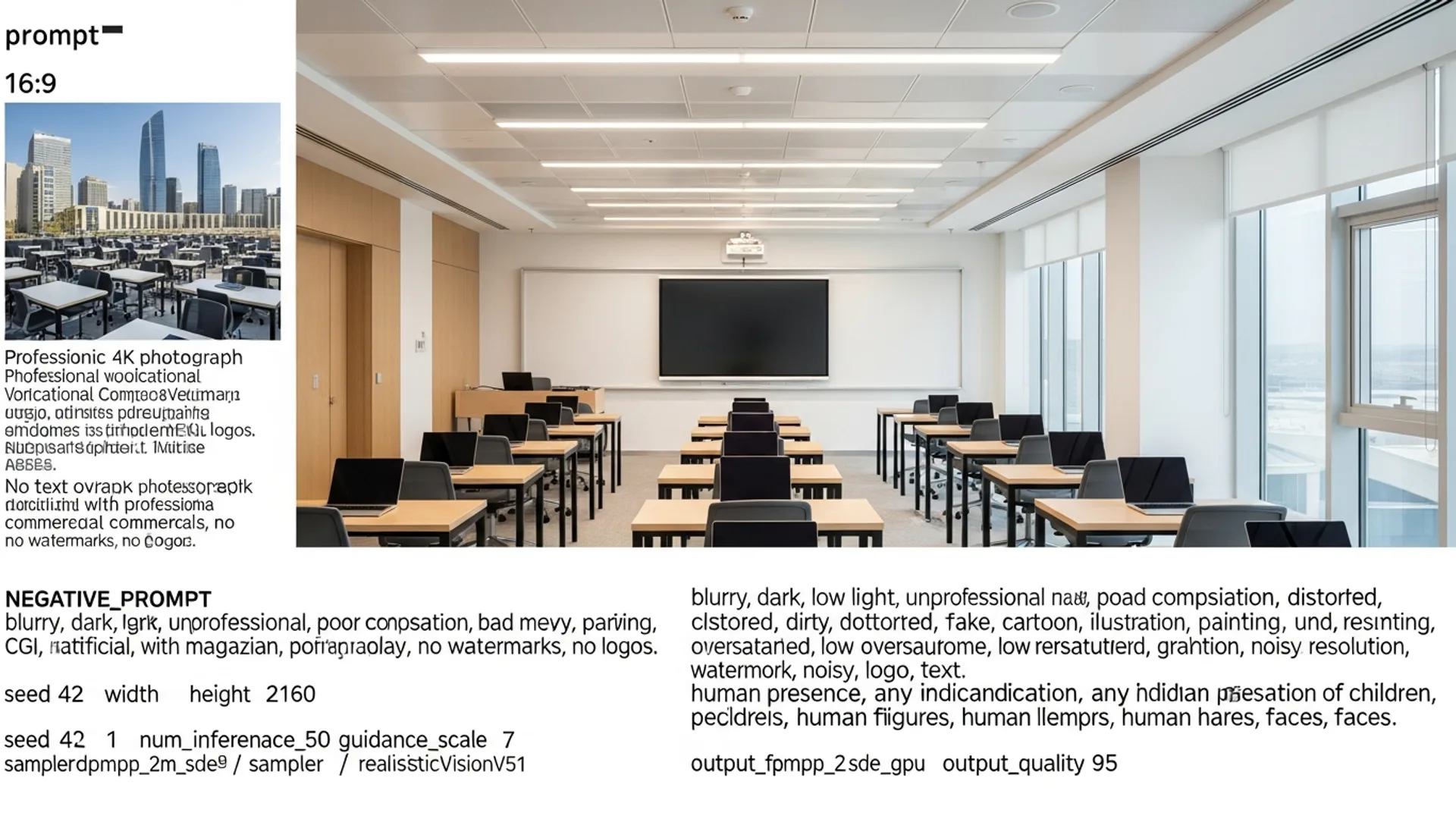
Opening a training centre in Saudi Arabia in 2026 means licensing your institute with the Technical and Vocational Training Corporation (TVTC), then registering the company with the Ministry of Commerce. Expect a unified Commercial Register (CR fee ~SAR 1,200–2,000), Chamber of Commerce membership (~SAR 2,000–3,000/yr), and TVTC accreditation that typically runs 30–90 days. Foreign investors add a MISA investment licence (issue/renew fees suspended in 2026) and can hold 100% ownership in most activities.
What a “training centre” means under TVTC rules
In Saudi Arabia, a private training centre (مركز تدريب أهلي) is a licensed institution that delivers vocational, technical, professional, or skills-based programmes to the public. The regulator is the Technical and Vocational Training Corporation (TVTC), the national authority that licenses and accredits all private training establishments, sets curriculum standards, and approves trainer qualifications. A training centre is different from a private school (regulated by the Ministry of Education) and from a higher-education college (regulated by the Ministry of Education’s universities sector).
Typical activities a TVTC licence covers include IT and software courses, language training, soft skills and management, technical and trades training (welding, HVAC, electrical), beauty and wellness skills, safety and HSE certification, and corporate upskilling. Each programme you intend to offer must be listed and approved; you cannot simply open and teach whatever you like. This programme-by-programme approval is the single biggest planning factor for a new training center Saudi Arabia project.
Vision 2030 has made vocational training a national priority, with strong government support for human-capital development. That makes the sector attractive, but it also means TVTC applies clear quality standards to protect trainees and employers.
It also helps to know the licence categories TVTC works with so you apply for the right one from the start. Broadly, a private training institution may be licensed as a general training centre serving multiple skill areas, a specialised centre focused on a single field (for example a language institute or a coding academy), a corporate or institutional training provider, or a branch of an existing licensed establishment. The category you choose shapes the premises standard, the trainer mix, and the programmes you are allowed to list. Choosing a general category when you only intend to teach one subject can mean preparing for inspection requirements you do not actually need, while choosing too narrow a category can box you out of programmes you later want to add. Mapping your business plan to the correct TVTC category before you file is one of the highest-leverage decisions in the whole project.
Training centre vs other education licences
Founders sometimes confuse a TVTC training centre with three neighbouring categories, and applying to the wrong regulator wastes weeks. A private school delivering the national curriculum to children is licensed by the Ministry of Education, not TVTC. A higher-education college or university awarding degrees falls under the Ministry of Education’s universities sector. Continuing professional development tied to a specific regulated profession (such as certain medical or engineering CPD) may need sign-off from that profession’s authority in addition to TVTC. A vocational and skills training centre that issues certificates of completion or attendance — rather than accredited academic degrees — is the classic TVTC case, and that is the focus of this guide.
Who needs a TVTC training-centre licence
You need a TVTC licence if you intend to operate any of the following on a commercial basis:
- A standalone private training institute offering paid courses to individuals or companies.
- A corporate training arm that sells programmes externally (in-house-only training for your own staff usually does not require a public licence, but confirm with TVTC).
- A specialised academy — coding bootcamp, language school, technical/trades centre, or professional-certification provider.
- A franchise or branch of an international training brand entering the Saudi market.
Foreign investors and foreign-owned companies must additionally hold an investment licence from the Ministry of Investment (MISA) before they can register the company and apply to TVTC. Saudi and GCC nationals register directly through the Ministry of Commerce without a MISA licence. If you are setting up as an overseas founder, our company formation in Saudi Arabia guide explains the corporate layer that sits underneath the TVTC approval.
One important point for foreign founders: the company must exist as a legal entity before TVTC can issue a training-establishment licence to it. That ordering matters. You cannot apply to TVTC as an individual and bolt on a company afterwards — the licence is held by the registered establishment. So the sequence is investment licence first (for foreign owners), then the commercial registration that creates the company, and only then the TVTC file. Getting this order wrong is one of the most common reasons a first application is returned. Saudi-owned ventures skip the MISA step but still register the company before approaching TVTC.
It is also worth deciding early whether a single owner, a partnership, or a corporate shareholder will hold the entity, because that affects the documents you attest and the GOSI and Qiwa setup later. A limited liability company (LLC) is the most common vehicle for a training centre, and 100% foreign ownership is permitted in most training activities, so an overseas group can typically own the centre outright.
Step-by-step: how to open a training centre in Saudi Arabia (2026)
The process runs across three authorities — MISA (for foreign investors), the Ministry of Commerce, and TVTC. Follow these steps in order:
- Secure your MISA investment licence (foreign investors only). Apply on the MISA portal at misa.gov.sa under the “service / education and training” investment category. MISA licensing typically takes about 3–10 business days. The issue and renewal fees that were previously SAR 12,000 and SAR 62,000 are suspended in 2026 — confirm the current figure on the portal before budgeting.
- Reserve a trade name and issue the Commercial Register (CR). Use the Saudi Business Center at my.gov.sa / the Ministry of Commerce platform mc.gov.sa. Under the new Commercial Register Law effective 3 April 2026, you receive a single unified national CR whose number starts with “7”, with no expiry date — you submit an annual confirmation instead of renewing. English trade names are now permitted.
- Join the Chamber of Commerce. Membership is mandatory and costs roughly SAR 2,000–3,000 per year depending on category (indicative, confirm current figures on the official portal).
- Apply to TVTC for the training-establishment licence. Submit through the TVTC private-training services portal. You provide the company documents, the proposed programmes, the premises plan, and the trainer profiles. TVTC reviews the academic file and inspects the premises.
- Pass the premises inspection. TVTC (often with Civil Defence) checks classroom size, capacity, safety, and equipment against the standards for your activity type.
- Get programme accreditation. Each course curriculum is approved individually. Approved programmes are then listed under your licence.
- Register employees and run payroll compliance. Set up files on Qiwa (labour/MHRSD) and GOSI (social insurance), and process visas/iqamas for foreign trainers via Muqeem and Absher.
- Register for tax with ZATCA. Enrol for VAT (15%) and the Fatoora e-invoicing system at zatca.gov.sa.
A practical tip: run the corporate steps (1–3) and the TVTC preparation in parallel rather than strictly one after another. While MISA and the Commercial Register are processing, you can already be drafting curricula, shortlisting premises, and assembling trainer files. Because the TVTC stage is the longest part of the timeline, every day you save on premises readiness and programme documentation is a day off your launch date. The compliance steps (7–8) can largely wait until the company exists, but pre-reading the Qiwa, GOSI, and ZATCA requirements now prevents surprises later.
Keep a single shared checklist of every portal login as you go — MISA, my.gov.sa, mc.gov.sa, Qiwa, GOSI, Muqeem, Absher, and ZATCA each have their own account, and a delegated representative needs the right authorisations on each. Losing time chasing access to a portal mid-application is avoidable.
Required documents and IDs
TVTC and the Ministry of Commerce will ask for a consistent set of papers. Prepare the following before you start to avoid back-and-forth:
- MISA investment licence (foreign investors) and parent-company documents, legalised and attested through the Saudi embassy and the Ministry of Foreign Affairs (MOFA) where the visa platform is Enjaz (visa.mofa.gov.sa).
- Articles of Association and the unified Commercial Register extract.
- National Address registration and a lease contract (Ejar) for the premises.
- Premises layout/floor plan showing classrooms, capacities, and safety provisions.
- Programme files — curriculum, learning outcomes, duration, and assessment method for each course.
- Trainer CVs and qualifications, plus iqama/passport copies for non-Saudi trainers.
- General Manager details and ID (Saudi ID for nationals, iqama for residents).
- Civil Defence safety certificate for the building.
Fees and timeline table (indicative, 2026)
The figures below are indicative planning numbers for a small-to-mid training centre. Government fees change; always confirm the current amount on the official portal before you transfer funds.
| Item | Authority / Portal | Indicative cost (SAR) | Typical timeline |
|---|---|---|---|
| MISA investment licence (foreign investors) | MISA — misa.gov.sa | Issue/renew fees suspended in 2026 | 3–10 business days |
| Trade name + unified Commercial Register | Saudi Business Center — mc.gov.sa | 1,200–2,000 | 1–3 days |
| Chamber of Commerce membership | Chamber | 2,000–3,000 / year | Same day |
| TVTC training-establishment licence | TVTC | Varies by activity/capacity | 30–90 days |
| Premises inspection + Civil Defence | TVTC / Civil Defence | Varies | 1–3 weeks |
| Per-programme accreditation | TVTC | Per programme | 2–6 weeks each |
| GOSI registration (Saudi staff ~21.5% total) | GOSI — gosi.gov.sa | Contribution-based | Same day |
| VAT + Fatoora e-invoicing enrolment | ZATCA — zatca.gov.sa | 15% VAT (no setup fee) | Same day |
As a rule of thumb, a foreign-owned training centre should budget for the corporate setup, the TVTC licence, premises fit-out to standard, and working capital for the 1–3 months while accreditation is in progress. Our MISA licence in Saudi Arabia page breaks down the investment-licence layer in more detail.
Premises and trainer standards TVTC checks
TVTC accreditation is as much about the place and the people as the paperwork. Plan your premises and hiring around these expectations:
Premises
- Minimum classroom area per trainee and a stated maximum capacity per room.
- Appropriate ventilation, lighting, and accessibility.
- Safety equipment, clear exits, and a valid Civil Defence certificate.
- Specialised activities (welding, beauty, lab work) require activity-specific equipment and safety provisions.
Trainers
- Trainers must hold qualifications relevant to the subject they teach.
- TVTC reviews CVs and may require a minimum level of certification or experience.
- Non-Saudi trainers need a valid iqama with a job title that matches the role; arrange this through Qiwa and Muqeem.
- A documented programme leader or academic supervisor is often expected to oversee curriculum quality across your courses.
Plan your trainer roster against your programme list, not the other way round. If you intend to launch eight programmes, TVTC will want to see that each has an identified, qualified trainer on file — promising courses you cannot staff is a fast route to a partial approval. Many centres open with a tight set of well-supported programmes and add more after the licence is live, which is both cheaper and lower-risk than trying to accredit everything on day one.
Curriculum and programme files
Each programme submission should set out the learning outcomes, the total training hours, the delivery method (classroom, practical, or blended), the assessment approach, and the certificate the trainee receives on completion. Where a programme maps to a recognised occupational standard, referencing that standard strengthens the file. Clear, professionally written curricula move through accreditation faster because the reviewer can see exactly what is being taught and how it is measured.
Hiring, Saudization, and payroll compliance
A training centre with employees must comply with labour and social-insurance rules administered by the Ministry of Human Resources and Social Development (MHRSD) through Qiwa, and by the General Organization for Social Insurance (GOSI). Key points:
- Saudization (Nitaqat): a percentage of your workforce must be Saudi nationals; the target depends on your activity and company size. Maintaining a healthy Nitaqat band keeps your visa and Qiwa services open.
- GOSI contributions: for Saudi employees the total contribution is approximately 21.5% (employer plus employee shares combined), covering pensions and occupational hazards; rates differ for non-Saudis. Confirm current rates on gosi.gov.sa.
- Iqama for foreign trainers: the government iqama issuance/renewal fee is around SAR 650 per year plus applicable levies; process renewals through Absher and Muqeem before expiry.
- Wage Protection (WPS): salaries must be paid through compliant channels and reported.
Choosing a city and premises that pass inspection
Where you open shapes both demand and approval. The largest training markets are Riyadh, Jeddah, and the Dammam–Khobar area in the Eastern Province, where corporate demand for upskilling is strongest, but secondary cities can offer lower rents and less competition for the same TVTC standard. Wherever you choose, the premises must satisfy these practical points before TVTC and Civil Defence will sign off:
- Right zoning: the building must be permitted for training/educational use under the municipality’s land-use rules; a purely residential unit will not qualify.
- Classroom maths: calculate room area against your intended capacity per course so you are not forced to cap class sizes after fit-out.
- Practical space: trades or lab-based programmes need workshop areas with the correct equipment, extraction, and safety gear.
- Accessibility and welfare: accessible entry, restrooms, and clear circulation for trainees.
- Civil Defence readiness: alarms, extinguishers, signage, and exits in line with the safety certificate requirements.
Because a failed premises inspection is expensive — you may already be paying rent — have the unit assessed against TVTC’s standard for your activity before you commit to a lease. A short pre-lease review can save months. Register the location’s National Address and the Ejar lease, since both feed into the licensing file.
Tax, e-invoicing, and ongoing obligations
Once trading, your training centre has recurring obligations with the Zakat, Tax and Customs Authority (ZATCA):
- VAT at 15% on taxable training services, with periodic returns filed on zatca.gov.sa.
- Fatoora e-invoicing — integration with ZATCA’s system is rolling out in waves; you must issue compliant electronic invoices once you are in a notified wave.
- Zakat or corporate tax depending on ownership (Saudi/GCC ownership is generally subject to Zakat; foreign ownership to corporate income tax).
- Annual CR confirmation — under the new Commercial Register Law your CR no longer expires, but you must submit an annual confirmation to keep it active, with a 5-year grace concept for lapses.
- TVTC reporting — trainee records, programme outcomes, and any new programmes for approval.
Common errors that delay a training-centre licence
Most TVTC delays trace back to a handful of avoidable mistakes. Watch for these:
- Signing a lease before TVTC sees the premises. If the building fails the space or safety standard you lose rent and time. Get premises pre-checked first.
- Listing programmes you cannot staff. Each course needs a qualified, documented trainer; unsupported programmes get rejected.
- Skipping attestation. Foreign parent-company documents not legalised through MOFA/Enjaz stall the MISA and CR steps.
- Mismatched activity codes. The activity on your CR must match the training activity you apply for at TVTC.
- Wrong trainer iqama titles. A trainer on an iqama with an unrelated profession cannot be counted; fix the title on Qiwa first.
- Ignoring Saudization early. A weak Nitaqat band can freeze the visa quota you need to bring in trainers.
- Assuming old fee figures. Several 2026 fees changed or were suspended — always confirm on the official portal before paying.
How Noble Core helps you open faster
Noble Core is a Saudi business-setup consultancy that manages the entire training-centre journey end to end, so you deal with one team instead of four government portals. We:
- Structure the company correctly — choose the right activity codes, secure your MISA investment licence, and issue the unified Commercial Register.
- Run the TVTC file — prepare the premises plan, programme curricula, and trainer documentation to TVTC’s standards, and coordinate the inspection.
- Set up compliance — Qiwa, GOSI, Muqeem/Absher visas and iqamas, ZATCA VAT and Fatoora e-invoicing, and Chamber membership.
- Plan Saudization so your Nitaqat band supports your hiring from day one.
Our training-centre setup packages start from SAR 36,999, with a clear scope and timeline agreed up front. To map your specific programmes and premises to TVTC’s requirements, start with our company formation in Saudi Arabia service and our MISA licence support, and we will build the full plan from there.
Need help setting up in Saudi Arabia? Noble Core handles your MISA licence, commercial registration, and visas end-to-end — done right the first time.
Frequently Asked Questions
How do I open a training center in Saudi Arabia in 2026?
To open a training center in Saudi Arabia, secure a MISA investment licence (foreign investors), register the company and issue a unified Commercial Register via the Saudi Business Center, then apply to the Technical and Vocational Training Corporation (TVTC) for the training-establishment licence. TVTC inspects your premises and accredits each programme, typically over 30 to 90 days.
What is the TVTC licence for a training center in Saudi Arabia?
The TVTC licence is the official authorisation from the Technical and Vocational Training Corporation to run a private training establishment. It covers your premises, your approved programmes, and your trainer qualifications. Every course you offer is accredited individually, so the TVTC licence confirms both that your centre is fit to operate and that each programme meets national vocational standards.
How much does it cost to open a training center in Saudi Arabia?
Indicative 2026 costs include a Commercial Register (SAR 1,200 to 2,000), Chamber membership (SAR 2,000 to 3,000 per year), and TVTC licensing that varies by activity and capacity. MISA issue and renewal fees are suspended in 2026. Noble Core training-centre setup packages start from SAR 36,999. Always confirm current government fees on the official portal before paying.
Do foreign investors need a MISA licence to run a training center?
Yes. Foreign investors and foreign-owned companies must hold a MISA (Ministry of Investment) investment licence before they can register the company and apply to TVTC. MISA permits 100% foreign ownership in most training activities and typically issues the licence in 3 to 10 business days. Saudi and GCC nationals register directly with the Ministry of Commerce without a MISA licence.
How long does it take to get a training center licence in Saudi Arabia?
The corporate steps (MISA, trade name, Commercial Register, Chamber) take roughly one to two weeks. The TVTC training-establishment licence, including premises inspection and per-programme accreditation, typically runs 30 to 90 days depending on your activity, premises readiness, and how many programmes you submit. Preparing trainer documents and curricula in advance shortens the timeline considerably.
What documents are required to open a training center in Saudi Arabia?
You need your MISA investment licence (foreign investors), attested parent-company documents via MOFA/Enjaz, Articles of Association, the unified Commercial Register, a National Address and Ejar lease, a premises floor plan, programme curricula, trainer CVs and qualifications, and a Civil Defence safety certificate. The General Manager’s Saudi ID or iqama is also required for the TVTC and Ministry of Commerce files.
What are the Saudization and GOSI rules for a training center?
A training centre must meet Saudization (Nitaqat) targets set by MHRSD through Qiwa, employing a percentage of Saudi nationals based on activity and size. For Saudi employees, GOSI social-insurance contributions total roughly 21.5% (employer plus employee combined). Maintaining a healthy Nitaqat band keeps your visa quota and Qiwa services open so you can hire trainers. Confirm current rates on gosi.gov.sa.
Can I run a training center in Saudi Arabia with 100% foreign ownership?
Yes. Under current investment rules, MISA allows 100% foreign ownership in most training and education-service activities, so you do not need a Saudi partner for a typical training centre. You still complete the same TVTC licensing, premises inspection, and programme accreditation as any other operator. Confirm that your specific activity is eligible for full foreign ownership when you apply on the MISA portal.