Starting an Events Management Company in Saudi Arabia (2026)
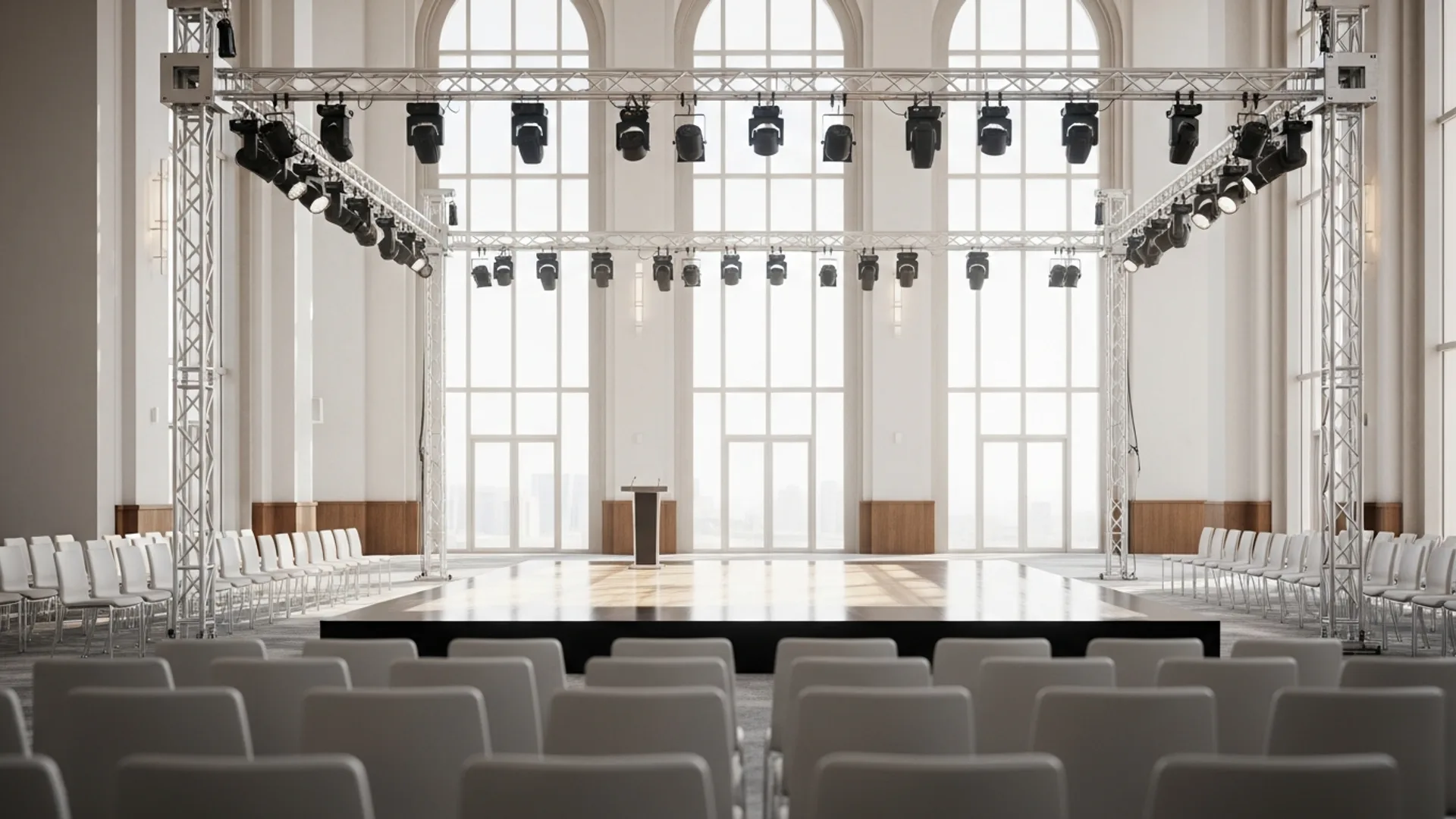
Starting an events management company in Saudi Arabia takes roughly 3-10 business days for the MISA investment licence plus a few more days for the Commercial Register, with 100% foreign ownership permitted in most events and entertainment activities. Under the new Commercial Register Law effective 3 April 2026, your CR has no expiry and ID starts with “7”. Core government costs run from a CR fee around SAR 1,200-2,000 plus annual Chamber of Commerce membership of roughly SAR 2,000-3,000, with the MISA licence issue/renewal fee suspended in 2026.
What an events management company in Saudi Arabia actually is
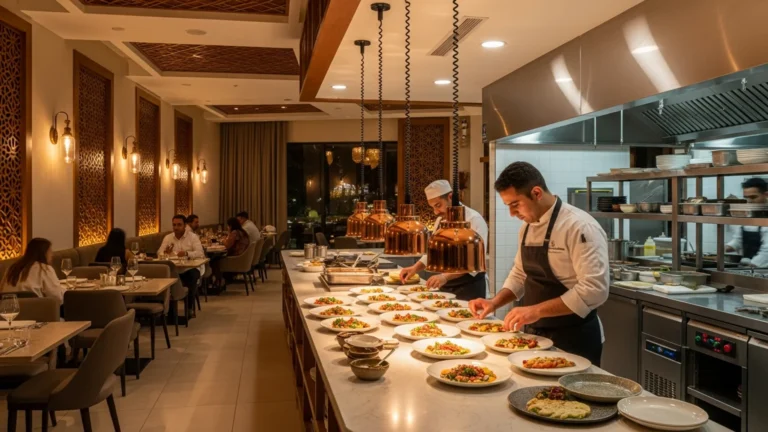
An events management company in Saudi Arabia is a licensed commercial entity that plans, produces and delivers events: corporate conferences, exhibitions, product launches, weddings, festivals, concerts, government ceremonies, sports activations and trade shows. The sector has expanded rapidly alongside Vision 2030, with major destinations like Riyadh Season, the Diriyah developments and a steady calendar of international conferences creating sustained demand for professional event production.
To trade legally, your company needs the right activity codes on its Commercial Register (CR), an investment licence from MISA (the Ministry of Investment) if there is foreign ownership, and—depending on what you produce—sector permits from bodies such as the General Entertainment Authority (GEA) for public entertainment events. The base structure is usually a limited liability company (LLC), which can be wholly foreign-owned in most events and marketing activities.
It is worth distinguishing the events company itself from the events it delivers. The company is a permanent legal entity with a CR, a tax file at ZATCA and employer files at Qiwa and GOSI. Each event you produce sits on top of that foundation as a project that may need its own short-lived permits—a GEA permit for a public concert, a municipality approval for a temporary outdoor stage, a Civil Defence clearance for crowd safety. Understanding this two-layer model early helps you scope client contracts accurately and avoid quoting a price that ignores per-event approval costs.
The Saudi events market in 2026 is unusually broad. On one end sit large-scale public entertainment programmes—seasons, festivals and concerts—coordinated with the General Entertainment Authority. On the other sit corporate and government events: conferences, ministerial ceremonies, exhibitions at venues like Riyadh and Jeddah’s exhibition centres, and a fast-growing MICE (meetings, incentives, conferences and exhibitions) segment tied to the Kingdom’s tourism and investment push. A single events company can serve several of these segments, provided its activity codes and permits cover what it actually delivers.
Common activity categories you may license
- Event organisation and management (conferences, exhibitions, ceremonies).
- Public relations and corporate communications.
- Advertising and marketing services (often paired with events work).
- Audio-visual, staging, lighting and technical production services.
- Wedding and private celebration planning.
Who needs to set up a licensed events company
You need a properly licensed entity if you intend to invoice clients in the Kingdom, sign venue and supplier contracts, sponsor staff for residence (Iqama), bid for government or large corporate event tenders, or issue compliant tax invoices through ZATCA’s Fatoora system. Operating events for paying clients without a CR and the relevant activity codes is not a viable path.
- Foreign investors and agencies opening a Saudi branch or new LLC to access the events market.
- GCC and international event producers wanting a local entity to win in-Kingdom contracts.
- Existing service businesses (marketing, PR, hospitality) adding event organisation as a regulated activity.
- Freelance organisers formalising into a company so they can sponsor talent, hire staff and scale.
If you are still deciding on the legal structure, our guide to company formation in Saudi Arabia walks through LLC vs branch vs sole establishment and the implications for ownership and liability.
LLC, branch or new company—which fits an events business?
Most foreign event producers entering Saudi Arabia choose one of three routes. A new LLC is the most common: it gives you a fresh Saudi entity, clean activity codes and full control over the brand. A branch of an existing foreign company suits established agencies that want their Saudi operation to carry the parent’s name and track record, which can help when bidding for large corporate or government work. A sole establishment is simpler but limited, and is less common for foreign-owned events businesses because of ownership and liability considerations.
For most agencies the LLC is the practical default. It allows 100% foreign ownership in qualifying events and marketing activities, ring-fences liability inside the Saudi entity, and lets you add local shareholders or partners later if a project calls for it. Whichever route you pick, the activity codes you select at the trade-name stage determine which events you can legally produce, so it pays to map your full service offering before you file.
Step-by-step: how to start your events company
The process is sequential—each step unlocks the next. Below is the practical order most foreign-owned events companies follow in 2026, naming the exact portals and screens you will use.
- Reserve your trade name and confirm activities. Use the Saudi Business Center portal at mc.gov.sa to check name availability and select your ISIC activity codes (event management, advertising, PR). Under the 2026 rules, English trade names are now allowed alongside Arabic.
- Apply for the MISA investment licence. If there is any foreign ownership, register on the MISA portal, upload your corporate documents and submit the investment licence application. MISA licensing typically takes around 3-10 business days for standard service activities.
- Issue the Commercial Register (CR). Once MISA approves, issue the CR through the Saudi Business Center. Under the new Commercial Register Law (effective 3 April 2026) the CR is a unified national register, the ID starts with “7”, it has no expiry, and you confirm details annually instead of renewing. The CR fee is indicative at roughly SAR 1,200-2,000—confirm the current figure on the official portal.
- Register Chamber of Commerce membership. Join your regional Chamber (Riyadh, Jeddah or Dammam) to authenticate documents and signatures. Annual membership is indicatively SAR 2,000-3,000.
- Draft and notarise the Articles of Association. The Memorandum/Articles are issued electronically through the Ministry of Commerce platform; for foreign LLCs they are validated as part of CR issuance.
- Open a corporate bank account. With your CR and MISA licence, open a business account with a Saudi bank to receive client payments and pay suppliers.
- Register with ZATCA for tax. Register for VAT (15%) on zatca.gov.sa and onboard to e-invoicing (Fatoora), which is being integrated in waves.
- Register as an employer. Set up your file on qiwa.sa (labour/MHRSD) and gosi.gov.sa (social insurance) so you can hire and sponsor staff.
- Apply for visas and Iqamas. Use the MOFA Enjaz platform at visa.mofa.gov.sa for entry visas, then process residence via muqeem.sa and absher.sa (Absher Business) for Iqama issuance.
- Obtain event-specific permits. For public entertainment events, ticketed shows or large gatherings, apply for the relevant General Entertainment Authority (GEA) permit and any municipality and Civil Defence approvals per event.
The single most important sequencing point is that the MISA investment licence comes before the Commercial Register for any foreign-owned company. You cannot issue the CR until MISA has approved the foreign investment, and you cannot open a corporate bank account, register for VAT or sponsor staff until the CR exists. Treat these as a chain: a delay at the MISA stage pushes everything downstream, so prioritise getting your corporate documents attested and your trade name and activity codes finalised before you submit.
A second practical tip: register your employer files on Qiwa and GOSI as soon as the CR is issued, even before you hire. Having active files means that when you win your first event and need to bring in talent or technical crew, you are not waiting on employer registration to start the visa process through Enjaz and Muqeem. The same applies to ZATCA—register for VAT and onboard to Fatoora early so your very first client invoice is compliant rather than something you have to reissue later.
Required documents and IDs
Having documents ready before you start removes most of the delay. Foreign-owned events companies are usually asked for the following.
- Passport copies of all shareholders and the proposed general manager.
- For corporate shareholders: certificate of incorporation, commercial registration and Articles of Association, attested and (where required) legalised via the Saudi embassy and the Ministry of Foreign Affairs (mofa.gov.sa).
- Audited financial statements for the most recent year (commonly requested for the MISA file).
- A board resolution authorising the Saudi investment and appointing the manager.
- Proposed trade name(s) and the chosen ISIC activity codes.
- A Saudi national address and lease/Ejar contract for the registered office.
- The general manager’s details for the Qiwa and GOSI employer files.
For the registered manager’s residence
To sponsor the general manager or staff, you will process an entry visa via Enjaz, then issue the Iqama through Muqeem and Absher Business. The government Iqama issuance/renewal fee is indicatively around SAR 650 per year plus applicable levies—always confirm the current amount on the official portal before paying.
Fees and timeline table (indicative 2026)
The figures below are indicative planning numbers for a standard foreign-owned events LLC. Government fees change; confirm current figures on each official portal before you budget.
| Item | Authority / Portal | Indicative cost (SAR) | Indicative timeline |
|---|---|---|---|
| MISA investment licence (issue/renewal fee) | MISA | Fee suspended in 2026 (was 12,000 issue / 62,000 renew) | ~3-10 business days |
| Commercial Register (CR) | Saudi Business Center (mc.gov.sa) | ~1,200-2,000 | ~1-3 business days after MISA |
| Chamber of Commerce membership | Regional Chamber | ~2,000-3,000 / year | ~1-2 business days |
| Articles of Association notarisation | Ministry of Commerce | Included / nominal | ~1-2 business days |
| VAT & e-invoicing registration | ZATCA (zatca.gov.sa) | No fee to register | ~1-3 business days |
| Employer file (labour + social insurance) | Qiwa & GOSI | No setup fee | ~1-2 business days |
| Iqama issuance (per employee) | Muqeem / Absher / MOFA | ~650 / year + levies (indicative) | ~5-10 business days |
| Event-specific permit (per event) | GEA / Municipality | Varies by event | Per application |
GOSI social insurance contributions run at a combined rate of roughly 21.5% (employer plus employee shares) for Saudi employees, with different rates for non-Saudis—budget this into your payroll from day one.
Two numbers most founders forget to plan for are the registered office and ongoing compliance. A real, leased office address registered on the Ejar platform is required before the CR can be issued, so factor in rent and the lease deposit. On the compliance side, the new 2026 Commercial Register Law replaces periodic CR renewal with an annual confirmation, but you still carry recurring costs: Chamber membership renewal, VAT filings with ZATCA, monthly GOSI contributions and per-employee Iqama renewals. Building a simple annual compliance calendar from day one prevents missed confirmations and last-minute penalties.
When you build a client quote, remember that the table above covers the company foundation, not the events themselves. Each event carries its own line items: venue hire, GEA or municipality permit fees, technical production, crew, insurance and security. Keeping company-setup costs and per-event costs in separate budgets makes your proposals more accurate and protects your margins.
Ownership, capital and Saudisation considerations
Most events, marketing and PR activities allow 100% foreign ownership through the MISA service licence, so you generally do not need a Saudi partner. There is no fixed universal minimum capital for a standard services LLC, though MISA may set expectations based on your activity and business plan; confirm requirements during your application.
As you hire, you fall under the Nitaqat Saudisation framework administered through Qiwa and MHRSD, which sets target percentages of Saudi nationals by sector and company size. Planning your hiring mix early—especially for client-facing and administrative roles—keeps you in a healthy Nitaqat band and protects your ability to issue and renew work visas smoothly.
Events businesses are often staff-light at the company level and scale up with freelancers and crew per project, which actually helps with early Saudisation planning: your permanent headcount stays manageable while you meet event demand through contracted suppliers. As you grow your core team, hiring Saudi nationals into coordinator, account-management and operations roles both strengthens your Nitaqat band and builds local market knowledge that clients value. Use the Qiwa dashboard to monitor your band in real time so a single hire or departure does not unexpectedly affect your visa quotas.
On capital, do not confuse “no fixed minimum” with “no need to demonstrate funds.” MISA reviews your business plan and may expect capital appropriate to the scale of events you intend to produce, particularly if you plan large public programmes that carry significant supplier and venue commitments. Showing realistic working capital strengthens your application and your credibility when you later approach banks and venues.
Permits specific to running events
The company licence lets you operate as a business; individual events often need their own approvals. Build permit timelines into every client proposal.
- General Entertainment Authority (GEA): permits for public, ticketed or large-scale entertainment events.
- Municipality (Amanah): approvals for temporary structures, outdoor setups and signage.
- Civil Defence: safety and crowd-management clearances for venues and large gatherings.
- Traffic and police coordination: for road closures, parking and security at major events.
- ZATCA-compliant invoicing: every client invoice must be issued through the Fatoora e-invoicing system.
Why 2026 is a strong time to enter the market
Several 2026 changes make setting up easier and cheaper than in previous years. The suspension of the MISA licence issue and renewal fees—previously SAR 12,000 to issue and SAR 62,000 to renew—removes a significant recurring cost for foreign investors. The new Commercial Register Law that took effect on 3 April 2026 simplifies administration: one unified national register, no CR expiry, an annual confirmation in place of renewal, a five-year grace period for existing businesses, and English trade names now permitted alongside Arabic. For a foreign agency, an English trade name alone can make brand consistency across markets much simpler.
On the demand side, the events and entertainment sector is one of the most visible parts of the Vision 2030 economic diversification programme. A packed calendar of seasons, festivals, international conferences and corporate activations means steady, recurring work for capable production companies. Entering now lets you build client relationships, supplier networks and a local track record while the market is still expanding, rather than competing for share in a saturated field later.
Combined, the lower setup friction and the strong demand backdrop mean the main constraint on a new events company is usually execution capacity, not regulatory cost. Getting the licence, tax and labour foundations right quickly lets you turn your attention to winning and delivering events.
Common errors that delay events-company setup
Most rejections and slowdowns come from a handful of avoidable issues. The list below reflects what trips up foreign event producers most often.
- Choosing activity codes that are too narrow—then needing to amend the CR before you can bid for certain event types.
- Submitting corporate documents that are not properly attested and legalised through MOFA and the Saudi embassy.
- Forgetting to register for ZATCA e-invoicing before issuing the first client invoice.
- Underestimating per-event permits (GEA, municipality, Civil Defence) and promising clients dates that cannot be cleared in time.
- Skipping early Nitaqat/Saudisation planning, then struggling to issue work visas.
- Not securing a registered office and Ejar lease before applying, which blocks CR issuance.
Common mistakes to avoid
- Quoting clients a “go-live” date before the MISA licence and CR are actually issued.
- Assuming the suspended MISA fee means zero government cost—CR, Chamber, GOSI and Iqama costs still apply.
- Treating the new no-expiry CR as “set and forget”—you must still file the annual confirmation under the 2026 Commercial Register Law.
- Running ticketed or public events without the GEA permit and municipality/Civil Defence approvals.
- Hiring before opening Qiwa and GOSI employer files, which delays payroll and visa processing.
- Mixing personal and company finances instead of using the corporate bank account tied to the CR.
How Noble Core helps you launch
Noble Core is a Saudi business-setup consultancy that handles the full events-company formation end to end: trade-name reservation, activity selection, the MISA investment licence, CR issuance under the 2026 rules, Chamber registration, bank-account introductions, ZATCA and Fatoora onboarding, and Qiwa/GOSI employer setup. We also coordinate the Iqama process for your manager and staff through Enjaz, Muqeem and Absher so your team can be on the ground for live events.
Our managed setup packages start from SAR 36,999, with transparent scopes and no surprise government-fee mark-ups. If you are weighing the investment-licence route in detail, see our explainer on the MISA license in Saudi Arabia, then talk to our team about the exact activity codes and permit roadmap for your first events.
From a single brand activation to a full Riyadh Season programme, getting the licence, tax and labour foundations right on day one is what lets you focus on producing world-class events—while we keep the compliance, renewals and annual CR confirmation on track in the background.
Need help setting up in Saudi Arabia? Noble Core handles your MISA licence, commercial registration, and visas end-to-end — done right the first time.
Frequently Asked Questions
How long does it take to start an events management company in Saudi Arabia?
Starting an events management company in Saudi Arabia typically takes about 3-10 business days for the MISA investment licence, plus a few more days to issue the Commercial Register and register Chamber membership. With documents prepared in advance, many foreign-owned events companies are fully operational within two to three weeks, before per-event permits.
Can foreigners own 100% of an events company in Saudi Arabia?
Yes. Most events, marketing and public-relations activities allow 100% foreign ownership through a MISA service licence, so you generally do not need a Saudi partner. The company is usually set up as a limited liability company. Confirm your specific activity codes with MISA, as a small number of activities carry ownership conditions.
What does it cost to set up an events management company in Saudi Arabia?
Indicative government costs in 2026 include a Commercial Register fee of roughly SAR 1,200-2,000 and Chamber of Commerce membership of about SAR 2,000-3,000 per year. The MISA licence issue/renewal fee is suspended in 2026. Noble Core managed setup packages start from SAR 36,999; confirm current government figures on the official portals.
Do I need a MISA licence for an events company in Saudi Arabia?
Yes, if there is any foreign ownership. The MISA (Ministry of Investment) investment licence is the gateway for foreign investors to register and own a Saudi company. For an events management company, MISA licensing usually takes around 3-10 business days for standard service activities before you issue the Commercial Register.
Which permits does an events company need to run public events?
Beyond the company licence, individual public or ticketed events typically need a General Entertainment Authority (GEA) permit, municipality approvals for temporary structures and signage, and Civil Defence safety clearances. Major events may also require traffic and police coordination. Build these per-event permit timelines into every client proposal to avoid promising dates you cannot clear.
What is the new Commercial Register Law for 2026?
Effective 3 April 2026, Saudi Arabia introduced a unified national Commercial Register. The CR ID now starts with ‘7’, the register has no expiry, and businesses confirm their details annually instead of renewing. English trade names are allowed alongside Arabic, and a five-year grace period applies for aligning existing registers to the new system.
Do events companies in Saudi Arabia need to register for VAT?
Yes. Events management companies register for VAT at 15% with ZATCA on zatca.gov.sa and onboard to the Fatoora e-invoicing system, which is being integrated in waves. Every client invoice must be issued through Fatoora. Register before issuing your first invoice to stay compliant and avoid having to reissue early invoices.
How does Noble Core help start an events management company in Saudi Arabia?
Noble Core handles the full setup end to end: trade-name reservation, activity selection, the MISA licence, CR issuance under 2026 rules, Chamber registration, bank introductions, ZATCA and Fatoora onboarding, and Qiwa/GOSI employer setup. We also coordinate visas and Iqamas via Enjaz, Muqeem and Absher. Packages start from SAR 36,999 with transparent scopes.