
Auto Spare Parts Trading Company in Saudi Arabia 2026
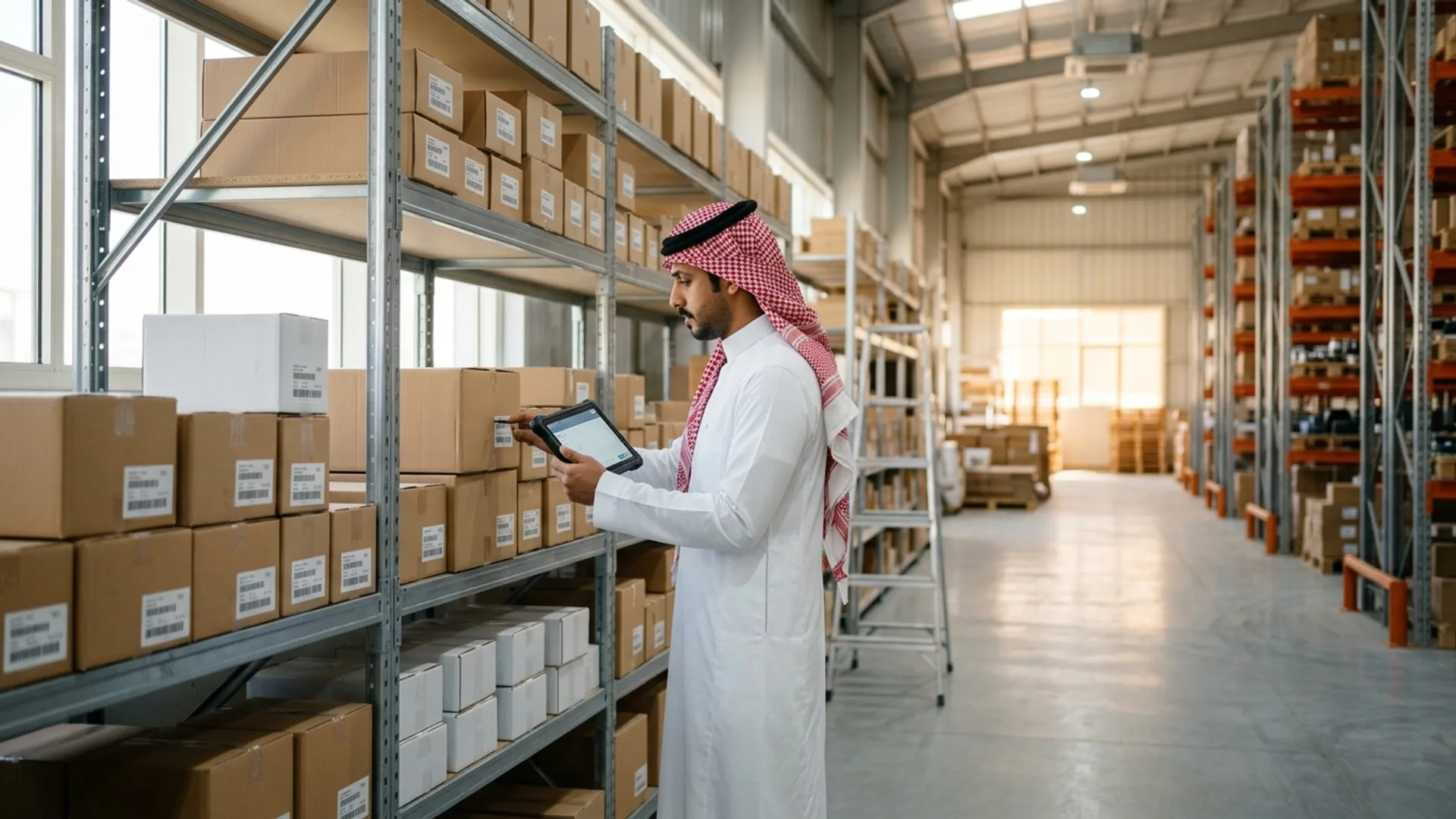
To open an auto spare parts trading company in Saudi Arabia as a foreign investor, you register with MISA, then obtain a Commercial Registration with the Ministry of Commerce (SAR 1,200 plus SAR 500 publication for an LLC), and every part you sell must meet the SASO Technical Regulation for Auto Spare Parts, amended in the Official Gazette on 11 August 2023. A 100% foreign-owned trading company needs SAR 30,000,000 in capital and a presence in at least 3 markets, so most founders enter with a Saudi partner or a GCC structure. The parts side is just as important: used, refurbished and expired parts cannot be imported except for clearly marked main assemblies, and most new parts need a Type 3 certificate of conformity before they reach the shelf.
This guide is written for the importer, distributor or wholesaler who wants to supply workshops, fleets and retail counters in the Kingdom. It walks through the ownership decision, the company setup, the SASO and SABER conformity route, labelling, warehousing and the mistakes that hold shipments at the port. If ownership is your first question, our main guide to 100% foreign ownership in Saudi Arabia explains which activities are open and on what terms; this article covers the narrower case of trading in vehicle parts and tyres.
The ownership rule for trading: what MISA requires before you sell parts
Selling spare parts is a commercial (trading) activity, and MISA treats trading as a special category. The Investor Guide published by the Ministry of Investment (13th edition, March 2026, section 5.1.1) sets two routes for a trading company with foreign shareholders:
- Commercial activity with a Saudi partner: minimum capital of SAR 26,666,667 and a minimum Saudi participation of 25%.
- Commercial activity with 100% foreign ownership: minimum capital of SAR 30,000,000 and a presence in at least 3 regional or global markets.
The 100% foreign route also carries obligations for the first five years (section 5.1.3): training 30% of Saudi employees each year, meeting the localisation rates set by the Ministry of Human Resources and Social Development, and investing either SAR 300 million over five years, or SAR 200 million over five years combined with a localisation standard. Those standards are local manufacturing of 30% or more of the products distributed in the Kingdom, 5% or more of sales allocated to research and development in the Kingdom, or a unified logistics and distribution centre that also provides after-sales service. Both amounts include the SAR 30 million cash capital.
For a regional parts distributor these thresholds suit a large brand owner or a manufacturer’s own distribution arm. Many mid-sized parts traders therefore choose one of three practical structures:
- A Saudi partner holding at least 25%, under the partner route above.
- A GCC-owned company, where shareholders who are GCC nationals or GCC-owned entities are generally treated as local investors for registration purposes. Confirm the treatment for your shareholders with the Ministry of Commerce before you file.
- A foreign-owned company in a non-trading activity, such as vehicle maintenance services or manufacturing of parts under an industrial licence, where the trading thresholds do not apply. The activity code must match what you actually do; ISIC codes decide what the Commercial Registration allows.
If you already have a company in the Kingdom and want to bring in a foreign shareholder, the steps are different again. Our guide to adding a foreign partner to a Saudi company covers that change.
What the SASO Technical Regulation for Auto Spare Parts covers
The Saudi Standards, Metrology and Quality Organization (SASO) approved the Technical Regulation for Auto Spare Parts at board meeting 162 on 9 November 2017. Amendment 1 was published in the Official Gazette on 11 August 2023. The regulation applies to new spare parts for vehicles, whether they are made in the Kingdom or imported. A vehicle, for this purpose, is a motor vehicle with four or more wheels, including light and heavy duty vehicles, passenger cars, buses and trucks; motorcycles and trailers are excluded.
Three product groups sit outside this regulation because other technical regulations cover them:
- Tyres
- Car batteries
- Safety barriers
The regulation names the supplier as the responsible party. In practice the supplier is the manufacturer if it is based in the Kingdom, the manufacturer’s agent in the Kingdom if the manufacturer is abroad, or the importer when there is no agent. Anyone in the supply chain whose work could affect the product’s characteristics, such as a repacker, also counts.
The regulation also separates two families of parts, and the difference affects your paperwork:
- Original parts are designed and made to the vehicle manufacturer’s specification, by the vehicle manufacturer or by a maker working to the same specification and quality control system.
- Commercial (conforming) parts are made by a third party to international, national or the part maker’s own standards, and must meet the vehicle maker’s performance requirements under the Gulf standard SASO GSO 1712.
Used, refurbished and expired parts: the import ban and its exception
Article 4.1.2 of the regulation prohibits importing used, refurbished or expired spare parts. There is one exception, and it is narrow. Main assemblies may be imported in refurbished condition:
- Body shells
- Engines
- Differentials
- Gearboxes
Even then, each unit must be wrapped, clean and free of grease and oil, and marked with the word “refurbished” in a way that cannot be removed. The supplier must also issue a declaration of conformity for those parts. A container of mixed used parts, such as second-hand alternators, brake calipers or suspension arms, does not fit the exception and should not be shipped.
This rule shapes the business model. A trader planning to supply refurbished engines and gearboxes to workshops can do so within the exception. A trader planning a general used-parts yard supplied by imports cannot.
Conformity routes: Type 3 certificate or supplier’s declaration
Article 6 of the regulation sets the conformity route, and it depends on who supplies the part:
| Situation | Conformity document required | Source in the regulation |
|---|---|---|
| Parts supplied to the Saudi market by the vehicle manufacturer or its legal representative | Supplier’s declaration of conformity is sufficient | Article 6.2 |
| Parts within the regulation’s scope (Annex 1 standards) placed on the market by any other supplier | Certificate of conformity from a SASO-accepted body under conformity model Type 3 | Article 6.3 |
| Parts outside the scope of the regulation | Supplier’s declaration of conformity (applies to suppliers of original and commercial parts) | Article 6.4 |
| Parts carrying the Saudi Quality Mark or an equivalent | Treated as conforming to the regulation | Article 6.7 |
| Refurbished main assemblies (body, engine, differential, gearbox) | Supplier’s declaration of conformity, plus cleaning, wrapping and permanent “refurbished” marking | Article 4.1.2 |
Annex 1 lists the standards that define the scope. They include SASO 2278 (general requirements for spare parts), SASO GSO 42 (general requirements for motor vehicles), SASO GSO ECE 90 (replacement brake linings), SASO GSO 1677 (laminated safety glass), SASO GSO 1503 (headlamps), SASO 526 (safety belts), wheel and rim standards, and others covering mirrors, door locks, coolants, horns, lamps and timing belts. Before you order a product line, map each part number to the right standard; that map becomes the basis of your certification plan.
Every product must also travel with a technical file. Article 6.6 lists three items: the supplier’s declaration of conformity on the template in Annex 3, a risk assessment document, and a certificate of origin. Test reports, certificates and declarations must show the manufacturer’s name, the part name and number, the country of manufacture, the month and year of manufacture, the vehicle type and model the part fits (a manufacturer’s catalogue reference is accepted), the standard number, and the expected life of the part where that is possible.
The regulation also expects a working quality management system at the factory. A manufacturer certified to ISO/TS 16949, the automotive application of ISO 9001, or an equivalent, is treated as meeting that requirement (Article 4.1.3). The supplier is responsible for sourcing parts from factories that are licensed in the country of origin (Article 10.2).
Labelling and packaging rules for spare parts
Labelling is where many otherwise compliant shipments fail. Article 4.2.4 requires each package to show:
- The manufacturer’s name or trademark.
- The country of manufacture.
- The part name or part number as listed in the manufacturer’s catalogue.
- The quantity in the package.
- The vehicle models the part fits, unless these are specified in the manufacturer’s catalogue.
- Safe operating parameters where relevant, such as an arrow showing the fitting direction.
- Any conformity mark, if one exists.
- Installation instructions in Arabic, or in Arabic and English where possible.
- Environmental and public safety information.
Imported parts must arrive inside their packaging, and the label data must be printed clearly and in a way that is hard to remove (Article 5.2). Where a part cannot be packed because of its size, the same information goes on the part itself or in the documents that come with it. Packaging must be free of asbestos, lead and other heavy metals, and plastic packaging must carry the degradable plastic label or a recycling symbol where the relevant regulation applies. Images and wording on packaging must respect public order and the values of the Kingdom (Article 5.5).
The regulation also sets out storage expectations: the manufacturer may specify shelving, temperature, humidity and dust control, and the supplier must make sure that storage or transport conditions do not affect conformity. Plan your warehouse layout with that in mind, especially for rubber, electrical and fluid products.
Tyres and batteries: separate regulations to plan for
Because the spare parts regulation excludes tyres and car batteries, a trader who adds them to the range must work through their own technical regulations. For tyres, SASO lists them among the products that need an energy efficiency label under SASO 2857, the technical regulation for registering information and issuing the energy consumption efficiency label for vehicles and tyres. SASO grants the licence to use that label. Tyre certification and labelling should therefore be scoped as a separate workstream from your general parts programme, with its own product registrations and test reports.
Batteries follow their own regulation as well. Check the current SASO list of technical regulations for the battery type you plan to sell before you place an order, and confirm the requirements on the official portal, since conformity schemes are updated from time to time.
Approvals in order: from company setup to first shipment
The sequence matters, because each authority asks for documents issued by the one before it. A typical order for a foreign-backed parts trading company is:
- Choose the ownership structure (Saudi partner at 25% or more, GCC ownership, or the 100% foreign trading route) and confirm the activity codes.
- Reserve the trade name with the Ministry of Commerce (SAR 200 for an Arabic name or SAR 500 for an English name).
- Register with MISA where there are foreign shareholders. MISA notifies registration within 10 working days of a complete file; the registration and annual update fees are determined by the ministry on approval. See the official service levels at misa.gov.sa.
- Obtain the Commercial Registration from the Ministry of Commerce through mc.gov.sa. Under the Commercial Register Law in force since 3 April 2025, the CR has no expiry date but must be confirmed every 12 months.
- Register with the Chamber of Commerce (no subscription for the first 3 years after CR registration).
- Register for VAT and customs with ZATCA, so the company can import under its own name through the Fasah clearance platform. Our guide to import licences and customs registration in Saudi Arabia covers this step.
- Secure the warehouse and shop premises with a municipal licence on Balady and Civil Defense approval for storage of oils, fluids and other materials.
- Register products on SABER, the SASO platform for product and shipment conformity, and obtain the Type 3 certificate or prepare the supplier’s declaration for each product line.
- Request a shipment certificate on SABER for each consignment, then clear the goods through Fasah.
- Set up Qiwa, GOSI and Muqeem for staff, and plan Saudization targets for the sales and warehouse team.
Steps 8 and 9 can start in parallel with the premises work, but no product can clear customs until the company exists and the product registrations are in place. For a full view of the company-side steps, see our company formation guide for Saudi Arabia.
Government costs and timelines at a glance
| Item | Authority | Indicative cost or time |
|---|---|---|
| Trade name reservation | Ministry of Commerce | SAR 200 (Arabic) or SAR 500 (English) |
| MISA investment registration | Ministry of Investment | Notified within 10 working days of a complete file; fee set by MISA on approval |
| Commercial Registration, LLC | Ministry of Commerce | SAR 1,200 + SAR 500 publication + 15% VAT |
| Annual CR confirmation, LLC | Ministry of Commerce | SAR 1,200 every 12 months |
| Chamber of Commerce | Chamber | No subscription for the first 3 years, then SAR 200 to 5,000 a year by class |
| Minimum capital, trading with Saudi partner | MISA | SAR 26,666,667 with 25% Saudi participation |
| Minimum capital, 100% foreign trading | MISA | SAR 30,000,000 plus presence in 3 markets |
| Type 3 product certificate | SASO-accepted conformity body | Fee set by the certification body; confirm on saber.sa |
| Municipal licence for shop or warehouse | Balady | Calculated on Balady under the Municipal Services Fees Regulation; valid 1 to 5 years |
Fees that are not fixed in law or listed above can change, so confirm them on the official portal at the time you apply.
Market surveillance, penalties and recalls
Customs and market surveillance authorities can check documents on each consignment, take random samples and send them to laboratories, and charge suppliers for the cost of testing (Article 7). If a part does not conform, the authorities can order the supplier to withdraw it from warehouses or the market, correct it where possible, re-export it or destroy it within a set period, and can announce a recall at the supplier’s expense (Article 9.3). SASO can cancel the related certificate of conformity.
The regulation lists the cases in which a product is treated as non-conforming: a missing or wrongly applied conformity mark, a missing or wrongly issued certificate or declaration, missing or incomplete technical documents, and missing or incomplete labelling or instructions. Violations of the approved standards are penalised under the Anti-Commercial Fraud Law, without prejudice to any stricter penalty in other laws. Products are also subject to the Product Safety Law issued by Royal Decree M/36 dated 29/01/1446H.
One structural rule deserves attention. Under Article 10.4, when parts are imported by the vehicle manufacturer or its agent, they must be supplied from vehicle manufacturers, or from companies those manufacturers approve. The same supplier may not combine supplying original parts with supplying commercial parts. If you plan to hold a brand agency and also sell aftermarket lines, take advice on how to separate the two businesses before you sign the agency contract.
Common mistakes to avoid
- Choosing 100% foreign ownership without checking the trading thresholds. The SAR 30,000,000 capital and five-year investment obligations apply to trading. Model the partner and GCC routes before you file.
- Shipping used parts outside the main-assembly exception. Second-hand components other than bodies, engines, differentials and gearboxes are prohibited, and even those must be cleaned, wrapped and permanently marked.
- Treating tyres and batteries as ordinary spare parts. They sit under separate technical regulations, and tyres need the SASO energy efficiency label.
- Labels without Arabic instructions or catalogue numbers. Missing label data is a listed ground for non-conformity.
- Repacking parts in Saudi Arabia. Imported parts must arrive inside their packaging, and a repacker becomes a supplier with its own obligations.
- Ordering stock before the product registrations are ready. Goods that arrive before their certificates can be held at the port while storage charges build up.
- Mixing original and aftermarket supply under a brand agency. Article 10.4 does not allow the same supplier to combine both.
- Activity codes that do not match the business. Wholesale, retail, workshop and import activities each need the right ISIC code on the Commercial Registration.
How Noble Core helps parts traders enter Saudi Arabia
Noble Core has supported foreign founders with company setup in Saudi Arabia since 2020, from our offices in Dubai and Riyadh. For an auto parts business we help you choose between the partner, GCC and foreign trading routes, prepare the MISA registration and Commercial Registration with the correct activity codes, register with ZATCA for VAT and customs, and coordinate the premises licences. We complete the procedures on your behalf and work with your certification body so that company documents are ready when the product registrations need them.
If you are still deciding on ownership, start with our guide to foreign ownership of a Saudi company, and see our MISA registration guide for the investor side. When you are ready to talk through your structure, message our team on WhatsApp with your shareholders’ nationalities and the product lines you plan to import, and we will map the route and the documents with you.
Need help setting up in Saudi Arabia? Noble Core handles your MISA licence, commercial registration, and visas end-to-end, done right the first time.
Frequently Asked Questions
Can a foreigner own 100% of an auto spare parts trading company in Saudi Arabia?
Yes, but spare parts trading is a commercial activity, so MISA requires SAR 30,000,000 minimum capital and a presence in at least 3 regional or global markets for 100% foreign ownership, plus five-year obligations such as training 30% of Saudi staff and investing SAR 300 million (or SAR 200 million with a localisation standard). Most mid-sized traders use a Saudi partner or GCC structure instead.
What is the minimum capital for a parts trading company with a Saudi partner?
Under section 5.1.1 of the MISA Investor Guide (13th edition, March 2026), a commercial activity with a Saudi partner needs minimum capital of SAR 26,666,667 and Saudi participation of at least 25%. There are no extra market-presence conditions on this route. Confirm the current figures with MISA before you file, as the guide is updated periodically.
Can I import used or refurbished car parts into Saudi Arabia?
Generally no. The SASO Technical Regulation for Auto Spare Parts bans importing used, refurbished or expired parts. The exception covers main assemblies: body shells, engines, differentials and gearboxes. These must be wrapped, clean, free of grease and oil, permanently marked as refurbished, and covered by the supplier’s declaration of conformity.
Which certificate do spare parts need before they can be sold in Saudi Arabia?
Parts within the regulation’s scope need a certificate of conformity from a SASO-accepted body under conformity model Type 3. Parts supplied by the vehicle manufacturer or its legal representative need a supplier’s declaration of conformity, and parts outside the scope also need a supplier’s declaration. Products are registered and certified through the SABER platform.
Are tyres and car batteries covered by the spare parts regulation?
No. Article 2 of the SASO spare parts regulation excludes tyres, car batteries and safety barriers because other technical regulations cover them. Tyres are listed by SASO among products that need an energy efficiency label under SASO 2857. Plan tyres and batteries as separate certification workstreams with their own registrations and test reports.
What must be printed on spare parts packaging in Saudi Arabia?
Each package must show the manufacturer’s name or trademark, country of manufacture, part name or catalogue number, quantity, the vehicle models it fits, safe operating indicators where relevant, any conformity mark, installation instructions in Arabic (or Arabic and English), and environmental and safety information. Imported parts must arrive inside their packaging.
Can a brand agent sell both original and aftermarket parts?
Article 10.4 of the SASO regulation says that when parts are imported by the vehicle manufacturer or its agent, they must come from vehicle manufacturers or companies they approve, and the same supplier may not combine supplying original parts with supplying commercial (aftermarket) parts. Separate the two businesses before signing an agency contract.
How long does it take to set up a spare parts trading company in Saudi Arabia?
MISA notifies investment registration within 10 working days of a complete file, and the Commercial Registration follows on mc.gov.sa. Premises licences on Balady, ZATCA registration and SABER product certificates run alongside. The overall time depends on capital deposits, partner documents and how quickly your certification body completes Type 3 assessments.