Business Setup in Jeddah (2026): Costs, Steps & Sectors
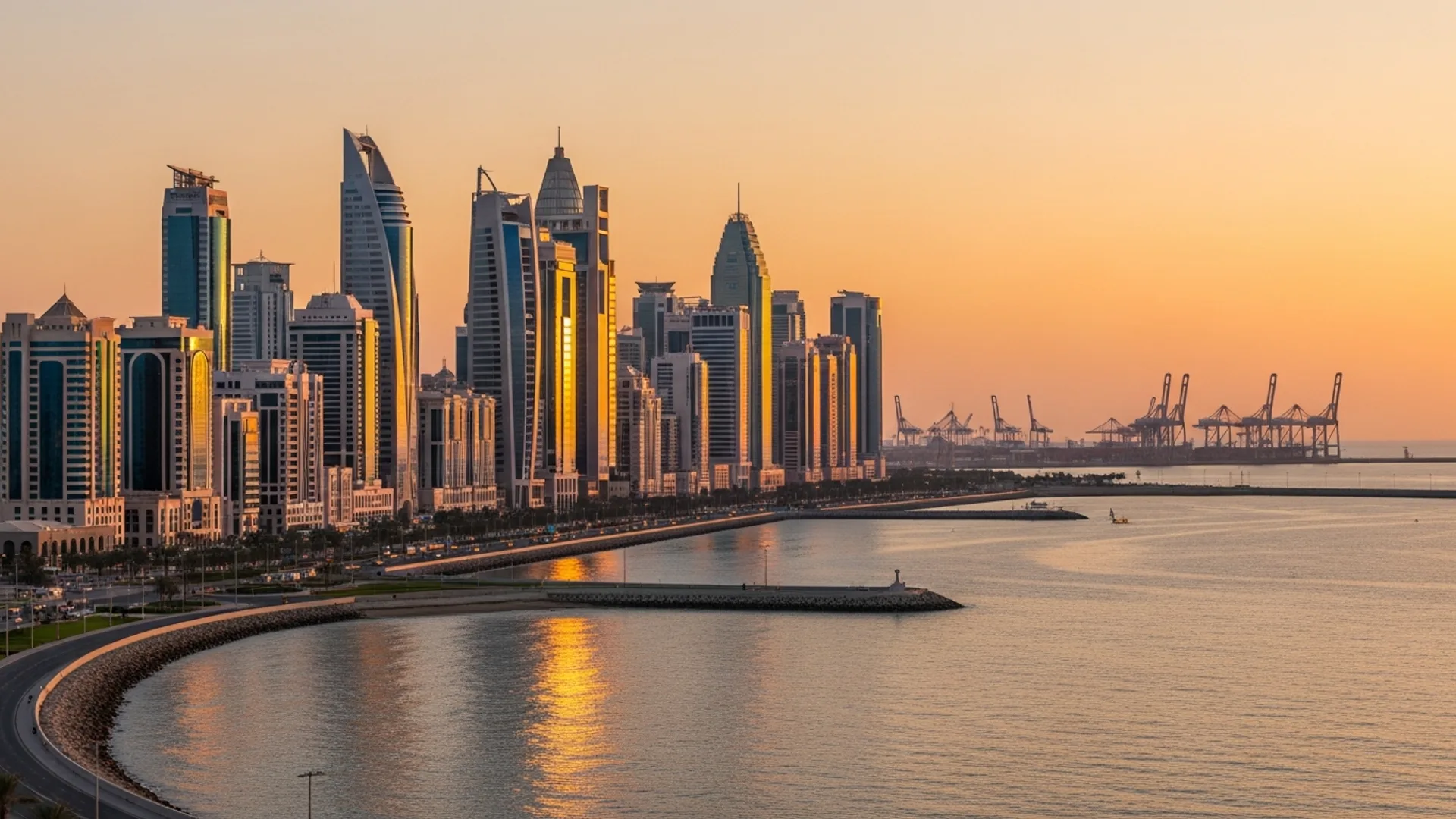
Business setup in Jeddah lets a foreign investor own 100% of a company on Saudi Arabia’s Red Sea coast — with the MISA investment licence typically issued in 3 to 10 business days. In 2026, MISA licence issuance and renewal fees remain suspended, the Commercial Registration costs a fixed SAR 1,200 (plus 15% VAT), and Jeddah’s position beside the Kingdom’s busiest port — Jeddah Islamic Port, which handles over 65% of Saudi imports — makes it a natural base for trade, logistics, retail and tourism ventures.
This guide explains exactly how to set up a business in Jeddah in 2026: why the city, the step-by-step process, the strongest sectors, the real costs in Saudi riyals, and the role of the Jeddah Chamber of Commerce and nearby King Abdullah Economic City.
Why set up a business in Jeddah in 2026?
Jeddah is Saudi Arabia’s commercial heart on the Red Sea and the Kingdom’s second-largest city. For foreign founders, three things make it stand out: location, trade infrastructure, and a diversifying economy under Vision 2030.
- Red Sea gateway. Jeddah sits on one of the world’s busiest shipping lanes connecting Asia, Africa and Europe through the Suez–Red Sea corridor — ideal for import/export and re-export businesses.
- Jeddah Islamic Port. The largest and busiest seaport in Saudi Arabia, handling more than 65% of the country’s imports, with services linking it to major hubs in India, Oman and beyond.
- Gateway to Makkah and Madinah. Jeddah is the principal entry point for millions of pilgrims travelling to the holy cities for Hajj and Umrah each year, supporting a substantial and respected pilgrimage-services economy — hospitality, transport, catering, and retail.
- Diversified, growing market. Beyond trade, Jeddah has strong retail, food and beverage, tourism, healthcare and manufacturing sectors that are expanding as Vision 2030 broadens the non-oil economy.
If you are weighing cities, the trade-and-logistics edge of Jeddah complements a Riyadh head office well — many groups run a national setup with a presence in both.
Jeddah’s appeal also comes from its history as the Kingdom’s traditional merchant city. For centuries it was the trading port that supplied Makkah and Madinah, and that mercantile DNA survives in a dense network of established importers, distributors and family trading houses. For a foreign founder, that means ready-made suppliers, agents and partners in nearly every product category — a practical advantage when you need local distribution from day one. The city’s Jeddah Chamber of Commerce and Industry (JCCI), established by royal decree in 1946, is one of the oldest business organisations in Saudi Arabia and a useful first port of call for market intelligence and networking.
The pilgrimage economy: a respected, structured opportunity
As the closest major city and main air and sea gateway to Makkah and Madinah, Jeddah anchors the services that support the millions of guests who perform Hajj and Umrah each year. This is one of the Kingdom’s most important and carefully regulated sectors. Foreign-owned businesses commonly serve it indirectly — through hospitality, ground transport, food and beverage, retail, technology platforms, and logistics — while activities tied directly to pilgrim guidance and the holy sites are governed by the relevant Saudi authorities and licensing rules. Founders should treat this sector with the respect it deserves and follow the official requirements for any activity that touches it.
The scale is significant: the seasonal and year-round flow of guests creates sustained, predictable demand for accommodation, transport, dining, telecommunications, money exchange, and consumer goods. Businesses that build reliable, high-quality services — for example serviced apartments, fleet transport, halal-certified central kitchens, or digital booking platforms — can serve this demand while remaining well clear of the directly regulated guidance activities. As always, confirm the licensing path for your specific activity with the relevant authorities and the Saudi Business Center before you launch.
The two licences you need: MISA licence + Commercial Registration
Every foreign-owned company in Jeddah is built on two core documents:
- MISA investment licence — issued by the Ministry of Investment of Saudi Arabia (MISA). This is the mandatory first step that grants a foreign investor the legal right to do business in the Kingdom, with 100% ownership available in most activities.
- Commercial Registration (CR / السجل التجاري) — issued by the Ministry of Commerce through the Saudi Business Center. The CR is your company’s official identity on the national registry, required to open a bank account, sign contracts, and hire staff.
You secure the MISA licence first, then use it to complete the Commercial Registration. For the full national picture, see our guide to company formation in Saudi Arabia.
Step-by-step: how to set up a business in Jeddah
1. Choose your activity and legal structure
Most foreign investors register a Limited Liability Company (LLC). A branch of a foreign company, a joint-stock company, or a Regional Headquarters (RHQ) are alternatives depending on your goals. Confirm your activity against the MISA negative list, as a small number of activities remain restricted.
2. Prepare and attest your documents
Foreign corporate documents — the parent company’s commercial registration, articles of association, board resolutions and passport copies — must be notarised in the country of origin, legalised by the Saudi embassy, and translated into Arabic by an approved translator inside Saudi Arabia. This step usually takes the longest, so start it early.
3. Apply for the MISA licence
Submit your application through the MISA portal with the attested documents and your chosen activities. With complete paperwork, the licence is typically issued in 3 to 10 business days.
4. Reserve your name and register the CR
Reserve a trade name and complete the Commercial Registration with the Ministry of Commerce via the Saudi Business Center, then notarise the Articles of Association to finalise the entity. Under the new Commercial Register Law effective 3 April 2026, the CR is a unified national registration with no expiry — replaced by an annual confirmation.
5. Join the Jeddah Chamber and complete registrations
Register with the Jeddah Chamber of Commerce and Industry (JCCI), then complete your post-licence registrations (below) so you can hire, invoice and operate legally.
One welcome change for 2026 is how much of this now happens digitally. The Saudi Business Center has integrated most of the company-registration journey — name reservation, Articles of Association, CR issuance and many municipal and labour steps — into unified online services, reducing the number of physical visits and shortening turnaround times. Under the new Commercial Register Law effective 3 April 2026, the CR is a single unified national registration whose identifier begins with the digit “7”, carries no expiry date, and is maintained through an annual confirmation rather than a renewal. English trade names are now permitted, and a five-year grace period applies for existing businesses to align with the new framework. These reforms make a Jeddah setup measurably simpler than it was even a year or two ago.
Legal structures: which is right for your Jeddah business?
Choosing the correct vehicle up front saves time and cost later. The most common options for foreign investors are:
- Limited Liability Company (LLC) — the default choice for trading, services and most operating businesses. It offers limited liability, flexible ownership, and is well understood by banks and counterparties.
- Branch of a foreign company — suits established international firms that want a direct extension of the parent rather than a separate legal entity. It still requires a MISA licence and a CR.
- Joint-stock company — used for larger ventures, capital-raising, or activities that require this form.
- Regional Headquarters (RHQ) — for groups basing their MENA leadership in the Kingdom, with associated incentives. While RHQs are often Riyadh-centric, the structure is relevant to multinationals operating across Saudi Arabia.
Your structure interacts with your activity, capital and tax treatment, so it is worth confirming the best fit with MISA or an advisor before you file.
Key sectors for foreign businesses in Jeddah
| Sector | Why Jeddah | Typical activities |
|---|---|---|
| Logistics & trade | Jeddah Islamic Port + King Abdullah Port nearby; Red Sea corridor | Import/export, freight forwarding, warehousing, distribution, re-export |
| Retail & e-commerce | Large affluent population and visitor flows | Stores, malls, online retail, fashion, electronics |
| Tourism & hospitality | Red Sea coast, Al-Balad heritage district, gateway to the holy cities | Hotels, tour operators, leisure, events |
| Food & beverage | Strong dining culture; year-round visitor demand | Restaurants, cafes, catering, central kitchens |
| Manufacturing & industry | Port access and nearby industrial cities | Light manufacturing, assembly, packaging, processing |
| Healthcare | Major regional medical hub | Clinics, medical services, pharma distribution |
Logistics is the standout: with Jeddah Islamic Port handling the majority of national imports and King Abdullah Port just north of the city, supply-chain and distribution ventures have unusually strong infrastructure on their doorstep.
King Abdullah Economic City (KAEC): the logistics hub next door
About 100 km north of Jeddah on the Red Sea coast lies King Abdullah Economic City (KAEC) — a planned city spanning roughly 185 square kilometres with a deep-water port, an industrial valley, and a designated special economic zone. Its centrepiece, King Abdullah Port, has grown rapidly to handle over 2 million TEUs a year, becoming one of the world’s fastest-growing container ports. For manufacturers, logistics operators and industrial investors, KAEC offers modern infrastructure and special-zone incentives within easy reach of Jeddah’s airport, talent pool and city services — making the Jeddah–KAEC corridor a powerful base for trade-focused companies.
Practically, many founders register their main commercial entity in Jeddah — close to the airport, banks, suppliers and staff — while locating warehousing, light manufacturing or distribution operations in or near KAEC’s industrial valley to benefit from purpose-built port handling and zone facilities. Because King Abdullah Port was built recently, it avoids many of the legacy constraints of older ports and offers fast, modern container operations. If your model is import-heavy or export-oriented, mapping your supply chain across both Jeddah Islamic Port and King Abdullah Port at the planning stage can meaningfully cut landed costs and lead times.
Cost of business setup in Jeddah (2026)
Setup cost depends on your activity, structure, office and visa needs. The headline 2026 facts: MISA’s licence issuance and renewal fees remain suspended, and the Commercial Registration is a fixed SAR 1,200 (plus 15% VAT). The table shows the typical components for a standard LLC in Jeddah.
| Cost component | Typical amount (SAR) | Notes |
|---|---|---|
| MISA investment licence | Fee suspended in 2026 | Issuance and renewal fees suspended (previously around SAR 12,000 first year / 62,000 renewal) |
| Commercial Registration (CR) | 1,200 + 15% VAT | One-time, via Ministry of Commerce / Saudi Business Center |
| Jeddah Chamber of Commerce | 2,000 – 3,000 / year | Annual subscription (JCCI) |
| Municipality (Baladi) licence | 1,000 – 5,000 | Varies by activity and premises |
| Office space (A-class, Jeddah) | 60,000 – 120,000 / year | Indicative for prime offices; smaller/shared space costs much less |
| Document attestation & translation | Varies | Notarisation, Saudi embassy legalisation, certified Arabic translation |
| Government & service support (Noble Core) | from 36,999 | Transparent end-to-end package |
Figures are indicative for 2026 and can change — always confirm current fees on the official MISA and Saudi Business Center portals, or ask our team for a live quote. Capital requirements vary by activity; some regulated activities carry specific thresholds, so verify yours with MISA before applying.
Post-licence registrations every Jeddah company needs
- Jeddah Chamber of Commerce (JCCI) — membership and authorised-signatory registration.
- ZATCA (Zakat, Tax and Customs Authority) — for Zakat/corporate tax, 15% VAT, and e-invoicing (Fatoora).
- GOSI (General Organization for Social Insurance) — for employee social insurance.
- Qiwa & Muqeem — for labour files, work visas, and resident (Iqama) management.
- Saudization (Nitaqat) — meeting the Saudi-national hiring ratio for your sector and size, administered by MHRSD.
- Corporate bank account — opened once the CR and signatory documents are in place.
Two of these deserve early attention. First, ZATCA e-invoicing (Fatoora) is now standard practice: once you are VAT-registered, your invoices must be issued through compliant e-invoicing, so choose accounting software that supports it from day one. Second, Saudization (Nitaqat), administered by the Ministry of Human Resources and Social Development (MHRSD), sets the minimum percentage of Saudi nationals you must employ based on your sector and headcount. Your Nitaqat band affects your access to work visas, so plan your hiring mix early rather than treating it as an afterthought. You can manage your labour file and visa quotas through the Qiwa platform.
How long does business setup in Jeddah take?
For a straightforward LLC with complete, pre-attested documents, the MISA licence is usually issued within 3 to 10 business days. The Commercial Registration, Jeddah Chamber registration, and post-licence steps add a few more days to a few weeks, depending on activity, bank onboarding and visa needs. Document attestation in your home country is the most common cause of delay — prepare it first to keep the timeline tight. The Saudi Business Center’s integrated digital services have made 2026 one of the faster years yet to register.
A realistic end-to-end timeline for most foreign founders, assuming documents are ready, looks like this: attestation and translation (1–4 weeks, done in parallel from your home country), MISA licence (3–10 business days), CR and Articles of Association (a few days), Jeddah Chamber and post-licence registrations (several days), and bank account opening (often the longest single step, as banks run their own compliance checks). Building a small buffer for banking and for any activity-specific approvals will keep your launch on schedule.
How Noble Core helps with your Jeddah setup
The mechanics of a Jeddah setup are straightforward once you know the sequence, but the friction lives in the details — attesting documents correctly the first time, choosing the right activity code, sequencing MISA before the CR, registering with ZATCA, GOSI, Qiwa and the Jeddah Chamber, and getting a bank account opened. Noble Core manages this full journey end-to-end: MISA licence, document attestation and certified Arabic translation, Commercial Registration, Chamber membership, post-licence registrations, visa and Iqama processing, and bank-account support — so you deal with one team from first enquiry to live company. For founders who want to focus on the business rather than the bureaucracy, that single point of accountability is the difference between a smooth launch and weeks of avoidable back-and-forth.
Common mistakes to avoid
- Leaving document attestation to the end — notarisation and Saudi embassy legalisation abroad are the slowest steps; start them before anything else.
- Picking the wrong activity code — your MISA activity drives ownership, capital and licensing; confirm it against the negative list before applying.
- Underestimating office costs — prime A-class offices in Jeddah are expensive; match your space (shared, serviced or full office) to your real needs.
- Ignoring Saudization (Nitaqat) early — plan your Saudi-national hiring ratio from day one to stay compliant and keep visa quotas open.
- Forgetting ZATCA e-invoicing — VAT registration and Fatoora e-invoicing are mandatory once you cross the thresholds; set them up correctly from the start.
- Treating pilgrimage-linked activities casually — any activity touching Hajj/Umrah services is regulated; follow the official licensing requirements precisely.
- Skipping the MISA-then-CR order — you must hold the MISA licence before the Commercial Registration; doing them out of sequence causes delays.
Get your Jeddah setup done right
Jeddah rewards businesses that respect the process and lean into its trade-and-logistics strengths. With suspended MISA fees, a fixed SAR 1,200 CR, 100% foreign ownership, and the Kingdom’s busiest port on the doorstep, 2026 is an excellent window to enter. For the licensing detail, read our pillar on the MISA license in Saudi Arabia, then talk to our team for an end-to-end Jeddah setup.
Need help setting up in Saudi Arabia? Noble Core handles your MISA licence, commercial registration, and visas end-to-end — done right the first time.
Frequently Asked Questions
How much does business setup in Jeddah cost in 2026?
In 2026, MISA licence issuance and renewal fees remain suspended. Beyond that, the Commercial Registration is a fixed SAR 1,200 plus 15% VAT, Jeddah Chamber membership runs SAR 2,000–3,000 per year, and municipality fees are roughly SAR 1,000–5,000. Office and attestation costs vary. Noble Core offers a transparent end-to-end package from SAR 36,999.
Can a foreigner own 100% of a company in Jeddah?
Yes. In most activities a foreign investor can own 100% of a Jeddah company through a MISA investment licence — no Saudi partner or sponsor required. A small number of activities remain restricted, so check the MISA negative list for your specific activity before you apply.
How long does it take to set up a business in Jeddah?
With complete, properly attested documents, the MISA licence is typically issued in 3 to 10 business days. The Commercial Registration, Jeddah Chamber registration and post-licence steps add a few more days to a few weeks, depending on activity, banking and visa needs. Document attestation abroad is the most common cause of delay.
What are the best sectors for business in Jeddah?
Jeddah is strongest in logistics and trade (driven by Jeddah Islamic Port and nearby King Abdullah Port), retail and e-commerce, tourism and hospitality, food and beverage, manufacturing, and healthcare. Its Red Sea location and role as gateway to the holy cities support a large, year-round services and trade economy.
What is Jeddah Islamic Port and why does it matter for business?
Jeddah Islamic Port is the largest and busiest seaport in Saudi Arabia, handling more than 65% of the country’s imports, with shipping links to major hubs in India, Oman and beyond. For import/export, logistics, distribution and re-export businesses, this gives Jeddah unmatched trade infrastructure on the Red Sea.
What is King Abdullah Economic City and how close is it to Jeddah?
King Abdullah Economic City (KAEC) is a planned city about 100 km north of Jeddah, spanning roughly 185 square kilometres with a deep-water port, an industrial valley and a special economic zone. Its King Abdullah Port handles over 2 million TEUs a year, making the Jeddah–KAEC corridor a strong base for logistics and industry.
Which authorities must a Jeddah company register with after its CR?
After the CR, register with the Jeddah Chamber of Commerce (JCCI), ZATCA (Zakat/tax, 15% VAT and e-invoicing), GOSI (social insurance), and Qiwa and Muqeem for labour and Iqama management. You must also meet your sector’s Saudization (Nitaqat) hiring ratio under MHRSD.
Can I serve the Hajj and Umrah pilgrimage economy from Jeddah?
Many foreign-owned businesses support the pilgrimage economy indirectly through hospitality, transport, food and beverage, retail, technology and logistics. Activities tied directly to pilgrim guidance and the holy sites are regulated by the relevant Saudi authorities, so follow the official licensing requirements carefully for any activity that touches this respected sector.