
Food Truck License Saudi: 2026 Cost & Steps
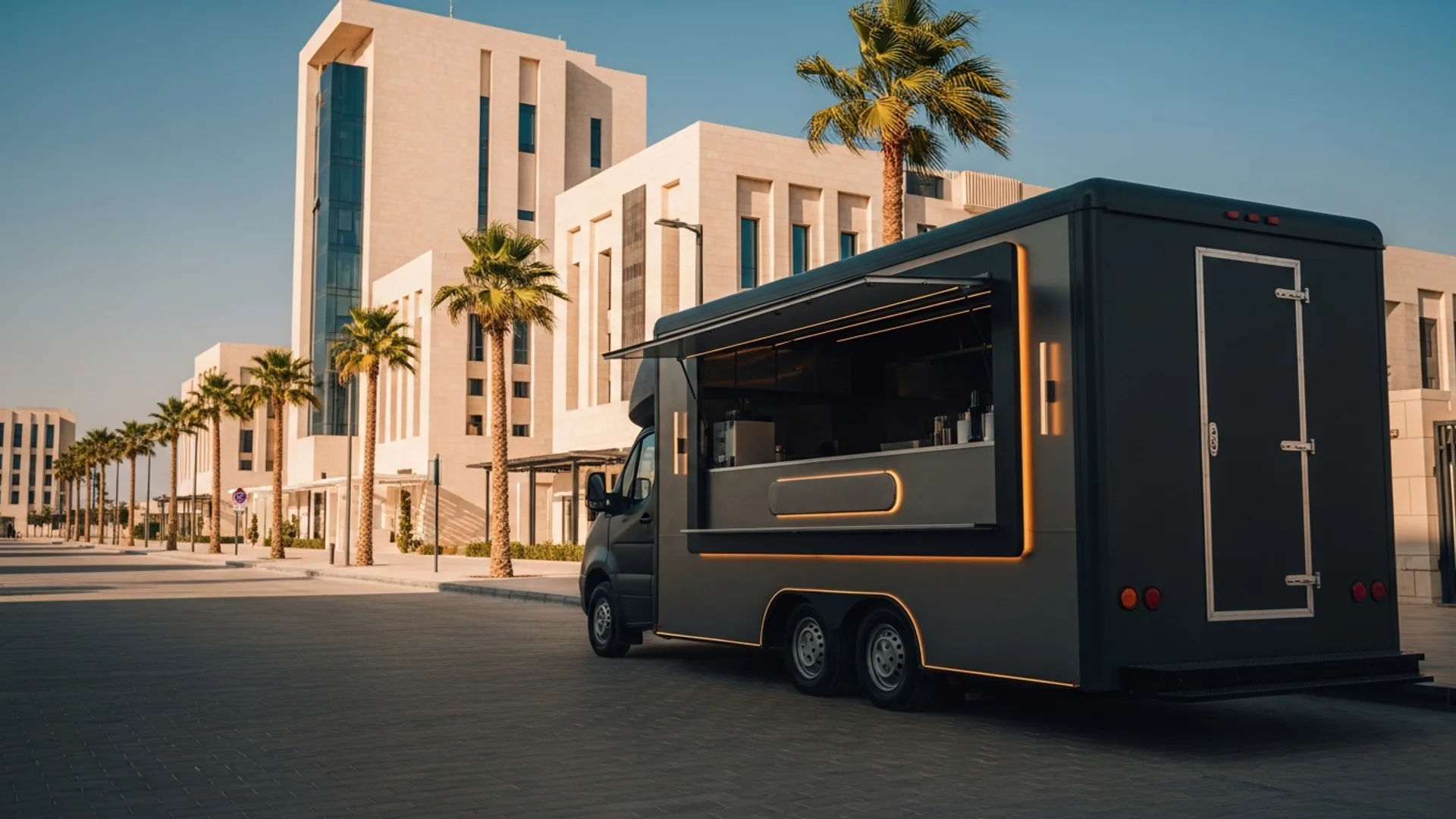
Getting a food truck license Saudi entrepreneurs can legally operate under requires two core approvals: a Commercial Registration (CR) from the Saudi Business Center (fee ~SAR 1,200–2,000) and a mobile-vending municipal permit from Balady, your city municipality’s platform. Budget roughly 10–20 business days end-to-end and SAR 15,000–40,000 in total setup costs, with 100% foreign ownership now permitted in most food activities. This guide walks through every portal screen, document, fee, and inspection so you can move from concept to your first service window without guesswork or costly rejections.
What a food truck license Saudi Arabia actually covers
A food truck license Saudi Arabia recognises is not a single document. It is a stack of approvals that together let you cook and sell food from a mobile unit legally. The foundation is your Commercial Registration (CR), which formally establishes the business as a legal entity. On top of that sits the Balady municipal permit for mobile food vending, plus a food-handling health certificate for you and every member of your team. Miss any one layer and you cannot trade compliantly.
Since the new Commercial Register Law took effect on 3 April 2025, CRs are issued as a single unified national record. The CR number now starts with “7”, carries no expiry date, and is confirmed annually rather than renewed. English trade names are now allowed, which makes branding a mobile food concept far simpler for international founders who want a name that travels. A five-year grace framework applies for keeping records current. This modernisation under Vision 2030 has genuinely streamlined how small food businesses register and stay compliant.
Balady, operated by the Ministry of Municipal, Rural Affairs and Housing, is the portal where mobile-vending permits, location approvals, and health-related municipal licences are issued and paid. Every food truck operator interacts with Balady at some stage, so understanding its screens early saves weeks of back-and-forth. Think of the CR as your legal identity and the Balady permit as your licence to physically operate a food unit on the ground.
Who needs a food truck license in Saudi Arabia
You need the full licensing stack if you prepare, cook, reheat, or sell food or beverages from any mobile or semi-mobile unit, a converted van, a trailer, a cart, or a container kitchen that moves. This applies whether you operate at fixed municipal-approved bays, at events and festivals, or on a roaming route across a city.
- Saudi nationals and residents starting a single-truck food business as their first venture.
- Foreign investors: you will also need a MISA investment licence before your CR. See our guide to the MISA license in Saudi Arabia for exactly how 100% foreign ownership works in food activities.
- Existing restaurants expanding into a mobile brand extension or catering arm.
- Event caterers and franchises running multiple trucks under one commercial entity.
- Cloud-kitchen operators adding a mobile front to reach customers directly at events.
If food never actually touches your unit, for example, you only sell sealed packaged goods with no on-site preparation, some requirements are lighter, but you should still confirm your exact activity code with the Saudi Business Center. The moment you cook, chill, or reheat, the full health-inspection framework applies. When in doubt, treat your concept as a full food-preparation business and license accordingly; it is far cheaper than being shut down for an under-scoped permit.
Step-by-step: how to get your food truck license Saudi guide
Follow this sequence exactly. Doing steps out of order, for example, applying to Balady before you hold a CR, is the single most common reason applications stall. Each step below names the portal and the screen you will use.
- Reserve your trade name and choose activity codes. Log in to the Saudi Business Center (business.sa) with your Absher or Nafath credentials. Open “Start a Business,” reserve a trade name (English names are now allowed), and select the food-service and mobile-catering ISIC activity codes that precisely match your concept.
- Foreign investors: obtain the MISA licence first. Apply on the Ministry of Investment (MISA) portal. MISA licensing typically completes in about 3–10 business days. Importantly, MISA licence issue and renewal fees are suspended in 2026 (previously SAR 12,000 issue / SAR 62,000 renewal), a meaningful saving for new international entrants.
- Issue the Commercial Registration. Complete the CR through the Saudi Business Center. Under the 2026 unified system your CR number starts with “7” and has no expiry date. Pay the CR fee (indicative SAR 1,200–2,000, confirm on the portal).
- Register with the Chamber of Commerce. Membership is issued alongside your CR; budget an indicative SAR 2,000–3,000 per year depending on your city and category tier.
- Register your National Address. Your business entity needs a registered National Address before municipal steps proceed smoothly.
- Open the Balady municipal file. Go to balady.gov.sa, sign in, and select the mobile food-vending service. Submit your vehicle specification, kitchen layout, and intended operating zones.
- Pass the municipal health and vehicle inspection. Balady schedules an inspection of your unit’s water tanks, refrigeration, gas safety, ventilation, and hygiene fittings. Approval unlocks the municipal permit.
- Obtain health certificates for staff. Every food handler needs a valid municipal health card confirming food-safety training and a clean medical check.
- Register for tax and payroll. Register with ZATCA for VAT (15%) and e-invoicing (Fatoora), and enrol staff with GOSI and Qiwa if you employ workers.
- Pay the permit fee and collect your licence. Once the inspection passes, pay through SADAD inside the Balady portal and download your electronic permit.
A well-prepared applicant who has documents ready can move through this entire sequence in two to three weeks. Gaps in paperwork are what stretch it to two months, so front-load your document gathering.
Required documents and IDs
Gather these before you start so no portal step blocks you mid-application. Having every file ready as a clear PDF or image is the biggest single factor in a fast approval:
- National ID (Saudis) or Iqama (residents), verified through Absher.
- MISA investment licence: foreign investors only.
- Commercial Registration certificate from the Saudi Business Center.
- Vehicle ownership/registration and a technical specification of the mobile unit.
- Kitchen and equipment layout showing water, refrigeration, ventilation, and gas-safety compliance.
- Food-handler health cards for you and every staff member.
- Lease or approval for any fixed commissary/base kitchen if used for prep or storage.
- National Address registered for the business entity.
- Chamber of Commerce membership certificate.
Employers will also use Qiwa for labour contracts and Muqeem for resident-employee records, and enrol staff with GOSI for social insurance. Keeping digital copies of every document in one folder means you can respond to any municipal request within hours rather than days, which keeps your application moving.
Food truck license fees and timeline table
The figures below are indicative 2026 planning numbers. Government fees change and vary by municipality, so confirm current figures on the official portal (Balady and the Saudi Business Center) before you commit to a budget or sign supplier contracts.
| Item | Authority / Portal | Indicative fee (SAR) | Typical timeline |
|---|---|---|---|
| MISA investment licence (foreign investors) | MISA | Issue/renew fees suspended in 2026 | 3–10 business days |
| Commercial Registration (CR) | Saudi Business Center | 1,200–2,000 | 1–3 business days |
| Chamber of Commerce membership | Chamber | 2,000–3,000 / year | Issued with CR |
| Balady mobile-vending permit | Balady | Indicative; confirm on portal | 5–10 business days |
| Municipal health & vehicle inspection | Balady | Indicative; confirm on portal | Scheduled after application |
| Food-handler health cards | Municipality | Per person; confirm locally | 2–5 business days |
| Iqama issue/renew (per foreign employee) | Absher / MHRSD | ~650 / year + levies | Ongoing |
| VAT & e-invoicing registration | ZATCA | No fee to register (VAT 15% on sales) | 1–2 business days |
Realistically, a first-time single-truck operator should plan for SAR 15,000–40,000 in combined setup costs, plus the separate cost of the vehicle and kitchen build-out itself, which often exceeds the licensing spend. Keep a contingency of 10–15% for inspection re-visits and any equipment upgrades an inspector may require before final sign-off.
Understanding the Balady portal screens
Because Balady is where most food truck applicants get stuck, here is what to expect once you sign in at balady.gov.sa. Walking in with a clear mental map of these screens is the difference between a smooth week and a frustrating month.
Selecting the right service
From the dashboard, choose the commercial-licensing category, then the mobile food-vending service. Balady groups food activities by risk level, so your selected activity code from the CR must align exactly with what you pick here. A mismatch is an automatic rejection, so cross-check the codes side by side before submitting.
Uploading unit specifications
You will attach the vehicle details, a kitchen layout diagram, and evidence of safe water storage, refrigeration, ventilation, and gas fittings. Clear, labelled diagrams speed up inspector approval dramatically. Photographs of the actual installed equipment, alongside the plans, help inspectors verify compliance before they even visit your unit.
Booking the inspection and paying
After document review, Balady issues an inspection appointment. Once your unit passes, the permit fee becomes payable through SADAD directly inside the portal, and the municipal permit is issued electronically. Keep the reference number; you will quote it when renewing or when operating at official events that request proof of licensing.
Choosing where your food truck can operate
A common surprise for new operators is that the licence does not grant the right to park and sell anywhere. Municipalities designate approved mobile-vending zones, event grounds, and sometimes seasonal locations. Before you finalise routes or commit to a festival slot, verify through Balady that your chosen locations are on the approved list for that municipality.
Fixed bays are typically allocated by the municipality and may involve a location-specific approval. Event operation, by contrast, is often arranged through the event organiser in coordination with the local municipality, but the underlying food truck permit and health cards must always be valid. Planning your operating geography before you build the truck ensures your unit’s size and setup match what the approved zones can physically accommodate.
Tax, payroll, and ongoing compliance
A food truck is a fully taxable business. Register with the Zakat, Tax and Customs Authority (ZATCA) for VAT if your taxable turnover crosses the mandatory threshold, apply the 15% VAT rate on sales, and comply with ZATCA e-invoicing (Fatoora), which is being rolled out in waves across businesses of different sizes. A compliant point-of-sale system that issues Fatoora-ready invoices from day one saves painful retrofitting later.
If you hire staff, you will run payroll obligations through the Ministry of Human Resources and Social Development (MHRSD) ecosystem: labour contracts on Qiwa, resident records on Muqeem, and social-insurance enrolment with GOSI. The total GOSI contribution for a Saudi employee is around 21.5% (employer and employee shares combined). Under the 2026 unified CR system, remember your registration is confirmed annually rather than renewed, with a five-year grace framework for keeping details current. Diarise the annual confirmation so your legal status never lapses.
Food-handler health cards also carry renewal cycles. Track every staff member’s card expiry, because an out-of-date card can halt trading during a spot inspection. Building a simple compliance calendar covering CR confirmation, VAT filing, GOSI payments, and health-card renewals keeps your mobile business audit-ready all year round.
Food truck vs fixed restaurant: what changes
Many first-time founders weigh a food truck against a traditional storefront. The licensing logic is similar. You still need a CR, Chamber membership, health approvals, and tax registration, but the mobile route removes the large fixed-premises lease and municipal building permits that a restaurant carries. That lower overhead is a big part of why food trucks appeal to new operators testing a concept.
What replaces the building permit is the Balady mobile-vending permit plus location-zone approvals. A restaurant’s inspection focuses on a fixed kitchen; a food truck’s inspection focuses on the mobile unit’s water storage, gas safety, refrigeration on the move, and hygiene in a compact space. If your longer-term plan is to open a fixed branch later, the CR and entity you register for the truck can often serve as the foundation, letting you expand activities rather than starting from scratch.
The mobile model also lets you follow demand, festivals, business districts at lunch, and seasonal events. Instead of waiting for footfall at one address. That flexibility is powerful, but it puts a premium on keeping every document current, because you may be inspected anywhere you trade. Treat compliance as portable: your licence travels with the truck, and so must your paperwork discipline.
Common errors that delay food truck approvals
These recurring mistakes cost applicants weeks and, sometimes, avoidable re-inspection fees:
- Applying to Balady before holding a CR. The municipal system needs a valid CR number first, so the file cannot even be opened without it.
- Mismatched activity codes. Your Saudi Business Center activity must match the Balady service exactly, or the file is rejected on review.
- Missing food-handler health cards. No unit is approved to trade until every staff member holds a valid municipal health card.
- Skipping gas and water safety evidence. Inspectors fail units that cannot demonstrate safe refrigeration, water storage, ventilation, and gas fittings.
- Ignoring VAT and e-invoicing setup. ZATCA compliance is not optional once you are trading, and retrofitting invoicing is painful.
- Assuming a permit is nationwide. Municipal permits are city-specific; operating in another municipality may need a separate Balady approval.
Common mistakes to avoid
- Budgeting only for the truck and forgetting the CR, Chamber, and municipal permit stack.
- Choosing operating zones that are not on Balady’s approved mobile-vending list.
- Letting a food-handler health card lapse mid-season and losing valuable trading days.
- Forgetting to register a National Address for the business entity.
- Not confirming current fees on the official portal before signing supplier contracts.
- Treating the annual CR confirmation as optional under the new 2026 rules.
- Underestimating the kitchen build-out, which often costs more than the licences themselves.
How Noble Core helps you launch faster
Licensing a mobile food business touches at least four authorities, the Saudi Business Center, MISA (for foreign owners), Balady, and ZATCA, plus payroll systems if you hire. Sequencing them correctly is where most first-timers lose time and money. Noble Core manages the entire stack for you: trade-name reservation, MISA licensing, CR issuance, Balady permit and inspection preparation, ZATCA and GOSI onboarding, and staff Iqama processing.
Explore our full company formation in Saudi Arabia service to see how we structure the entity, or start directly with Noble Core’s commercial registration service to get your CR issued first. Our done-for-you setup packages come with a fixed quote for your activity, and we confirm every current government fee against the official portals before you commit a single riyal, so your food truck reaches its first service window on schedule, fully compliant, and ready to grow into a fleet.
Need help setting up in Saudi Arabia? Noble Core handles your MISA licence, commercial registration, and visas end-to-end, done right the first time.
Frequently Asked Questions
What is a food truck license Saudi Arabia requires to operate?
A food truck license Saudi Arabia requires is really a stack: a Commercial Registration (CR) from the Saudi Business Center, a Balady mobile-vending municipal permit, and food-handler health cards. Foreign investors add a MISA licence. Together these let you legally cook and sell food from a mobile unit across approved operating zones.
How much does a food truck license in Saudi Arabia cost in 2026?
Plan for roughly SAR 15,000-40,000 in combined setup costs, excluding the vehicle build-out. Indicative components include the CR (SAR 1,200-2,000), Chamber membership (SAR 2,000-3,000 per year), plus Balady permit, inspection, and health-card fees. Government fees change, so confirm current figures on the official Balady and Saudi Business Center portals.
How long does it take to get a food truck license in Saudi Arabia?
End-to-end, budget about 10-20 business days. CR issuance takes 1-3 days through the Saudi Business Center, MISA licensing (for foreign owners) around 3-10 business days, and the Balady mobile-vending permit roughly 5-10 business days including the municipal inspection of your unit’s hygiene, water, and gas safety fittings.
Can foreigners get a food truck license in Saudi Arabia?
Yes. Foreign investors can obtain a food truck license in Saudi Arabia, with 100% foreign ownership permitted in most food activities. You must first secure a MISA investment licence, then issue your Commercial Registration, then apply for the Balady municipal permit. MISA issue and renewal fees are suspended in 2026, lowering entry costs.
Which portal issues the food truck permit in Saudi Arabia?
The mobile-vending permit is issued through Balady (balady.gov.sa), the platform run by the Ministry of Municipal, Rural Affairs and Housing. You reserve your trade name and issue your CR on the Saudi Business Center (business.sa) first, then open your Balady file, upload unit specifications, pass inspection, and pay the permit fee via SADAD.
What documents do I need for a food truck license Saudi application?
You need your National ID or Iqama (verified via Absher), your Commercial Registration certificate, vehicle registration and technical specification, a kitchen layout showing water, refrigeration and gas safety, food-handler health cards for all staff, a registered National Address, and a MISA licence if you are a foreign investor. Employers also use Qiwa and GOSI.
Is the food truck permit valid across all Saudi cities?
No. Municipal permits issued through Balady are generally city-specific, tied to the municipality where you applied. Operating in another city may require a separate Balady approval for that municipality’s approved mobile-vending zones. Always confirm which operating locations are permitted before committing to routes, events, or fixed vending bays.
Do food trucks in Saudi Arabia need to register for VAT?
Yes, food trucks are fully taxable businesses. You register with the Zakat, Tax and Customs Authority (ZATCA), apply 15% VAT on sales once you cross the mandatory turnover threshold, and comply with e-invoicing (Fatoora), rolled out in waves. If you employ staff, you also register with GOSI and manage labour contracts through Qiwa.