Transfer Municipal License Saudi: 2026 Balady Guide

To transfer municipal license Saudi businesses hold, you submit an ownership-transfer request on the Balady platform (balady.gov.sa) after the Commercial Register is transferred through the Ministry of Commerce. The Balady step typically takes 3-10 business days, involves roughly 5 online screens, and municipal licence fees commonly range from about SAR 500 to SAR 5,000 per year depending on activity and municipality (indicative — confirm current figures on the official portal).
What a municipal licence is, and what “transfer” actually means
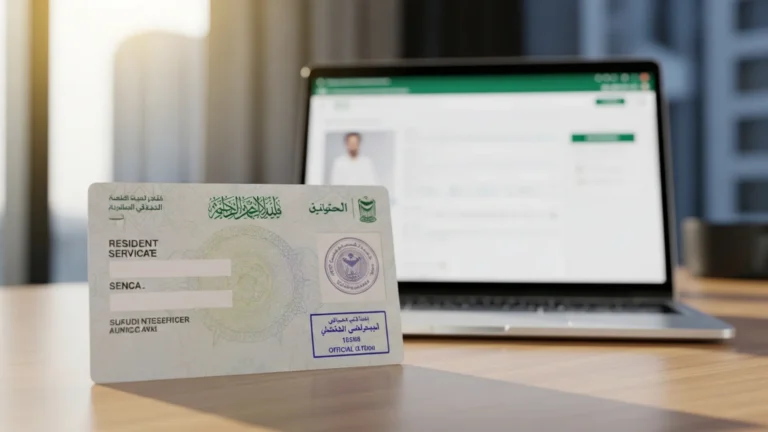
A municipal licence — the rukhsah baladiyah issued through Balady, the digital platform of Saudi municipalities under the Ministry of Municipalities and Housing — is the permit that allows a specific commercial premises to operate a specific activity at a specific address. It is the licence a health inspector, a civil defence officer, or a municipal field team will ask to see when they visit your shop, restaurant, warehouse, clinic reception, or office.
Unlike the Commercial Register (CR) issued by the Ministry of Commerce, which belongs to the legal entity, the municipal licence is attached to the premises plus the activity. That distinction explains almost everything about how transfers work. When people say they want to transfer municipal license Saudi authorities have issued, they usually mean one of three quite different things:
- Ownership transfer — the business is being sold and the new owner wants the existing licence moved to their name and their CR.
- Location transfer — the same owner is relocating the same activity to a new shop or unit, and wants the licence to follow the business to the new address.
- Activity amendment — the licence stays with the same owner and premises, but the licensed activity is being changed or added to.
Balady handles all three, but through different service tiles and with different document sets. Choosing the wrong service is the single most common reason a request bounces back. Read the next two sections carefully before you touch the portal, because the sequence — Ministry of Commerce first, Balady second — matters more than the forms themselves.
Who needs to transfer a municipal licence
You need a municipal licence transfer whenever the legal or physical identity behind a licensed premises changes. In practice, these are the situations we see most often at Noble Core:
- Buying an existing business — a café, salon, grocery, gym, laundry, workshop, or small factory sold as a going concern with its fit-out and equipment in place.
- Partner exit or entry — one partner buys out another, or a new shareholder joins, changing the ownership structure behind the CR.
- Foreign investor acquisition — an international group acquiring a Saudi retail or F&B business, which adds a MISA licensing layer before any municipal step.
- Corporate restructuring — converting an establishment into an LLC, merging two entities, or moving a branch under a different parent CR.
- Relocation — the landlord does not renew, the mall repositions, or the business outgrows its unit and moves to a larger one.
- Inheritance — the licence must move to heirs or to a newly formed entity representing them.
If none of these apply and you simply need to keep an existing licence alive, what you need is a renewal, not a transfer. Renewals are a much lighter process and are handled through the same Balady account. If you are buying into the Saudi market for the first time rather than taking over an existing shop, start instead with our guide to company formation in Saudi Arabia, because you will need a CR before a municipal licence can exist in your name at all.
The correct order of operations: CR first, Balady second
Municipal licences in the Kingdom are issued against a valid Commercial Register. Balady validates your CR number in real time against Ministry of Commerce records. That means the licence cannot be issued to a buyer who does not yet legally own the business.
The reliable sequence is:
- Agree the sale and sign the transfer contract — a sale-and-purchase or assignment agreement covering the business, its fit-out, and the licences being handed over.
- Notarise the transfer — establishment ownership transfers and LLC share transfers are executed electronically through the Ministry of Justice’s Najiz platform (najiz.sa) or the Ministry of Commerce’s own e-notary flow, depending on the entity type.
- Update the Commercial Register — through the Saudi Business Center (business.sa) or the Ministry of Commerce portal (mc.gov.sa). Under the new Commercial Register Law effective 3 April 2026, the Kingdom moved to a unified national CR whose identifier begins with “7”, with no expiry date; instead of renewing, you submit an annual confirmation. English trade names are now permitted, and there is a five-year grace period for aligning existing registers.
- Transfer the lease — register the new tenancy contract for the premises so the address on the licence matches a lease in the buyer’s name.
- Submit the Balady transfer request — only once steps 1-4 are complete and reflected in the government systems.
- Update everything downstream — ZATCA VAT registration, GOSI establishment records, Qiwa labour file, Muqeem for any sponsored staff, civil defence certificate, and the Chamber of Commerce membership.
Attempting step 5 before step 3 is the most common failure. Balady will simply not find a CR that matches the buyer’s national ID or Unified Number, and the request will sit rejected.
Step-by-step: how to transfer municipal license Saudi businesses hold on Balady
The Balady interface is available in Arabic at balady.gov.sa/ar. If your Arabic is limited, use the browser’s translate function or have a bilingual colleague sit with you — the screen labels below are given in English with their common Arabic equivalents so you can match them.
1. Sign in with your national identity
Balady authenticates through the National Single Sign-On, which is the same identity layer behind Absher (absher.sa). Click Login (تسجيل الدخول), enter the buyer’s national ID or Iqama number and password, then approve the one-time password sent to the registered mobile. For companies, the person signing in must be the authorised manager listed on the CR, or hold a valid electronic delegation.
2. Open the commercial licensing service
From the dashboard, choose Services (الخدمات) → Commercial Activity Licences (رخص الأنشطة التجارية). You will see a list of licences already tied to your identity plus a button to start a new request.
3. Choose the correct request type
Select the tile that matches your situation:
- Transfer of licence ownership (نقل ملكية الرخصة) — for a sale or ownership change.
- Amend licence data (تعديل بيانات الرخصة) — for activity or trade-name changes.
- New licence for a new location — for relocations, since a licence is bound to an address; the old licence is then cancelled.
4. Identify the licence being transferred
Enter the existing municipal licence number and the seller’s CR number. The system pulls the licence details — activity code, municipality, premises area, issue and expiry dates. Check every field against the paper licence before continuing. If the details do not match, the seller may have amended the licence without telling you.
5. Enter the new owner’s details
Provide the buyer’s Unified Number (الرقم الموحد, the “7xxxxxxxxx” identifier), CR number, national ID or Iqama, mobile, and email. Balady cross-checks these against Ministry of Commerce records automatically.
6. Attach the supporting documents
Upload each document as a clear PDF or high-resolution image, generally under 5 MB per file. The full list is in the next section.
7. Seller confirmation
For ownership transfers, the seller receives a notification in their own Balady account and must approve the transfer. Nothing progresses until they do. Agree in advance who will be at a computer to click approve, and on what date.
8. Municipal review and inspection
The relevant municipality reviews the file. Many low-risk activities are approved on a self-declaration basis with a post-issuance inspection; higher-risk activities — food handling, health, fuel, workshops — usually trigger a field visit to confirm the premises still meets the technical requirements for that activity.
9. Pay via SADAD
Once approved, an invoice with a SADAD bill number appears in your Balady account. Pay through any Saudi bank app or online banking under the “government payments” section. Payment usually reflects within minutes to a few hours.
10. Download the new licence
The licence is issued electronically as a PDF with a QR code. Print it and display it at the premises — municipal inspectors expect to see it posted visibly. Keep the digital copy; you will need it for ZATCA, GOSI, and bank account updates.
Documents you need to prepare
Gathering these before you start saves days of back-and-forth. Requirements vary slightly by municipality and activity, so treat this as the core set:
- New owner’s Commercial Register — showing the acquired activity, valid and reflecting the completed ownership change.
- Existing municipal licence — a copy of the licence being transferred, ideally still valid rather than expired.
- Signed transfer or sale agreement — notarised where the entity type requires it.
- Registered lease contract for the premises in the new owner’s name, with the correct national address and building number.
- National ID or Iqama of the new owner or authorised manager.
- Chamber of Commerce membership certificate for the new entity.
- Civil defence safety certificate for the premises, where the activity requires one.
- Health certificates for food-handling staff, for F&B and similar activities.
- Premises layout or engineering drawing, for activities where the municipality holds a technical file.
- Sector approvals where applicable — for example the Ministry of Health for clinics and pharmacies, the Ministry of Tourism for hotels, SFDA-related approvals for certain food and cosmetics operations.
- MISA licence — for foreign-owned entities. Investors acquiring a Saudi business should read our detailed breakdown of the MISA licence in Saudi Arabia before signing anything, since the investment licence must cover the acquired activity.
- Power of attorney or electronic delegation, if a representative is filing on your behalf.
Fees and timelines: what to budget
Municipal licence fees are set per activity and per municipality, and are calculated on factors such as activity classification and premises area. The figures below are indicative planning numbers based on commonly observed ranges — always confirm the exact amount shown on your own SADAD invoice on the official portal before budgeting.
| Step | Authority / portal | Indicative fee (SAR) | Typical timeline |
|---|---|---|---|
| Notarising the sale / share transfer | Ministry of Justice — Najiz | 0 – 500 | 1 – 3 business days |
| Commercial Register issue or amendment | Ministry of Commerce / Saudi Business Center | 1,200 – 2,000 | 1 – 3 business days |
| Chamber of Commerce membership | Chamber of Commerce | 2,000 – 3,000 per year | Same day – 2 days |
| Municipal licence transfer / issue | Balady | 500 – 5,000 per year (activity-dependent) | 3 – 10 business days |
| Civil defence certificate | Civil Defence via Balady/Salamah | 0 – 1,000 | 3 – 10 business days |
| Lease registration | Ejar platform | Nominal per contract | Same day |
| MISA investment licence (foreign owners) | MISA | Issue/renew fees suspended in 2026 (previously 12,000 / 62,000) | 3 – 10 business days |
| ZATCA VAT registration update | ZATCA | No fee | Same day – 3 days |
| GOSI establishment update | GOSI | No fee | Same day |
End to end, a clean transfer where both parties are responsive and documents are ready typically completes in two to four weeks. Where a MISA licence, a sector approval, or a civil defence re-inspection is involved, plan for six to eight weeks. Build that into your handover date with the seller so you are not paying rent on a shop you cannot yet legally operate.
Special case: foreign buyers acquiring a licensed Saudi business
Saudi Arabia now permits 100% foreign ownership across most activities, which has made acquiring an existing licensed business an attractive entry route — you inherit a fitted-out premises, a trading history, and often a trained team. The sequence, however, has an extra layer.
- MISA licence first. The foreign entity applies to the Ministry of Investment for an investment licence covering the target’s activity. MISA licensing typically runs 3-10 business days once the file is complete, and issue/renewal fees are suspended in 2026.
- Incorporate or amend the Saudi entity. Either a new LLC is formed to acquire the business, or the existing entity’s shares are transferred to the foreign investor and the CR amended accordingly.
- Confirm the activity is open to foreign investment. A small number of activities remain restricted or carry conditions. Check before you sign a purchase agreement, not after.
- Then run the Balady transfer exactly as described above.
One practical warning: the municipal licence’s activity code must sit inside the scope of both the CR and the MISA licence. If the shop you are buying is licensed for, say, a restaurant with a bakery section, and your MISA licence covers only restaurants, the municipality will reject the transfer until the licences align. Reconciling activity codes across MISA, the Ministry of Commerce, and Balady is a routine part of Noble Core’s commercial registration service, and it is worth doing at the term-sheet stage rather than after money has changed hands.
What must be updated after the licence transfers
The municipal licence is not the finish line. A business changing hands touches several government systems, and leaving any of them pointing at the old owner creates problems that surface at the worst moment — usually during an inspection or a bank review.
- ZATCA — update the VAT registration for the new CR. VAT remains 15%, and e-invoicing under the Fatoora programme is being rolled out in waves; confirm which wave your turnover band falls into at zatca.gov.sa. Your point-of-sale system must issue compliant invoices under the new entity’s details from day one.
- GOSI — transfer or open the establishment file at gosi.gov.sa. Total contributions for a Saudi employee run around 21.5% combining employer and employee shares.
- Qiwa (MHRSD) — move the labour file, re-issue employment contracts under the new entity, and check the Saudization band that applies to your activity and headcount at qiwa.sa.
- Muqeem — update records for expatriate staff at muqeem.sa. Iqama issue and renewal government fees are around SAR 650 per year plus applicable levies (indicative).
- Bank account — a new CR generally requires a new corporate account or, at minimum, a full re-KYC.
- Utilities and telecoms — electricity, water, and internet accounts move to the new entity.
- Signage and delivery-platform listings — the trade name on your fascia sign must match the licence, and aggregator listings should be updated to the new licensed name.
- Chamber of Commerce — the new entity needs its own membership, which is also what authenticates documents you may later need attested.
Renewals and annual confirmation after the transfer
Once the licence is in your name, keep two dates in your calendar. The first is the municipal licence expiry, which is typically annual — Balady sends reminders, and renewing before expiry avoids penalties and the risk of a suspended activity. The second is the annual confirmation of your Commercial Register.
Under the Commercial Register Law effective 3 April 2026, registers no longer carry an expiry date. Instead, businesses submit an annual confirmation that their data remains accurate. It is a lighter obligation than the old renewal, but it is still mandatory, and it is easy to forget precisely because there is no expiry date staring at you from the certificate. Set a recurring reminder for the anniversary of your CR.
Also worth noting: the unified national CR means branches in different cities no longer need separate registers in the way they once did, though each premises still needs its own municipal licence from the municipality that governs that address. One CR, many Balady licences, is the normal shape for a multi-branch retailer.
Common mistakes to avoid
- Filing on Balady before the CR is transferred. The portal validates the CR live; the request will fail. Always complete the Ministry of Commerce step first.
- Buying a business with an expired municipal licence. Expired licences may need to be renewed and settled — including any accrued fines — before a transfer can proceed, and that cost lands on someone. Decide who in the purchase agreement.
- Not checking for outstanding municipal violations. Fines and open violation files attached to the premises can block a transfer. Ask the seller for a clean-status printout from their Balady account before you pay a deposit.
- Mismatched activity codes between the CR, the MISA licence, and the municipal licence. Reconcile all three on paper before submitting anything.
- Assuming the licence moves with a relocation. It usually does not — a new address generally means a new licence and cancellation of the old one, with a fresh premises inspection.
- Forgetting the seller’s approval step. Ownership transfers stall for weeks simply because the seller never logged in to approve. Schedule that click.
- Overlooking the lease. A registered lease in the buyer’s name, with a national address that matches the licence, is non-negotiable. An unregistered handshake sublease will not pass.
- Ignoring civil defence. For F&B, workshops, warehouses, and any premises with public footfall, an out-of-date safety certificate will hold the whole file.
- Leaving ZATCA, GOSI, and Qiwa until later. Payroll and invoicing under an entity that no longer matches your licence creates compliance gaps that are painful to unwind.
- Uploading unreadable documents. Phone photos at an angle, cropped edges, and 300 KB scans are a leading cause of rejection. Use flat, full-page PDFs.
- Treating indicative fees as final. Municipal fees vary by activity and municipality. Verify the exact SADAD amount in your own account before committing to a budget.
How Noble Core helps
Most licence transfers do not fail because the rules are unclear. They fail because five government systems have to agree with each other at the same time, and one stale record — an unregistered lease, an activity code that does not match, a violation nobody checked — quietly blocks everything downstream.
Noble Core Ventures manages the whole chain for clients acquiring or restructuring businesses in the Kingdom:
- Pre-purchase due diligence — verifying the target’s CR status, municipal licence validity, outstanding violations, lease position, and GOSI/ZATCA standing before you commit funds.
- Activity-code mapping across MISA, the Ministry of Commerce, and Balady so the licences you end up with actually permit the business you intend to run.
- MISA licensing for foreign buyers, typically 3-10 business days once documents are complete.
- CR transfer and notarisation through the Saudi Business Center and Najiz, aligned to the 2026 unified register rules.
- Balady filing and follow-up, including coordinating the seller’s approval and preparing for the municipal inspection.
- Post-transfer clean-up — ZATCA VAT and e-invoicing readiness, GOSI establishment file, Qiwa labour file and Saudization planning, Muqeem records, Chamber membership, and bank account opening.
- Ongoing compliance calendar so the annual CR confirmation and the municipal licence renewal never surprise you.
Our Saudi setup packages start from SAR 36,999, and acquisition-support engagements are scoped to the specific licences and sector approvals involved. Whether you are a Saudi entrepreneur buying a neighbourhood café or an international group acquiring a multi-branch retailer, the same principle applies: get the order of operations right, verify every record before money moves, and the transfer becomes routine.
Need help setting up in Saudi Arabia? Noble Core handles your MISA licence, commercial registration, and visas end-to-end — done right the first time.
Frequently Asked Questions
How do I transfer municipal license Saudi authorities issued to a new owner?
You transfer the Commercial Register through the Ministry of Commerce or Saudi Business Center first, then log in to Balady with your national ID, open Commercial Activity Licences, choose transfer of licence ownership, enter the licence and CR numbers, upload documents, wait for the seller to approve, then pay the SADAD invoice and download the new licence.
How long does a municipal licence transfer take in Saudi Arabia?
The Balady step itself usually takes three to ten business days once the file is complete. End to end, including the Commercial Register transfer, lease registration and any inspection, a clean transfer typically completes in two to four weeks. Add six to eight weeks where a MISA licence, sector approval or civil defence re-inspection is required.
What does it cost to transfer a municipal licence in Saudi Arabia?
Municipal licence fees commonly range from around SAR 500 to SAR 5,000 per year depending on activity and municipality. Add roughly SAR 1,200 to 2,000 for the Commercial Register and SAR 2,000 to 3,000 annually for Chamber of Commerce membership. These are indicative figures, so confirm the exact SADAD amount on the official Balady portal.
Can I transfer a municipal licence to a new location?
Generally no, because a municipal licence is bound to a specific premises and address. Relocating usually means applying for a new licence at the new address through Balady and cancelling the old one, with a fresh premises inspection. Register the new lease first so the national address on the application matches your tenancy record.
What documents are required for a Balady licence transfer?
Prepare the new owner’s Commercial Register, a copy of the existing municipal licence, the signed and notarised transfer agreement, a registered lease in the buyer’s name, national ID or Iqama, Chamber of Commerce membership, civil defence certificate where required, health certificates for food activities, and any sector approvals or MISA licence for foreign owners.
Do foreign investors need a MISA licence before transferring a municipal licence?
Yes. A foreign-owned entity needs a Ministry of Investment licence covering the acquired activity before the Commercial Register and municipal licence can move into its name. MISA licensing typically takes three to ten business days, and issue and renewal fees are suspended in 2026. Confirm the activity is open to foreign investment before signing.
What happens if the seller has unpaid municipal fines?
Outstanding violations or fines attached to the premises can block the transfer on Balady until they are settled. Ask the seller for a clean-status printout from their Balady account before paying any deposit, and state clearly in the purchase agreement who bears responsibility for pre-transfer fines and any licence renewal arrears.
What must I update after the municipal licence transfer completes?
Update ZATCA for VAT at 15% and e-invoicing readiness, transfer the GOSI establishment file where contributions run around 21.5% for a Saudi employee, move the Qiwa labour file and contracts, update Muqeem for expatriate staff, open or re-KYC the bank account, and switch utilities, signage and delivery-platform listings to the new licensed name.