Opening a Pharmacy in Saudi Arabia (2026)
Opening a pharmacy business in Saudi Arabia in 2026 requires four core approvals: a MISA investment licence (issue and renew fees suspended in 2026), a unified Commercial Register from the Saudi Business Center, an establishment licence from the Saudi Food and Drug Authority (SFDA), and operational approval from the Ministry of Health. Government licensing typically takes 3–10 business days per stage, foreign investors may hold 100% ownership in most retail activities, and a fully licensed Noble Core setup package starts from SAR 36,999. This 2026 guide walks you step by step through how to open a community or hospital pharmacy in the Kingdom — naming the exact portals (MISA, Saudi Business Center, SFDA, Ministry of Health), the documents you need, indicative SAR fees and timelines, plus the common mistakes that delay a pharmacy file.
What “opening a pharmacy business” means in Saudi Arabia
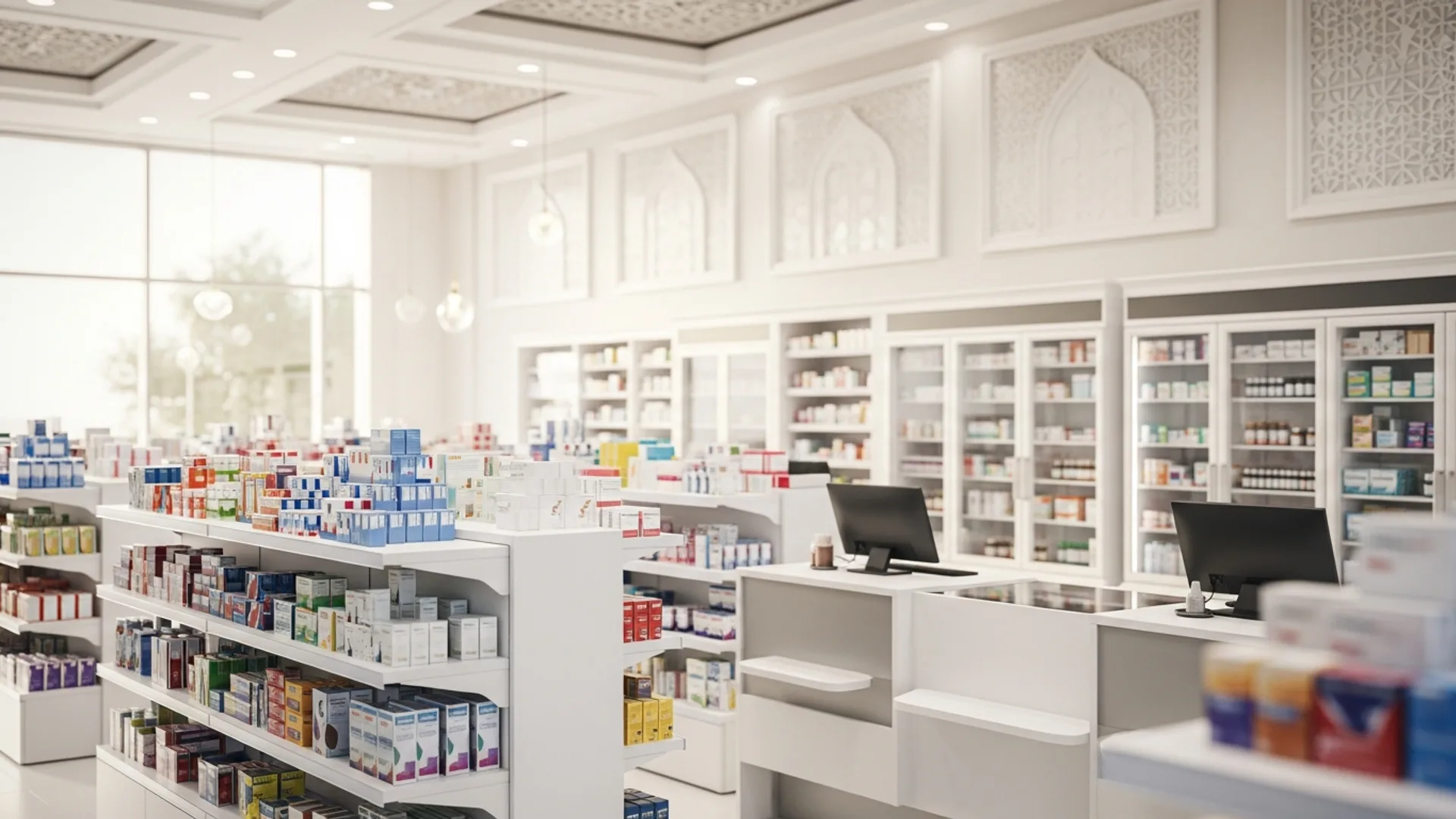
A pharmacy in Saudi Arabia is a regulated healthcare establishment, not an ordinary retail shop. It dispenses medicines, over-the-counter products and medical supplies, and it sits under the joint oversight of the Saudi Food and Drug Authority (SFDA) and the Ministry of Health (MOH). Because medicines are a sensitive category, a pharmacy needs both a normal commercial licence track (investment licence + Commercial Register) and a sector-specific establishment licence before it can legally open its doors.
There are several pharmacy formats you can set up, and the route differs slightly for each:
- Community (retail) pharmacy — a standalone or chain pharmacy serving the public, the most common format.
- Hospital / institutional pharmacy — operating inside a licensed health facility.
- Pharmaceutical warehouse / distribution — wholesale storage and supply of medicines, with stricter SFDA storage and cold-chain rules.
- Online / e-pharmacy — dispensing through an approved digital platform, layered on top of a physical licensed pharmacy.
Whichever format you choose, the licensing logic is the same: register the company, secure the SFDA establishment licence, register your pharmacists, and complete tax and labour registrations before opening.
It also helps to understand why the Kingdom regulates pharmacies so closely. Saudi Arabia’s healthcare sector is expanding fast under Vision 2030, with rising demand for accessible community pharmacies, chronic-disease management and well-stocked retail health outlets. The regulatory framework — SFDA standards, MOH oversight and SCFHS classification of pharmacists — exists to keep quality high as the market grows. For an investor, that means a clear, predictable rulebook: meet the standards and your licence is straightforward; cut corners and the file stalls. Treating compliance as part of the business model from day one, rather than an afterthought, is the single biggest predictor of a smooth launch.
Who needs an SFDA pharmacy licence
You need the full pharmacy licensing pack if you intend to dispense, store, import or sell medicines and pharmaceutical products in the Kingdom. This applies whether you are a Saudi national, a GCC investor, or a 100% foreign-owned company entering through a MISA (Ministry of Investment of Saudi Arabia) investment licence.
In practice, the following operators must hold an SFDA establishment licence and MOH operational approval:
- Investors opening a single community pharmacy or a multi-branch chain.
- Hospitals, clinics and polyclinics running an in-house pharmacy.
- Companies operating pharmaceutical warehouses or distribution centres.
- Foreign pharmacy groups expanding into Saudi Arabia under 100% foreign ownership, available in most retail activities.
Every pharmacy must also employ at least one registered pharmacist classified by the Saudi Commission for Health Specialties (SCFHS) and licensed to practise. The pharmacist-in-charge is the person legally accountable for dispensing inside the establishment.
Single pharmacy vs. a chain
The licensing route is the same whether you open one pharmacy or fifty, but the planning differs. A single community pharmacy is the simplest entry point: one CR, one SFDA establishment licence tied to one premises, and one pharmacist-in-charge. A chain layers additional branch licences on top — each physical location needs its own SFDA establishment approval and its own registered pharmacist, even though they sit under the same company. If you intend to scale, structure the parent entity and capital with the chain in mind from the start, so you are not restructuring the CR after your second or third branch. Mapping your roll-out before you file keeps every branch licence consistent and avoids duplicated attestation work later.
Step-by-step: how to open a pharmacy in Saudi Arabia in 2026
The 2026 process is more streamlined than in previous years, especially after the new Commercial Register Law took effect on 3 April 2026. Follow these stages in order — skipping ahead is the single biggest cause of file rejections.
- Reserve your trade name and confirm the activity. Log in to the Saudi Business Center (mc.gov.sa) and reserve a trade name. Under the 2026 rules, English trade names are now allowed. Confirm that your ISIC activity covers “retail sale of pharmaceutical goods” or the warehouse equivalent.
- Apply for the MISA investment licence (foreign investors). On the MISA portal, submit your company profile, shareholder documents and a notarised commercial registration from your home country. MISA issue and renewal fees are suspended in 2026 (previously SAR 12,000 issue / SAR 62,000 renewal). Licensing typically takes 3–10 business days.
- Issue the unified Commercial Register (CR). Through the Saudi Business Center, draft and notarise your Articles of Association, then issue the new unified national CR. Under the April 2026 law the CR ID now starts with “7”, has no expiry (you submit an annual confirmation instead) and carries a 5-year grace concept. The CR fee is indicative at SAR 1,200–2,000 — confirm current figures on the official portal.
- Register with the Chamber of Commerce. Activate your Chamber membership, indicative at SAR 2,000–3,000 per year, which you will need to attest documents later.
- Secure premises that meet SFDA layout rules. Lease a unit that satisfies pharmacy specifications — minimum floor area, separate storage, controlled-temperature space for medicines, and required distance from existing pharmacies where local rules apply. Register the lease on the Ejar platform.
- Apply for the SFDA establishment licence. Submit the pharmacy establishment application to the Saudi Food and Drug Authority (sfda.gov.sa). This is the sector approval that confirms your premises, storage and quality systems meet pharmaceutical standards.
- Obtain Ministry of Health operational approval. Register the facility with the Ministry of Health (moh.gov.sa) and link your registered pharmacist-in-charge so the pharmacy is authorised to operate.
- Register the pharmacist(s) and recruit staff via Qiwa. Verify SCFHS classification for each pharmacist, then create labour files and work permits on the Qiwa platform (qiwa.sa). Issue or renew Iqamas for expatriate staff through Muqeem (muqeem.sa) and Absher (absher.sa).
- Register for tax with ZATCA. Enrol for VAT (15%) and onboard to e-invoicing (Fatoora) on the Zakat, Tax and Customs Authority (zatca.gov.sa) as integration waves require.
- Register staff with GOSI. Open your social-insurance file at GOSI (gosi.gov.sa); total contributions for Saudi employees run around 21.5% (employer plus employee shares).
If you are mapping the company-formation half of this journey, our detailed company formation in Saudi Arabia guide breaks down the CR and shareholding steps that sit underneath every pharmacy licence.
Required documents and IDs
Have these ready before you start — incomplete files are the top reason SFDA and MOH applications stall. Documents originating abroad must be attested and, where required, translated into Arabic.
- Passport copies and IDs of all shareholders and the appointed manager.
- Notarised commercial registration / certificate of incorporation from the parent company (for foreign investors).
- Audited financial statements of the parent company (often requested by MISA).
- Draft Articles of Association for the Saudi entity.
- Trade-name reservation certificate from the Saudi Business Center.
- Registered lease contract (Ejar) for premises meeting pharmacy specifications.
- Premises layout and floor plan showing storage and dispensing areas.
- SCFHS classification and practice licence for each pharmacist.
- National Address registration for the establishment.
- Bank reference / capital deposit evidence where requested.
For the pharmacist-in-charge
The pharmacist-in-charge file usually requires the pharmacy degree (attested), SCFHS professional classification, a valid practice licence, a Saudi Iqama (for expatriates), and a clean professional record. The pharmacist must be physically present and accountable during operating hours.
Fees and timeline (indicative 2026)
Use the table below for budgeting. These are indicative SAR figures for the 2026 process — government charges change, so always confirm current figures on the official portal before you commit funds.
| Stage / item | Authority / portal | Indicative fee (SAR) | Typical timeline |
|---|---|---|---|
| Trade-name reservation | Saudi Business Center (mc.gov.sa) | Nominal | Same day – 2 days |
| MISA investment licence | MISA | Issue & renew fees suspended in 2026 | 3–10 business days |
| Unified Commercial Register | Saudi Business Center | 1,200–2,000 | 1–3 business days |
| Chamber of Commerce membership | Chamber of Commerce | 2,000–3,000 / year | 1–2 business days |
| SFDA pharmacy establishment licence | SFDA (sfda.gov.sa) | Indicative — confirm on SFDA portal | 2–6 weeks (inc. inspection) |
| Ministry of Health operational approval | MOH (moh.gov.sa) | Indicative — confirm on MOH portal | 1–4 weeks |
| Pharmacist SCFHS classification & licence | SCFHS | Indicative per pharmacist | 1–4 weeks |
| Iqama issuance / renewal (per expat) | Absher / Muqeem | ~650 / year + levies | Days |
| VAT & e-invoicing registration | ZATCA (zatca.gov.sa) | No fee (VAT 15% on sales) | Days |
| GOSI registration | GOSI (gosi.gov.sa) | ~21.5% total contribution (Saudi staff) | Days |
| Noble Core full setup package | Noble Core | From 36,999 | Coordinated end-to-end |
Beyond government fees, budget realistically for the build-out: fit-out, shelving, a controlled-temperature store, refrigeration, a pharmacy management/POS system linked to national prescription platforms, opening inventory, and staff salaries. These commercial costs typically dwarf the licence fees themselves.
What drives the real cost
Two pharmacies with identical licences can cost very different amounts to open. The variables that move your budget most are location and lease (a prime high-street unit in Riyadh or Jeddah costs far more than a neighbourhood spot), the size and number of refrigerated and controlled-storage units, the sophistication of your pharmacy management system, and your opening stock depth. A lean single community pharmacy can open on a modest budget once licensed, while a flagship branch with a wide medicine range, cosmetics and wellness lines, and a strong digital ordering layer needs significantly more working capital. Build a 12-month cash-flow plan, not just a launch budget — pharmacies take time to build a loyal customer base.
Choosing premises and location
Premises selection is where many pharmacy projects gain or lose months, because the SFDA establishment licence is tied to a specific compliant location. Get this right before you sign a lease.
Key considerations when selecting and fitting out your unit:
- SFDA layout standards — a clearly separated dispensing area, secure storage, and controlled-temperature and refrigerated zones for medicines that require them.
- Minimum area — your unit must meet the minimum floor-space requirement for a licensed pharmacy; confirm the current threshold on the SFDA portal.
- Distance rules — some municipalities apply minimum-distance rules between pharmacies, so check before committing to a location near an existing pharmacy.
- Accessibility and footfall — proximity to clinics, residential density and parking all affect commercial success.
- Registered lease — the lease must be registered on the Ejar platform, and the premises must have a valid National Address before inspection.
A practical sequence is to shortlist units, verify SFDA suitability and any distance rules, then sign — never sign first and hope the premises pass. A failed inspection on an already-signed lease is one of the most expensive mistakes in the whole process.
Saudisation, staffing and Qiwa
Pharmacy is a healthcare profession with active Saudisation (Nitaqat) requirements administered through MHRSD and the Qiwa platform. In practice this means a defined share of your pharmacist and support roles should be filled by Saudi nationals, and your Nitaqat colour band affects your ability to issue new work permits.
- Create your establishment file and labour contracts on Qiwa.
- Confirm SCFHS classification for every pharmacist before you assign dispensing duties.
- Register all staff with GOSI from day one of employment.
- Plan your Saudi-to-expat ratio early so your Nitaqat band stays healthy and permit issuance is smooth.
Building a compliant staffing plan up front protects your licence renewals and keeps recruitment moving — getting it wrong mid-year can freeze new visas.
For expatriate pharmacists and support staff, the visa and residency chain runs through familiar portals: work permits and labour contracts on Qiwa, Iqama issuance and renewal through Muqeem and Absher, and exit-re-entry and dependent services through Absher. The Iqama government fee is indicative at around SAR 650 per year plus applicable levies — confirm current figures on the Absher portal. Keeping every pharmacist’s Iqama and SCFHS practice licence valid is not just an HR task: an expired practice licence can directly suspend dispensing, so put renewal reminders in place from the first day of operation.
Tax, e-invoicing and ongoing compliance
Once trading, your pharmacy carries the same ongoing obligations as any Saudi company, plus sector-specific record-keeping for medicines:
- VAT at 15% on taxable sales, filed periodically with ZATCA.
- E-invoicing (Fatoora) integration as ZATCA’s onboarding waves reach your turnover band.
- Annual CR confirmation — under the 2026 law the Commercial Register no longer expires, but you must submit an annual confirmation to keep it active (5-year grace concept applies).
- SFDA and MOH renewals for the establishment licence and pharmacist practice licences.
- GOSI monthly contributions for all registered staff.
Keep meticulous dispensing and inventory records — controlled and refrigerated medicines are subject to additional SFDA traceability rules, and clean records make every renewal and inspection far easier.
A simple compliance calendar keeps everything on track. Map out, for the year ahead: VAT filing dates with ZATCA, the annual CR confirmation window with the Saudi Business Center, SFDA establishment-licence and pharmacist practice-licence renewal dates, Chamber of Commerce membership renewal, GOSI monthly cycles, and each expatriate Iqama expiry. Linking your pharmacy management system to national prescription and dispensing platforms also streamlines record-keeping and reporting. Investors who treat compliance as a scheduled, routine task — rather than a fire-fight at renewal time — keep their licences clean and avoid the penalties and operational pauses that come with lapses.
Common errors that delay a pharmacy file
We see the same avoidable mistakes derail pharmacy applications. Watch for these:
- Applying for the SFDA licence before the CR is issued — the establishment licence needs a valid Commercial Register first.
- Leasing premises that fail SFDA layout or distance rules, then having to relocate after signing.
- Not securing a registered pharmacist early — without an SCFHS-classified pharmacist-in-charge, MOH approval cannot be finalised.
- Submitting un-attested foreign documents, which bounce at MISA and the notary stage.
- Mismatched activity codes between the trade name, CR and SFDA application.
- Ignoring Saudisation until after hiring, then hitting permit blocks.
- Missing ZATCA e-invoicing onboarding when your wave arrives.
Common mistakes to avoid
- Treating a pharmacy like a normal shop and skipping SFDA and MOH approvals entirely.
- Budgeting only for licence fees and underestimating fit-out, refrigeration and inventory costs.
- Assuming MISA fees still apply — issue and renewal fees are suspended in 2026, but always confirm on the official portal.
- Using an old assumption that the CR expires — under the 2026 law it does not; you submit an annual confirmation instead.
- Appointing a pharmacist who is not SCFHS-classified for the correct scope.
- Failing to register the National Address and Ejar lease before the SFDA inspection.
- Letting Iqama or practice-licence renewals lapse, which can suspend dispensing.
How Noble Core helps you open a pharmacy in Saudi Arabia
Opening a pharmacy means running two licensing tracks in parallel — the corporate track (MISA, CR, Chamber, ZATCA, GOSI) and the healthcare track (SFDA establishment licence, MOH approval, SCFHS pharmacist registration). Noble Core coordinates both so you are not bouncing between portals or repeating attestations.
Our team handles trade-name reservation, the MISA application, the unified Commercial Register under the 2026 law, premises and lease compliance, SFDA and MOH documentation, pharmacist onboarding, and your ZATCA and GOSI registrations — with a single point of contact. A full setup package starts from SAR 36,999, and we map your Saudisation plan up front so renewals stay clean.
If 100% foreign ownership is part of your plan, our MISA licence in Saudi Arabia guide explains the investment-licence route that underpins a foreign-owned pharmacy. Speak to Noble Core and we will turn the pharmacy checklist above into a sequenced, deadline-driven plan tailored to your format and emirate.
Need help setting up in Saudi Arabia? Noble Core handles your MISA licence, commercial registration, and visas end-to-end — done right the first time.
Frequently Asked Questions
How much does it cost to open a pharmacy business in Saudi Arabia in 2026?
A fully licensed pharmacy business in Saudi Arabia starts from around SAR 36,999 with a Noble Core package. Indicative government costs include the Commercial Register (SAR 1,200–2,000) and Chamber membership (SAR 2,000–3,000/year), while MISA issue and renewal fees are suspended in 2026. Fit-out, refrigeration and inventory are extra. Confirm current figures on the official portals.
Can a foreigner own 100% of a pharmacy in Saudi Arabia?
Yes. Through a MISA investment licence, foreign investors may hold 100% ownership in most retail activities, including community pharmacies, in 2026. You still need a unified Commercial Register, an SFDA establishment licence and Ministry of Health approval. A registered, SCFHS-classified pharmacist-in-charge must run the pharmacy. Verify activity eligibility on the MISA portal before applying.
Which authorities license a pharmacy business in Saudi Arabia?
A pharmacy business in Saudi Arabia is licensed by several authorities. MISA issues the investment licence, the Saudi Business Center issues the Commercial Register, the Saudi Food and Drug Authority (SFDA) issues the establishment licence, and the Ministry of Health grants operational approval. Pharmacists are classified by the SCFHS, with ZATCA and GOSI handling tax and social insurance.
How long does it take to get a pharmacy licence in Saudi Arabia?
Core government licensing stages each take roughly 3–10 business days, but the SFDA establishment licence usually takes 2–6 weeks because it includes a premises inspection, and Ministry of Health approval can add 1–4 weeks. Overall, a typical pharmacy setup runs several weeks once documents are attested and premises are ready. Timelines vary by file completeness and emirate.
What is an SFDA pharmacy establishment licence?
The SFDA establishment licence is the sector-specific approval that confirms your pharmacy premises, storage and quality systems meet the Saudi Food and Drug Authority’s pharmaceutical standards. It is separate from your Commercial Register and is required before a pharmacy can dispense medicines. You apply through the SFDA portal after issuing your CR, and an inspection is part of the process.
Do I need a registered pharmacist to open a pharmacy in Saudi Arabia?
Yes. Every pharmacy in Saudi Arabia must employ at least one registered pharmacist-in-charge who is classified by the Saudi Commission for Health Specialties (SCFHS) and holds a valid practice licence. The pharmacist is legally accountable for dispensing during operating hours, and Ministry of Health operational approval cannot be finalised without one. Secure this pharmacist early in the process.
What documents are required to open a pharmacy business in Saudi Arabia?
You need shareholder passports and IDs, an attested commercial registration of the parent company (for foreign investors), draft Articles of Association, a trade-name reservation, a registered Ejar lease for compliant premises, a premises floor plan, SCFHS classification for each pharmacist, and National Address registration. Documents from abroad must be attested and translated into Arabic where required.
What taxes and Saudisation rules apply to a Saudi pharmacy?
A pharmacy charges 15% VAT on taxable sales and must onboard to ZATCA e-invoicing (Fatoora) as waves require. GOSI contributions for Saudi staff total around 21.5% combined. Pharmacy is a healthcare profession with Saudisation (Nitaqat) targets administered via MHRSD and Qiwa, so plan your Saudi-to-expat staffing ratio early to keep work-permit issuance flowing.