Commercial Visit Visa Saudi: 2026 Full Guide

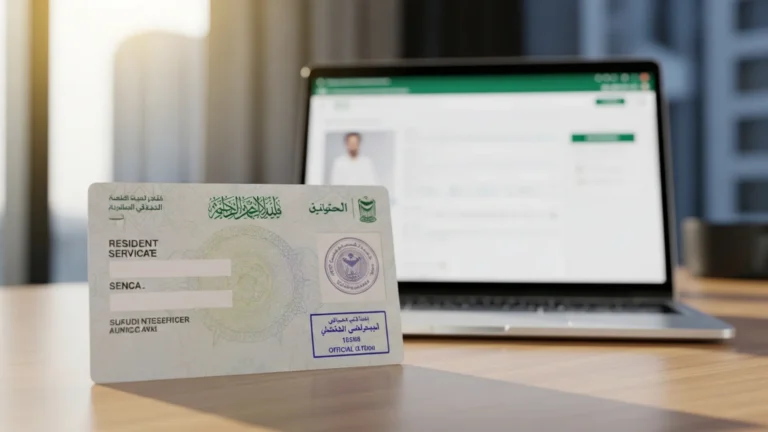
A commercial visit visa Saudi applicants use for business travel is a short-stay business visa issued through the Ministry of Foreign Affairs visa platform at visa.mofa.gov.sa, usually processed in 3–10 business days. It is sponsored by a Saudi company holding a valid Commercial Register, applied for in roughly 6 online steps, and typically issued as a single-entry stay of 30–90 days or a multiple-entry visa valid up to 1 year.
What a commercial visit visa Saudi companies issue actually is
The commercial visit visa — often called the business visit visa — is the entry permit the Kingdom of Saudi Arabia issues to a foreign national who is travelling for legitimate business purposes: meetings, contract negotiations, factory or site inspections, equipment installation supervision, trade exhibitions, supplier audits, or exploratory market visits ahead of a company formation decision.
It is not a work visa. It does not permit paid employment inside the Kingdom, and it does not lead to an Iqama (residence permit) on its own. It is a temporary, purpose-bound entry document that lets a business traveller enter, meet, inspect, negotiate, and leave. If the objective is to actually operate — hire staff, invoice locally, open a bank account in the company’s name — that requires a MISA investment licence and a Commercial Register, not a visit visa.
Two features distinguish the commercial visit visa from the ordinary tourist e-visa. First, it requires a Saudi-side sponsor: a company registered with the Ministry of Commerce that submits the invitation electronically. Second, it is processed through the Ministry of Foreign Affairs (MOFA) visa system rather than the tourism portal, and the application is finalised at a Saudi embassy, consulate, or an authorised visa service centre in the applicant’s country of residence.
Who needs one — and who does not
You need a commercial visit visa if you are travelling to Saudi Arabia for a business purpose and you are not a GCC national, not a Saudi resident holding a valid Iqama, and not eligible to conduct your business activity on a tourist visa.
- Foreign suppliers and contractors attending pre-tender meetings, Etimad-listed government procurement briefings, or contract signings.
- Investors and founders doing due diligence before applying for a MISA licence — visiting potential premises, meeting local partners, or attending Monsha’at and chamber events.
- Technical specialists supervising installation, commissioning, or warranty work performed under a Saudi client’s contract (short, non-employment engagements).
- Regional executives from a group’s overseas entity visiting a Saudi subsidiary or branch for board meetings and internal reviews.
- Exhibitors and delegates attending trade fairs, conferences, and sector summits.
You generally do not need one if you hold a valid Saudi Iqama, if you are a GCC citizen, or if your visit is genuinely limited to attending a public conference or event covered by the tourist e-visa or the event-linked visa route. Many nationalities eligible for the Saudi tourist e-visa can attend conferences and exhibitions on that visa — but a tourist visa does not cover contractual site work, formal supplier audits, or activities where a host company must accept responsibility for you. When in doubt, the sponsored commercial route is the cleaner, more defensible option.
Who can sponsor a commercial visit visa in Saudi Arabia
The sponsor must be a Saudi-registered entity in good standing. Practically, this means:
- A valid, active Commercial Register (CR) issued by the Ministry of Commerce. Under the new Commercial Register Law effective 3 April 2026, the Kingdom moved to a unified national CR whose identifier begins with “7” and which no longer carries an expiry date — instead, businesses complete an annual confirmation. A five-year transitional grace period applies for aligning older registrations, and English trade names are now permitted.
- An active Chamber of Commerce membership — indicative cost SAR 2,000–3,000 per year depending on class and city (confirm current figures with your local chamber).
- Clean compliance status across Qiwa (labour file and Saudization/Nitaqat band), GOSI (social insurance contributions), ZATCA (VAT and Zakat filings), and Balady (municipal licence, where applicable). A blocked file in any of these can stall a visa request.
- A registered user with the authority to submit invitations on the company’s behalf, typically the authorised manager or an appointed delegate.
Foreign-owned entities can sponsor too. Once a company holds a MISA investment licence and a CR, it has the same visa-sponsorship capability as a locally owned firm. If you are still at the stage of setting that up, our Saudi company formation service covers the CR, chamber registration, and Qiwa/GOSI activation that make sponsorship possible.
Step-by-step: how to apply for a commercial visit visa Saudi sponsors initiate
The flow runs in two halves: the Saudi sponsor raises the invitation online, then the traveller finalises the visa in their own country. Screen names differ slightly by portal version — read labels carefully rather than clicking from memory.
Part A — the Saudi sponsor’s steps
- Log in to the MOFA visa platform at visa.mofa.gov.sa using the company’s registered credentials. Establishments generally authenticate through their national access credentials; where the account is linked to an individual’s national identity, sign-in is completed through Absher.
- Open “Establishment Services” → “Visa Requests” (in some interface versions labelled “eServices” then “Issue Visa”). Confirm the establishment profile shows the correct CR number and that the visa quota or balance is available.
- Select visa type: “Business Visit” / “Commercial Visit.” Choose single-entry or multiple-entry, and the requested stay duration. Do not pick “Work Visit” unless the engagement genuinely fits that category — a mismatch is one of the most common rejection triggers.
- Enter the visitor’s details exactly as printed in the passport: full name in the passport order, passport number, issue and expiry dates, nationality, date of birth, and profession. Any variation between the invitation and the passport will surface as a mismatch at the embassy stage.
- Upload the invitation letter on company letterhead, stating purpose of visit, dates, the relationship between the parties, and who bears the cost of the trip. Attach the CR copy and, where required, chamber attestation. Some requests must be attested by the Chamber of Commerce before submission — check the on-screen requirement list.
- Submit and record the request number. The system returns an application or invitation reference. Track it under “My Requests.” Once approved, the sponsor shares the visa authorisation number with the traveller.
Part B — the traveller’s steps
- Register on the Enjaz / MOFA applicant portal in your country of residence and start a new visa application, entering the authorisation number issued to your host.
- Complete the applicant form — personal details, address, employer, travel dates, and the sponsoring Saudi company’s name and CR number.
- Pay the visa fee through the authorised channel and keep the payment receipt.
- Book an appointment with the Saudi embassy, consulate, or the authorised visa service centre covering your jurisdiction, and submit the passport plus supporting documents.
- Collect the visa — typically stamped in the passport or issued electronically depending on the mission. Verify every field before you travel: name spelling, entry type, validity window, and permitted stay.
Documents you will need
Requirements vary slightly by embassy and nationality, but the core pack is consistent:
- Passport valid at least 6 months beyond the intended entry date, with two or more blank facing pages.
- Recent colour photograph on a white background, meeting the mission’s size specification.
- Invitation letter from the Saudi sponsor, on letterhead, signed and — where required — chamber-attested.
- Copy of the sponsor’s Commercial Register and chamber membership certificate.
- Letter from your own employer confirming your position, salary, purpose of travel, and that your job is held for you on return.
- Proof of business relationship — a purchase order, contract, tender reference, or prior correspondence adds substance to a thin file.
- Return flight itinerary and hotel booking (or a host accommodation letter).
- Polio vaccination certificate for travellers from designated countries, and any other health documentation the mission specifies at the time.
- Company profile or trade licence of your own overseas employer, in some jurisdictions.
Translate non-English, non-Arabic documents and have them legalised where the mission requires it. Legalisation chains — notary, foreign ministry, Saudi mission — can add a week or more, so start early.
Fees and timelines (indicative)
Visa fees are set by the Ministry of Foreign Affairs and vary by nationality, reciprocity agreements, entry type, and service centre handling charges. Treat the figures below as indicative planning numbers and confirm current amounts on the official portal or with the Saudi mission in your country before you budget.
| Item | Indicative cost (SAR) | Typical timeline |
|---|---|---|
| Sponsor invitation request on MOFA platform | Nominal / included in establishment services | 2–5 business days for approval |
| Single-entry business visit visa (government fee) | ~300–500 (varies by nationality) | 3–7 business days at the mission |
| Multiple-entry business visa, 1 year | ~2,000–3,000 (varies by nationality) | 5–10 business days |
| Visa service centre / handling charge | ~150–350 | Same day at submission |
| Document attestation and legalisation | ~200–800 depending on chain | 3–10 business days |
| Medical insurance (mandatory travel cover) | ~100–400 | Instant to 1 day |
| Chamber of Commerce membership (sponsor, annual) | ~2,000–3,000 | 1–3 business days |
| Commercial Register issuance (sponsor) | ~1,200–2,000 | 1–3 business days |
| MISA investment licence (issue/renew) | Government fees suspended in 2026 (previously SAR 12,000 first year / 62,000 renewal) | ~3–10 business days |
All figures above are indicative; confirm current figures on the official portal. The MISA fee suspension is a meaningful cost change for foreign investors in 2026 and materially lowers the entry cost of establishing a sponsoring entity.
Validity, duration of stay, and extensions
Read three separate numbers on the visa and never confuse them:
- Visa validity — the window within which you must enter the Kingdom (commonly 90 days from issue for single entry, up to 1 year for multiple entry).
- Duration of stay — how long you may remain per entry, printed on the visa (commonly 30, 60, or 90 days).
- Entry type — single, double, or multiple.
The permitted stay counts from the date of entry, not from the date of issue. Extensions, where available, are requested through the Saudi sponsor via the relevant government channel before the current permission expires, and approval is discretionary. Plan the trip so you do not depend on an extension being granted. If your business needs repeated, extended presence in the Kingdom, the correct answer is usually a registered entity and a proper residence route rather than serial visit visas — a point worth modelling in your budget early.
Checking status and entry records
Sponsors can track invitation and visa status inside the MOFA visa platform under “My Requests.” Once a visitor is in the Kingdom, establishments use Muqeem to view and manage visitor and resident records linked to the establishment, including entry and exit information. Labour-file and establishment compliance items live in Qiwa, and social insurance registration in GOSI.
From visit visa to real presence: when to convert
A commercial visit visa is a discovery tool. Once the opportunity is validated, most companies hit a ceiling: you cannot sign local contracts as a Saudi entity, invoice in the Kingdom, register for VAT with ZATCA, hire through Qiwa, or bid on Etimad tenders without a registered presence.
The pathway is well defined and, in 2026, unusually favourable:
- MISA investment licence from the Ministry of Investment — 100% foreign ownership is permitted in most activities, and licence issuance/renewal government fees are suspended in 2026. Typical issuance runs about 3–10 business days on a complete file. Our MISA licence guide for Saudi Arabia walks through the document set.
- Commercial Register via the Saudi Business Center and the Ministry of Commerce — now a unified national CR with no expiry date, replaced by an annual confirmation.
- Chamber of Commerce membership, national address, and municipal licence through Balady where the activity requires premises.
- Government portal activation — Qiwa (labour), GOSI (social insurance, total contribution approximately 21.5% for a Saudi employee across employer and employee shares), ZATCA (VAT at 15% and e-invoicing under the Fatoora programme, rolled out in waves), Muqeem, and Najiz for judicial services.
- Visa quota and Iqama issuance for staff you actually relocate — the government Iqama issue/renewal fee runs around SAR 650 per year plus applicable levies (indicative; confirm current figures on the official portal).
Support programmes from Monsha’at are also worth reviewing once you are registered, particularly for SME-scale operations.
Practical planning notes for first-time business visitors
A few operational details save time on the ground and are rarely covered by thin online guides.
Timing your trip around the Saudi working week
The standard working week in the Kingdom runs Sunday to Thursday, with Friday and Saturday as the weekend. Government service counters, chambers, and most corporate offices follow that rhythm, and hours shorten during Ramadan. If your visit depends on a government appointment — a chamber attestation, a Balady inspection, a bank meeting for a newly registered entity — build the calendar backwards from those fixed slots rather than from your flight availability. Public holidays around the national day and the two Eids should also be checked before you commit to dates.
Getting the invitation letter right the first time
Missions read invitation letters closely. A strong letter is one page, on company letterhead, and states the visitor’s full passport name, passport number, nationality, job title, the exact purpose of the visit in plain language, the intended arrival and departure dates, the relationship between the two companies, and an explicit statement of who bears travel and accommodation costs. It should be signed by the authorised manager whose name appears on the Commercial Register, with the CR number quoted. Vague phrases like “business discussions” without a named project or contract are the most common reason a file gets returned for clarification.
What to carry at the border
Keep printed copies of the visa, invitation letter, hotel booking, return ticket, and your employer letter in hand luggage. Immigration officers may ask for the host company’s contact details and a Saudi phone number — have them written down rather than buried in an email thread. Register your entry details with your host promptly so the establishment can reflect your visit accurately in its Muqeem records where required.
Money, connectivity, and moving around
The riyal is pegged, cards are widely accepted, and most government and corporate payments run through bank transfer or SADAD rather than cash. A local eSIM or airport SIM makes appointment coordination far easier, since many portals and services send one-time verification codes to a phone number. For intercity travel, Riyadh, Jeddah, and Dammam are connected by frequent domestic flights, and the Haramain high-speed rail serves the Jeddah and King Abdullah Economic City corridor for travel between offices along the western coast.
Common mistakes to avoid
- Name mismatch between the invitation and the passport. Enter the name exactly as machine-printed in the passport, in the same order, with no dropped middle names — this is the single most frequent cause of rejection and rework.
- Choosing the wrong visa sub-type. A “work visit” and a “commercial visit” are different products with different evidentiary requirements. Selecting the wrong one usually means starting the request again.
- Passport with under 6 months validity or no blank facing pages — missions decline the file at counter stage.
- Sponsor compliance blocks. An overdue ZATCA filing, a lapsed chamber membership, or an unresolved Qiwa item can freeze the establishment’s visa services. Clear the file before you invite anyone.
- Thin justification. An invitation letter with no contract, purchase order, or tender reference behind it reads as unsupported. Attach evidence of the commercial relationship.
- Assuming a tourist visa covers everything. Formal audits, contractual site work, and engagements requiring a host’s accountability belong on the sponsored commercial route.
- Confusing visa validity with duration of stay. A 1-year multiple-entry visa may still permit only 90 days per entry. Count from the entry stamp.
- Booking non-refundable flights before approval. Approval timelines vary by nationality and mission workload — hold flexible bookings until the visa is in hand.
- Ignoring health and insurance requirements. Polio certificates for designated countries and valid travel medical cover are checked, not waived.
- Relying on repeated visit visas to run an operation. If you are effectively operating in the Kingdom, register properly — it is cheaper and cleaner in 2026 than it has been in years.
How Noble Core helps
Noble Core Ventures works with foreign companies and investors on the full Saudi entry path — from the first business trip to a fully licensed, staffed, and compliant Saudi entity. On the visa side, we act as the coordination layer: preparing invitation letters that meet mission expectations, checking sponsor compliance status across Qiwa, GOSI, ZATCA, and chamber records before a request is raised, assembling and legalising the document pack, and tracking the request through to issuance.
On the establishment side, we handle MISA licensing, Commercial Register issuance under the 2026 unified-CR framework, chamber registration, national address, bank account introductions, ZATCA and e-invoicing readiness, and staff visa quotas. Our standard Saudi setup package starts from SAR 36,999, with scope and government charges confirmed in writing before we begin. For ongoing visa and residence support after incorporation, see Noble Core’s visa and Iqama service.
The practical advice we give most often is simple: use the commercial visit visa for what it is good at — validating the opportunity on the ground — and move to a registered entity as soon as the business case is proven. With MISA licence fees suspended in 2026, a unified Commercial Register that no longer expires, and 100% foreign ownership available across most activities, the gap between “visiting” and “operating” has never been narrower.
Need help setting up in Saudi Arabia? Noble Core handles your MISA licence, commercial registration, and visas end-to-end — done right the first time.
Frequently Asked Questions
What is a commercial visit visa Saudi companies sponsor?
A commercial visit visa Saudi companies sponsor is a short-stay business entry permit issued through the Ministry of Foreign Affairs visa platform at visa.mofa.gov.sa. It allows meetings, negotiations, inspections and trade events, but not paid employment. It is typically issued for 30 to 90 days per entry, with multiple-entry options valid up to one year.
How long does a commercial visit visa Saudi application take?
Most applications complete in three to ten business days once the file is clean. The Saudi sponsor’s invitation approval on the MOFA platform usually takes two to five business days, and the embassy or authorised visa service centre stage adds a further three to seven business days. Legalisation of foreign documents can add another week, so start early.
How much does a Saudi business visit visa cost in 2026?
Indicative government fees run around SAR 300 to 500 for a single-entry business visit visa and roughly SAR 2,000 to 3,000 for a one-year multiple-entry visa, varying by nationality and reciprocity. Service centre handling adds about SAR 150 to 350, plus attestation and insurance. Confirm current figures on the official portal before budgeting.
Who can sponsor a commercial visit visa in Saudi Arabia?
Any Saudi-registered entity with an active Commercial Register from the Ministry of Commerce and valid Chamber of Commerce membership can sponsor. The establishment must be compliant across Qiwa, GOSI, ZATCA and Balady, since blocks in any of these freeze visa services. Foreign-owned companies holding a MISA licence and a Commercial Register sponsor on identical terms.
Can I work in Saudi Arabia on a commercial visit visa?
No. The commercial visit visa permits business activities such as meetings, contract discussions, supplier audits, exhibitions and technical supervision, but it does not authorise paid employment or lead to an Iqama. To employ staff, invoice locally or register for VAT with ZATCA, you need a MISA investment licence and a Commercial Register instead.
What documents are required for a Saudi commercial visit visa?
You need a passport valid at least six months with blank facing pages, a recent white-background photo, the Saudi sponsor’s invitation letter on letterhead, a copy of the sponsor’s Commercial Register and chamber certificate, your employer’s letter, return itinerary and accommodation proof, plus a polio certificate where designated and travel medical insurance.
Can a commercial visit visa Saudi holders receive be extended?
Extensions may be requested through the Saudi sponsor via the relevant government channel before the current permission expires, and approval is discretionary rather than automatic. Never build a trip plan that depends on an extension. If you need repeated or extended presence in the Kingdom, a registered entity with proper residence permits is the appropriate route.
Should I get a business visit visa or set up a Saudi company?
Use the visit visa to validate the opportunity, then register once the business case is proven. In 2026, MISA licence issuance and renewal government fees are suspended, the unified Commercial Register no longer expires, and 100% foreign ownership applies in most activities. Noble Core packages start from SAR 36,999 plus government charges.